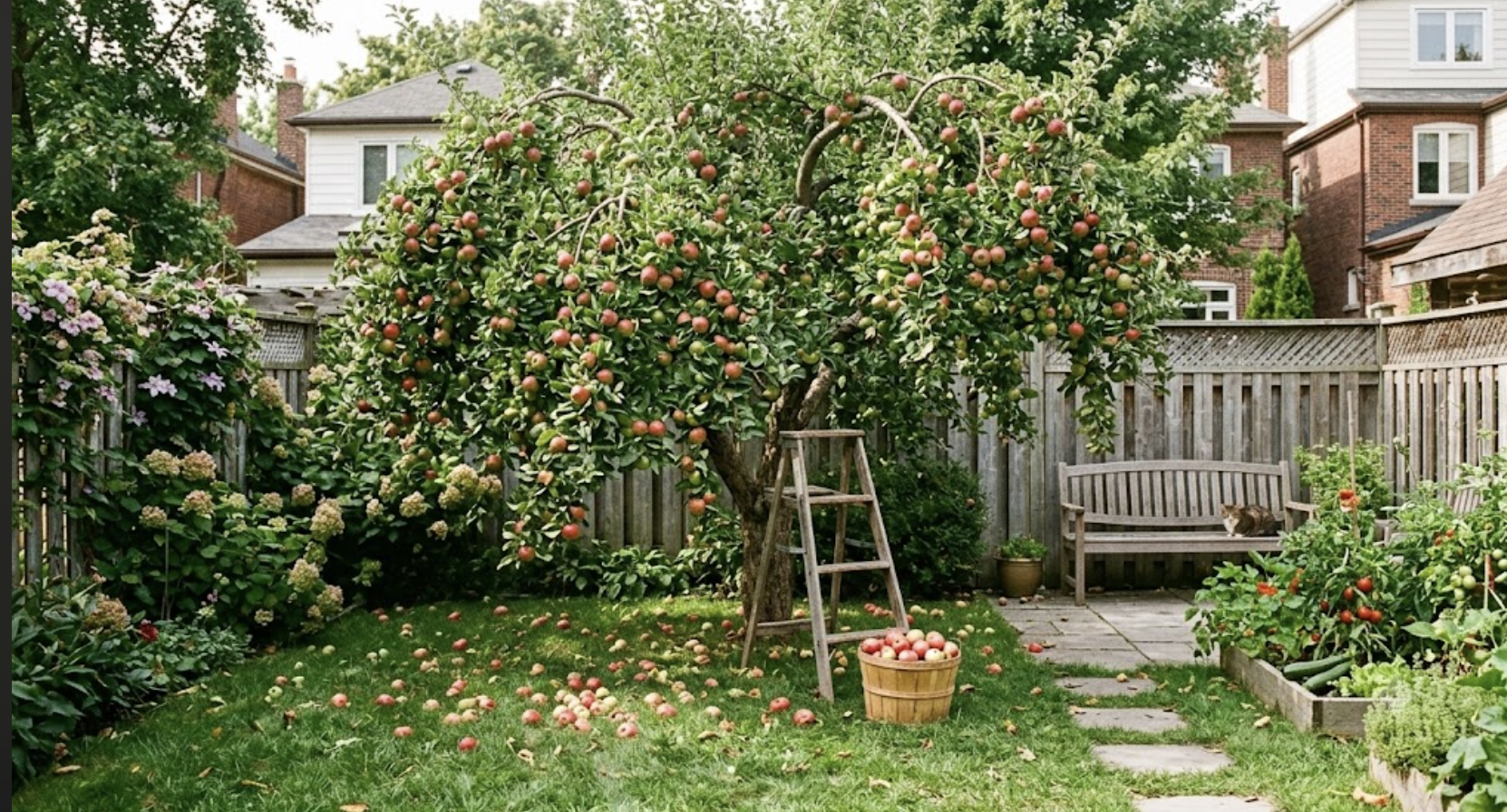
Late August and September are what the whole gardening year was for: apples and pears coming ripe, tomatoes at full production, squash swelling, everything peaking at once. It's also the point where your property's food output attracts the most attention from everything that eats — and a lot of what shows up for the harvest stays for the house.
Here's the harvest-season pest playbook: what the garden and fruit trees pull in, how to protect the crop, and how to keep the surge from becoming your fall indoor problem.
The Windfall Problem (Start Here)
If this post changes one habit, make it this one: pick up fallen fruit daily.
Windfall apples and pears fermenting in the grass are the single biggest harvest-season pest driver on residential properties. One neglected tree's drop zone feeds, in rough order of arrival:
Yellowjackets and other wasps — fermenting fruit at exactly the season colonies are largest, hungriest for sugar, and most aggressive. A windfall zone in September is functionally a wasp feeding station, and it recalibrates every colony in range toward your yard.Fruit flies — breeding in fermenting fruit by the thousand, then following the harvest into your kitchen.Rats and mice — windfalls are premium calories during exactly the weeks rodents are scouting winter quarters. A drop zone near the house is an advertised address.Raccoons and skunks — nightly cleanup crews that, once routine visitors, start investigating the rest of the property (see our lawn-digging guide for where that leads).
Daily pickup during drop season — into a sealed bin or hot compost, not an open pile — removes the engine driving all four. It's twenty minutes that replaces hours of pest management later.
Protecting the Fruit Still on the Tree
Harvest slightly early and ripen indoors where the variety allows — fully tree-ripened fruit is what draws wasp attention upwardThin damaged fruit as you see it; split and pecked fruit ferments on the branch and recruits wasps to the canopyBag prize fruit (paper or mesh fruit bags) on young or small trees where it's practicalManage the wasp side directly when the canopy is already busy: traps placed well away from the tree and from people (see our honest wasp trap review for placement), and professional attention for any actual nest discovered nearby — canopy feeding plus a nest on the property is the combination that produces stingsNet against birds if they're your primary thieves — and check netting daily so it doesn't trap anything you didn't intend
The Vegetable Garden in Fall
The late-season garden has its own pressure pattern:
Harvest promptly and completely. Overripe tomatoes on the vine and cracked squash are the vegetable version of windfalls — the same ferment-and-attract cycle.Clear as you go. Spent plants, dropped produce, and collapsing vines removed to compost as beds finish, not left as autumn habitat. Standing dead garden material is overwintering shelter for squash bugs, earwigs, slugs, and rodent runways.Mind the vole highway. Dense fall garden growth and mulch against beds gives voles covered routes to bulbs, root crops, and — over winter — the bark of your fruit trees. See the mole and vole guide for the runway signs; the fix is the same cover reduction.Compost with discipline. Harvest season overloads compost with exactly the high-sugar material that draws wasps, flies, and rats. Bury fresh additions under browns, keep the bin closed, and keep meat and oils out — the full compost rules are in our bird feeder and compost guide.
The Part Most People Miss: The Harvest Surge Moves Indoors
The reason a pest company writes about gardening: harvest-season pressure is a staging phase. The wasps fed by the drop zone are the ones at your September patio table. The fruit flies bred in the windfalls arrive in the kitchen with the harvest baskets. The rodents drawn to the fruit and garden calories are, in the same weeks, scouting your foundation for winter access — the exact late-summer scouting behaviour our fall rodent guides are built around.
So the harvest playbook connects directly to the fall exclusion push:
Bring produce in through an inspection — check baskets and boxes outdoors; fruit flies and earwigs ride in on the harvestRipen and store cleanly — one forgotten fermenting tomato behind the fruit bowl seeds a kitchen fruit fly population; cold-store what you can, cycle counter fruit fastTime your exclusion work now — the same late-August window as everything else this month: seal the foundation while the rodents your garden attracted are still decidingDon't feed the transition — the daily windfall pickup and prompt garden clearing are, functionally, rodent prevention for the house
A property can have a productive orchard and garden and a quiet house. The connection between them just has to be managed on purpose.
How Summit Handles Harvest-Season Calls
For orchard-and-garden properties in Guelph and Wellington County, Tateum's approach:
Wasp management — nest location and removal when canopy and drop-zone feeding has escalated, and honest advice on trap placement that diverts rather than attractsRodent assessment — reading whether harvest attraction has become foundation scouting, and completing exclusion in the window that mattersProperty layout advice — drop zone management, compost placement, and garden-to-house buffer as part of any assessmentThe seasonal combination — harvest-season calls pair naturally with the fall invader treatment and exclusion work in a single well-timed visit
Frequently Asked Questions
Wasps are all over my apple tree. Can the tree be treated? Treating a fruit canopy directly isn't the move — it risks the harvest and the pollinators. The effective sequence is windfall removal, early harvest, diversion trapping away from the tree, and removal of any actual nest on the property. The tree traffic drops fast once the ferment supply stops.
Do fallen crabapples and ornamental fruit count? Fully. Ornamental drop zones ferment the same way and run the same cycle — they're just easier to forget because nobody's harvesting them.
Rats found my compost during harvest season. Now what? Close the buffet (enclosed bin, buried additions, no more windfalls in open compost) and take the rodent side seriously — harvest-season rat interest in a property is precisely the establishment window. Our yard rat guide covers the full response.
Is it worth all this for a couple of backyard trees? The daily pickup and prompt harvest, yes, unquestionably — that's the 80% measure. The rest scales with how much you grow and how close it sits to the house.
Enjoy the Harvest, Keep the Guests Outside
The best growing season ends with full shelves and a quiet house — and the difference is mostly a bucket of windfalls picked up every evening. Manage the transition and you get both.
Summit Pest Control serves garden and orchard properties across Guelph, Fergus, Elora, and surrounding areas.
Call (226) 780-6446 or request a quick estimate today.