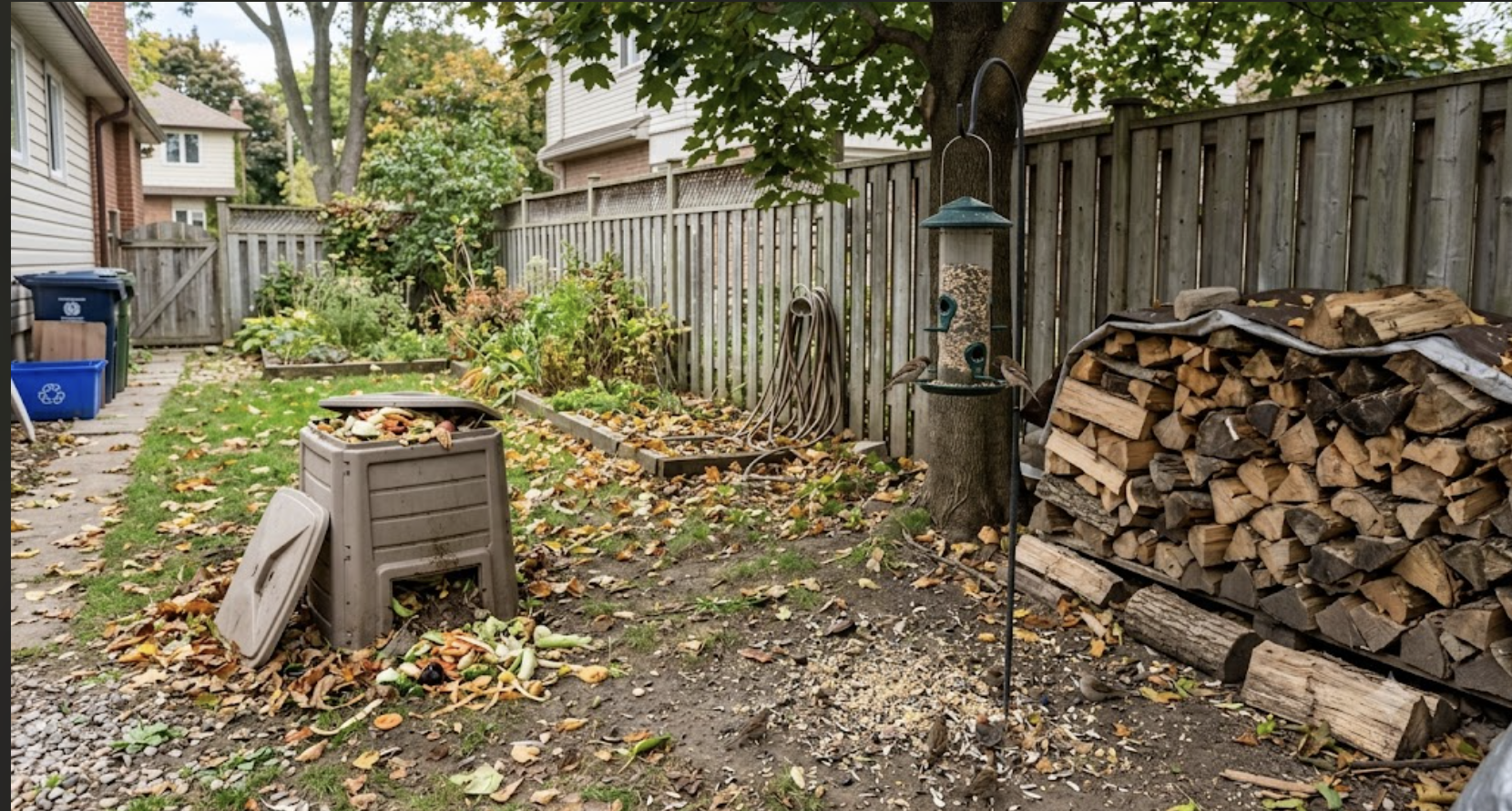
Cambridge has a real rat problem in certain neighbourhoods — older areas near the Grand River, streets with mature trees and lots of gardens, and any property backing onto a ravine, creek, or wooded lot. If you've spotted a rat in the yard, it's not an anomaly. It's a signal.
Here's what's actually attracting rats to your property, why yard activity leads to indoor activity, and what to change now — before they scout their way inside.
The Big Six Rat Attractants
Almost every yard rat problem comes down to one or more of these:
1. Bird feeders. Overwhelmingly the top attractant. Spilled seed on the ground is a rat's ideal food source — high-calorie, easy to gather, constantly replenished. If you feed birds, you're likely feeding rats too.
2. Compost. Especially poorly-managed open compost with food scraps. Meat, dairy, cooked food, and oily items in compost are rat magnets. Even properly managed vegetable compost provides some attraction.
3. Pet food. Bowls left outside, spilled kibble around outdoor feeding areas, and stored bags of dog or cat food in sheds or garages.
4. Garbage. Bins without secure lids, garbage bags left at the curb overnight, and outdoor garbage cans without weight or clamps to keep raccoons and rats out.
5. Fallen fruit or garden produce. Fruit trees with unpicked ground fruit, dropped vegetables in gardens, and overripe items in produce beds.
6. Water sources. Standing water in birdbaths, pet bowls, kid pools, or dripping outdoor taps. Rats need water and will settle where it's reliably available.
The Secondary Attractants
Beyond the big six, these make properties more rat-friendly:
- Wood piles — perfect harbourage
- Overgrown vegetation — cover for daytime movement
- Sheds and outbuildings with gaps — nesting sites
- Compost or garden waste piled loosely at property edges
- Neighbouring properties with major attractants — rats travel 30–100+ meters from home base
- Fruit trees, especially near the house
- Open decks with debris underneath
- Old vehicles or unused equipment parked in yards long-term
Why Yard Activity Means Indoor Risk
Rats in the yard aren't a separate problem from rats in the house — they're the same problem, at an earlier stage. Yard-active rat populations:
- Learn your property's food and water map
- Scout entry points into structures as populations grow
- Move indoors when weather changes — especially in fall
- Establish burrow systems near foundations
- Grow in numbers before you notice
The yard rat you spot in July is often the wall rat you hear in October.
Signs of Yard Rat Activity
Look for:
- Burrows — 2–3 inch dark holes near foundations, under decks, or in garden edges, often with a smooth track leading to them
- Droppings — capsule-shaped, ¾ inch long, dark
- Runways — worn tracks through grass or along fences
- Grease marks on fence posts or foundation edges from repeated travel
- Gnaw damage on wooden fences, siding, or outdoor stored items
- Missing bird seed or pet food overnight
- Nighttime sounds — squeaks, movement in vegetation
If you're seeing any of these, active population is present.
What to Change First
Prioritize by impact:
Immediately:
- Take down bird feeders temporarily
- Secure garbage bins with lids and, if needed, weights
- Bring pet food inside
- Empty and store pool toys, kid pools, wheelbarrows
- Fix dripping outdoor taps
- Pick up fallen fruit daily
This week:
- Move wood piles at least 20 feet from the house, raised off the ground
- Trim vegetation away from foundations and fences
- Clean out compost bin or switch to a fully enclosed rodent-resistant model
- Inspect sheds and outbuildings for gaps; seal what you find
- Cut back long grass and clear debris around foundations
This month:
- Address moisture issues around the yard
- Coordinate with neighbours if their property is contributing
- Consider a professional exterior perimeter treatment
- Book a full property assessment for entry points to the house
Why Yard-Level Prevention Matters
Once rats have established burrows or regular travel patterns on your property, reducing the population takes real work. Preventing them from establishing in the first place — through attractant management — is dramatically cheaper.
For homeowners in high-pressure Cambridge neighbourhoods (near the river, older mature streets, or backing onto ravines), yard-level prevention is often the most impactful pest control decision you can make.
How Summit Handles Rat Problems in Cambridge
For a Cambridge property with yard rat activity, Tateum's approach:
- Property walk — identify current activity, attractants, burrows, and structural entry points
- Attractant guidance — practical, specific recommendations for your property
- Targeted trapping and station placement — professional-grade equipment
- Burrow treatment where present
- Structural exclusion — sealing potential house entry points
- Follow-up visits to confirm results
- Prevention plan where ongoing pressure is high
Most yard rat problems in Cambridge are brought under control within 4–8 weeks with proper treatment and homeowner cooperation.
Frequently Asked Questions
Can I get rid of rats without giving up bird feeding?Sometimes yes with smart feeder choices (mesh, seed catchers, elevated placement), but during active rat problems, taking feeders down entirely for 6–8 weeks is more effective.
Do I need to worry about rats if I only see one?Probably yes. Rats are social animals; solitary sightings often mean established populations that are simply spending most of their time hidden.
Are yard rats dangerous to my dog?Direct encounters are uncommon but possible. The bigger risk is that dogs may eat improperly-placed rodent bait from neighbouring properties. Always use professional locked stations.
How quickly do rat populations grow?Quickly. A pair of rats can produce 40+ offspring in a year under favourable conditions.
Don't Let the Yard Become the Living Room
Yard rats become house rats. Address the attractants and the population now, and you avoid the much harder problem in October.
Summit Pest Control offers rat control across Cambridge, Guelph, KW, and surrounding areas.
Call (226) 780-6446 or request a quick estimate today.