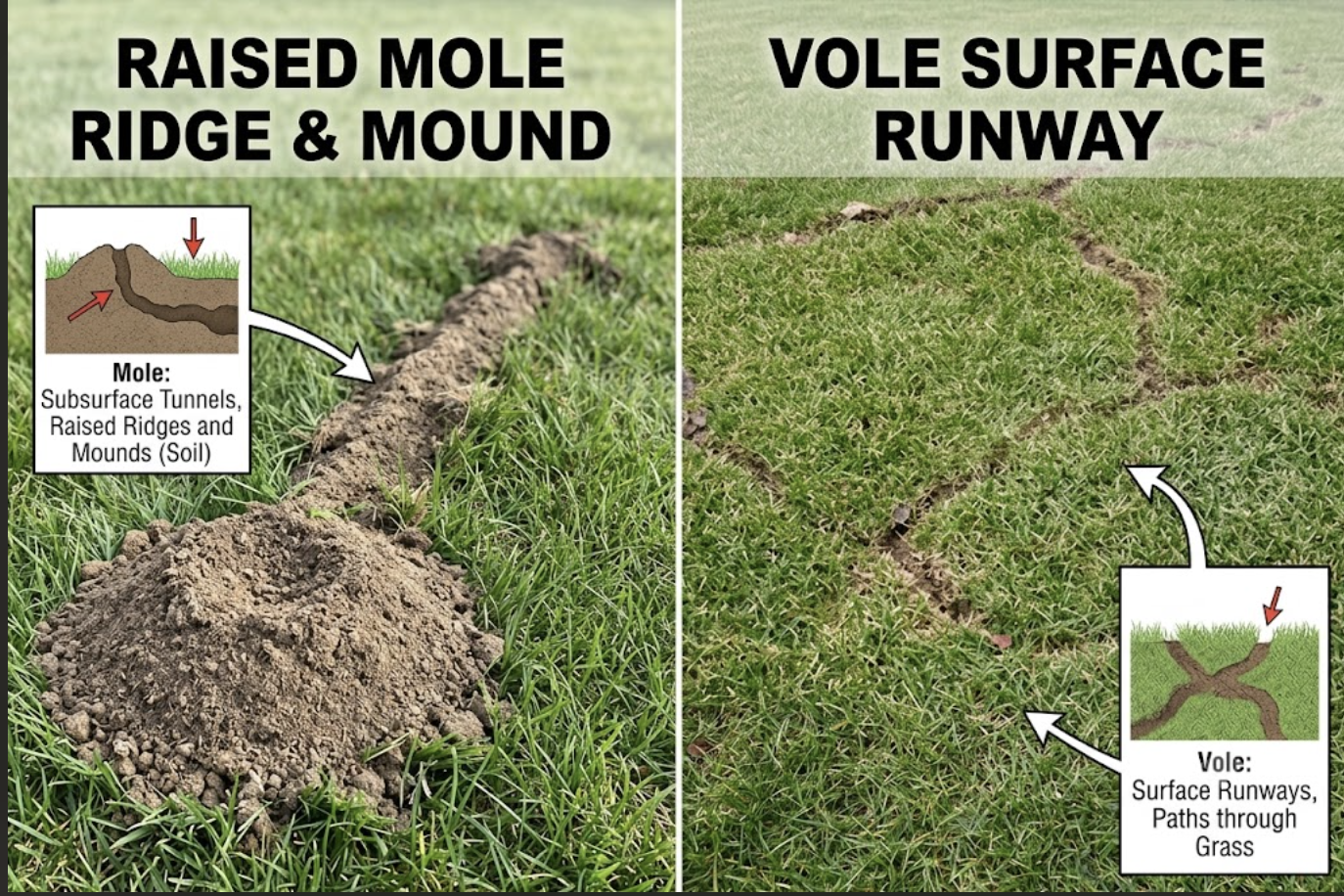
"Something is tunnelling my lawn" is one of the more common yard complaints in Guelph, and it almost always comes down to one of two animals with confusingly similar names. Moles and voles are unrelated, eat different things, cause different damage, and respond to completely different fixes. Treat the wrong one and nothing changes.
Here's how to read the evidence and get the diagnosis right.
Reading the Damage
Mole signs:
Raised ridges snaking across the lawn — the roof of shallow feeding tunnels, spongy underfootVolcano-shaped mounds of fluffy soil (molehills) with no visible entry holeDamage that appears fast — a single mole can tunnel 20 metres in a dayGrass along ridges browning from root disturbance, but not eaten
Vole signs:
Surface runways — narrow (3–5cm) worn paths through the grass, like a maze pressed into the lawn, most visible after snow melt in springSmall open burrow holes (2–3cm) with clean edges, no moundChewed grass — clipped short along runways, sometimes with small droppingsGnawed bark at the base of young trees and shrubs, especially over winter — a girdled fruit tree is classic vole work
Quick version: raised ridges and dirt volcanoes = mole. Surface paths and open holes = vole.
The Animals Themselves
Moles are insect-eaters, not rodents. They live underground almost entirely, and they're after earthworms and grubs — not your plants. They're solitary; the "mole invasion" tearing up a lawn is usually one or two animals. Damage to the lawn is structural (tunnels and mounds), not from feeding on the grass.
Voles are rodents — stocky, mouse-like, active year-round. They eat plants: grass, roots, bulbs, bark, and garden vegetables. They breed fast, live in colonies, and their damage is feeding damage. Winter under snow cover is their peak season, which is why the worst vole damage reveals itself at spring melt.
Why the Difference Changes Everything
For moles, the food supply is worms and grubs. A heavy grub population makes a lawn more attractive (and grub control from our fall digging guide helps somewhat), but earthworms — which you want — are the staple, so you can't remove the food supply entirely. Mole management is about the animal: trapping in active tunnels is the reliable method. To find active tunnels, stamp down a section of ridge; the tunnel that's re-raised within a day or two is in use.
For voles, management looks like rodent control crossed with habitat work:
Cut the cover. Voles need overhead concealment. Mow regularly, especially in fall; clear tall grass at property edges; pull mulch back from tree trunks and keep it under 5–8cm deep.Protect the trees. Hardware cloth cylinders around the base of young trees and shrubs, sunk a few centimetres into the soil and rising above expected snow line, prevent winter girdling.Trap along runways. Standard mouse-style snap traps placed perpendicular to active runways, under cover (a box or roof tile over the trap), baited with peanut butter and apple.Skip the poison. Open-yard rodenticide use risks pets, raptors, and other wildlife. Trapping and habitat management do the job.
Do They Ever Get Into the House?
Moles: no. They have no interest in structures.
Voles: rarely — they're outdoor animals — but they'll happily occupy garages, sheds, and crawl spaces at ground level, and their runways along foundations sometimes reveal gaps that mice will use. Vole activity against the house is a good prompt for a perimeter exclusion check.
Tolerance Is an Option
Honest note: a mole in a large lawn is arguably doing useful work — aerating soil and eating grubs. If the damage is at the property edge and cosmetic, tolerating it is legitimate. The calculus changes when tunnels undermine walkways and garden beds, or when it's the front lawn.
Voles earn less tolerance: their populations grow, and the tree and garden damage compounds.
How Summit Handles Tunnelling Calls
For a mole/vole call in Guelph, Tateum's approach:
Correct identification from the damage pattern — no guessing, no treating the wrong animalMole trapping programs in active tunnels where warrantedVole management — trapping, habitat modification, and tree protectionGrub assessment where grub pressure is amplifying mole activityPerimeter check where vole activity is close to the structure
Frequently Asked Questions
Do those sonic spike repellers work? No reliable evidence for either animal. Moles and voles habituate quickly. Save the money.
What about castor oil treatments for moles? Mixed evidence at best. Some homeowners report temporary displacement; the mole usually relocates within the same property. Trapping remains the dependable method.
Voles or mice — how do I tell in the garage? Voles are stockier with short tails and small ears; mice are slighter with long tails and prominent ears. Runway damage outside points to voles; droppings along interior walls point to mice.
How fast do vole populations grow? Fast — several litters a year. A light spring population can be a heavy fall one, which is why fall habitat cleanup matters.
Diagnose First, Then Act
The lawn will tell you exactly who's under it. Read the ridges and runways, and put the effort where it counts.
Summit Pest Control handles mole and vole management across Guelph, Fergus, Elora, and surrounding areas.
Call (226) 780-6446 or request a quick estimate today.