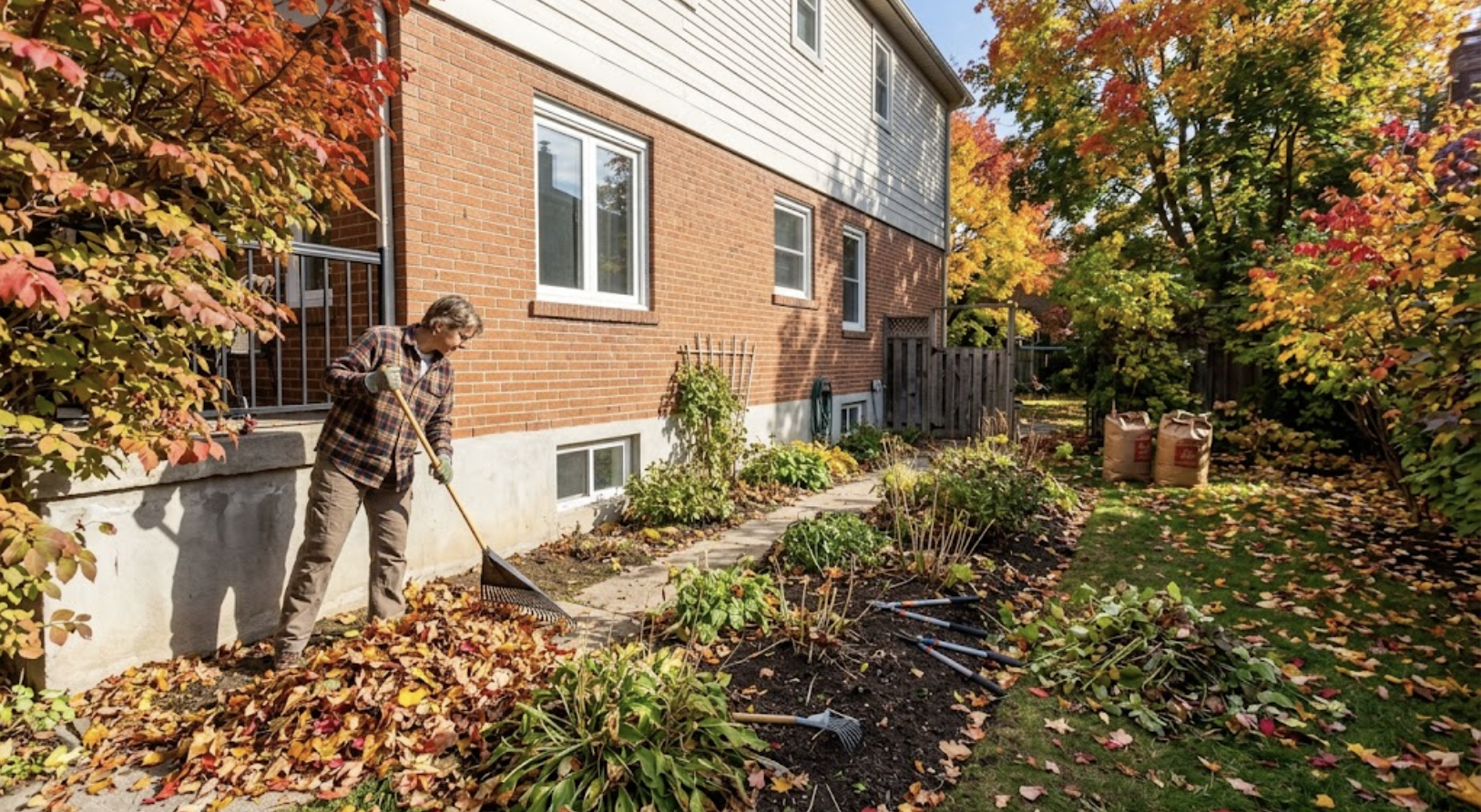
Fall yard cleanup gets done for the lawn's sake, or the neighbours', or just because it's what October is. Here's the reframe this series has been building toward: yard cleanup is the largest pest-control project most homeowners perform all year — they just don't organize it that way.
Every major overwintering strategy from last week's "where pests go in winter" guide depends on the yard you leave behind: the leaf litter, the standing stems, the unmoved pile. This is that cleanup checklist, reorganized by what each job actually prevents.
The Leaf Decision — And the Honest Middle Ground
Leaf litter is the winter habitat headline: it shelters overwintering ticks (insulated under snow, ready for the first thaw), moisture pests, slugs and their eggs, and the wasp queens and beetles of next year — while matting over lawns and feeding the vole runway system.
It's also, honestly, where beneficial insects overwinter too, and "leave the leaves" has real ecological merit. The defensible middle ground, by zone:
Clear completely: the metre against the foundation (the moisture-pest guide's rule), along walkways and play areas, and under fruit trees (harvest-guide logic — dropped fruit and leaf mat together are the rodent draw)Clear from turf: matted leaves kill grass and roof the vole highways; mulch-mow light coverage instead where you canLeave deliberately: back-corner beds and naturalized edges away from the house — habitat where habitat costs you nothing
The tick line specifically: whatever else you leave, the leaf litter along the lawn-to-woods transition and the shady margins your family and dogs actually use is where tick management happens with a rake.
Cut, Clear, and Cap — The Rest of the Checklist
The final mow, slightly short. The last cut of the season goes a notch lower: short grass through freeze-up denies voles their runway cover (the mole/vole guide's core move) and removes tick questing height at the margins.Garden teardown, done fully. Spent vegetable plants, collapsed annuals, and fallen produce out to compost — standing dead garden is squash-bug, earwig, and slug overwintering structure, and the last unpicked tomatoes run the harvest-guide ferment cycle in miniature. Perennials can stay standing for winter interest away from the house; the vegetable beds get cleared.Tree guards on, mulch pulled back. The vole-girdling protection from the ID guides: hardware-cloth cylinders on young trees before snow, mulch donuts pulled off the trunks — five minutes per tree against a killed orchard.The pile audit. Walk the property for every casual pile — the brush from summer pruning, the lumber offcuts, the bagged leaves that never left. Each is a winter shelter unit (rodents, and next year's queens); chip, burn where permitted, or move to the one designated distant pile. The firewood rules (raised, covered, 20+ feet out) get re-checked while you're at it.Gutters and drainage, one more time. Cleared gutters and extended downspouts close the mosquito's last standing-water niches and dry the foundation strip for winter — the same water discipline the whole summer ran on, buttoned up.Structures, swept and shut. Shed and gazebo corners swept of webs and egg sacs (the orb-weaver guide's fall to-do), fence-line vegetation cut back, and the deck perimeter cleared underneath — closing the season's structural shelters.Feeders and the winter food question. Bird feeding through winter is legitimate — but per the feeder guides, it restarts on winter rules: spill-managed, distant from the house, and paused instantly at any sign of rodent interest. The fall rodent-scouting weeks are the wrong time for a seed carpet at the foundation.
What This Buys You, Season by Season
The payoff schedule, plainly: fewer overwintering queens and beetles means a lighter spring wasp and invader start; no vole cover means intact turf and un-girdled trees at melt; cleared tick margins mean a safer first warm weekend; a dry, bare foundation strip means the moisture-pest migrations and rodent scouting both find less; and the exclusion work from this month's project holds better with the habitat pulled back from the wall. One weekend of raking, cast as what it is: the year's biggest single act of prevention.
Frequently Asked Questions
Is burning leaves a pest-control win? Where permitted at all, it's an air-quality loss for a marginal pest gain — removal or targeted composting achieves the same habitat result. Check Guelph and township bylaws before striking anything.
Does a tidy yard actually reduce ticks, or is that oversold? For the margins people use, it's real: ticks need humid litter and questing vegetation, and clearing both from the transition zones measurably cuts encounters. The deep woods beyond your line are unchanged — personal checks stay in force.
When exactly should the tree guards go on? Before consistent snow cover — late October to November around Guelph. Under-snow is where voles do the girdling, unseen until spring.
Can cleanup wait until spring? Spring cleanup serves the garden; fall cleanup serves prevention — the habitat does its damage over winter. Do the foundation strip, the guards, and the pile audit in fall even if the rest waits.
Rake Like You Know What It's For
The yard you leave in November is the pest season you get in April. Clear the strips that matter, cap the trees, audit the piles — and let the back corner stay wild on purpose.
Summit Pest Control offers fall property assessments and prevention programs across Guelph, Fergus, Elora, and surrounding areas.
Call (226) 780-6446 or request a quick estimate today.