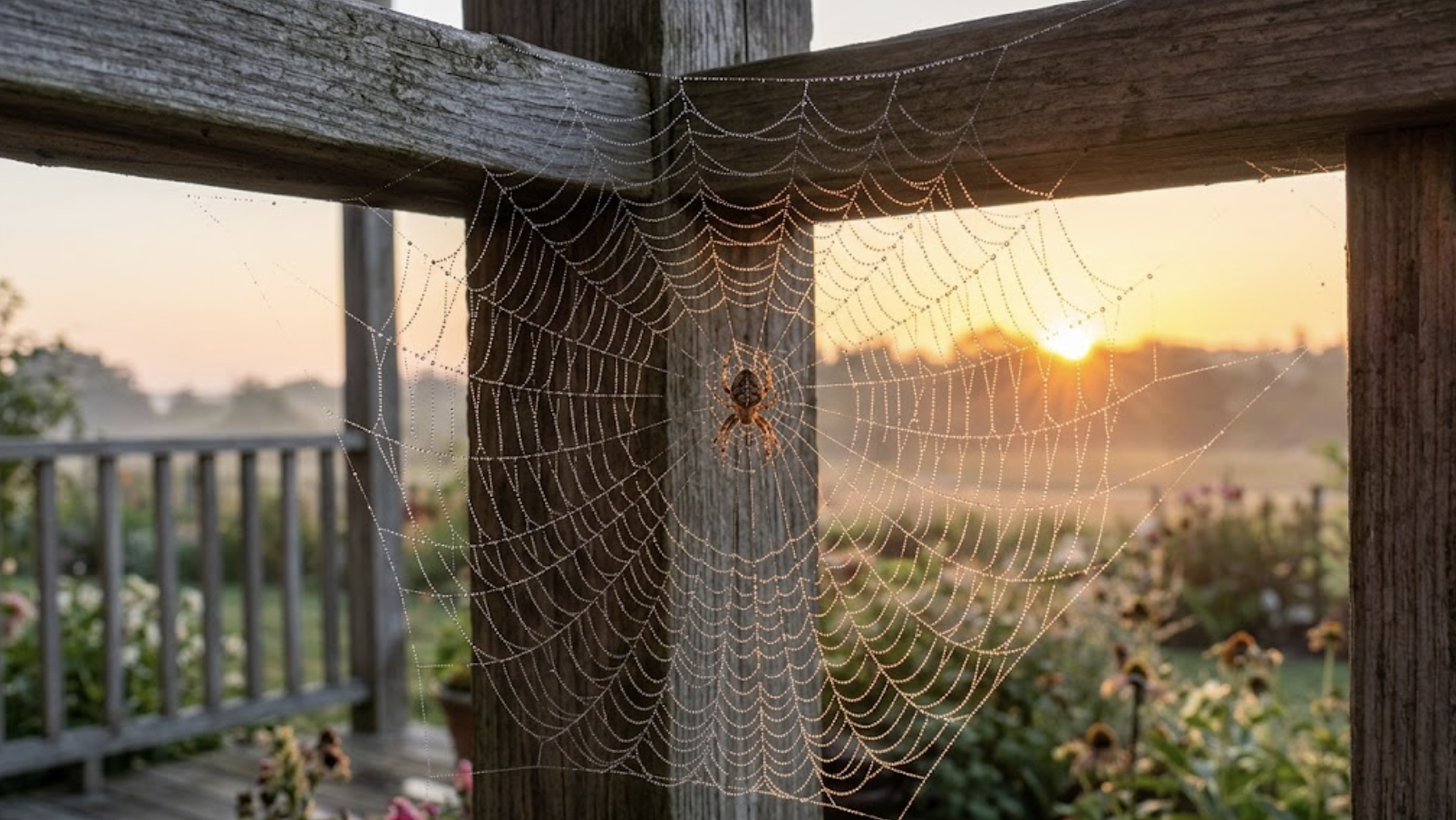
It happens every September like a switch flipped: you walk out the front door into a web the size of a bicycle wheel, anchored porch-post to railing, with a spider at the centre notably bigger than anything you remember from July. By the weekend there are three more — across the garden path, on the shed, spanning the gap between the hedge and the eavestrough.
Meet the orb weavers, the seasonal stars of Ontario spider life. Here's what's actually happening, why it happens now, and the honest answer on what — if anything — to do about them.
What You're Looking At
Orb weavers are the classic-web spiders — the wheel-shaped, spiralled, storybook web is theirs. Around Guelph, the September regulars:
Cross orbweaver (garden spider). The most common porch resident: 10–20mm body, brown-orange, with a distinctive white cross pattern of spots on the abdomen. A European import long established here.Yellow garden spider (black and yellow argiope). The showstopper — large (females to 25mm+ body), striking black-and-yellow, sitting head-down in a big web with a bold zigzag ribbon of silk (the stabilimentum) down the middle. Gardens, meadows, tall plantings.Banded argiope and various smaller orb species. Same family, same habits.
The size is real, the look is dramatic — and the threat is close to zero, which is the part of this post that matters.
Why September
The spiders aren't arriving — they've been in your yard all summer. Three things converge in early fall:
They're finally full-grown. Orb weavers hatch in spring tiny and grow all season; the September giants are the same spiders you didn't notice in June, at their maximum size — mostly the females.It's mating and egg season. Mature females build their biggest, most productive webs to fuel egg production; males wander (and show up in odd places doing it).The webs got obvious. Bigger webs, heavier dew, lower sun angles — September mornings light every web on the property like a display case.
Then the frost comes, and the entire cast dies. Orb weavers are annuals: almost none survive an Ontario winter. What persists is the egg sac — a papery silk ball tucked into an eave, shrub, or siding gap, holding next spring's hundreds.
The Honest Risk Assessment
Bites: functionally a non-issue. Orb weavers are docile, poor at biting through human skin, and interested exclusively in staying on the web. Bites require essentially grabbing one, and rate below a bee sting when they happen at all. They are not medically significant spiders.The webs: the actual "problem," and it's a walking-into-them-at-6am problem, not a safety one.The benefit: enormous and underrated. A single large orb web takes dozens of flying insects a night — mosquitoes, flies, moths, wasps, the whole roster of things this blog spends the summer fighting. A porch orb weaver is running a free interception program at exactly the height wasps and mosquitoes travel. In pest control terms, they're on staff.
What to Do (Ranked by Reasonableness)
Nothing. Legitimately the right call for webs in gardens, on sheds, along fences, and anywhere you're not physically walking. Enjoy the September show; frost handles the offboarding in a few weeks.Relocate the geometry, not the spider. For a web across a doorway or path: take the web down with a broom in the evening. The spider rebuilds — often, after a couple of removals, somewhere less contested, since rebuilding nightly in a losing location is expensive. This usually resolves the doorway conflict within a few evenings, no spider harmed.Physically relocate the spider. Cup-and-cardboard to a garden shrub works fine if you'd rather redirect than negotiate. She'll build where released.Manage the attraction. Webs concentrate where flying insects concentrate — which is porch lights. The same warm/yellow LED swap from our cricket and fall-invader guides reduces the insect traffic that makes your doorway premium web real estate.Treat, in the rare case it's warranted. Heavy structural spider pressure (webbing rebuilt across every eave and window nightly, egg sacs accumulating on the building) folds into a standard exterior perimeter service. That's about the building-adjacent population generally — a single porch orb weaver never justifies it.
The Egg Sac Question
Fall's practical to-do: if you'd rather not host next year's hatch against the house, remove egg sacs found on the building during fall cleanup — the papery balls in eave corners, shutter backs, and siding gaps. Sacs in the garden and hedge are next year's free pest control; leave those.
What Orb Weavers Are Telling You
One diagnostic note in the spirit of our indicator-pest guides: an unusually dense population of large webs on the structure itself means the building is producing or attracting heavy flying-insect traffic — lighting, standing water nearby, or (occasionally) something like a drain fly or cluster fly source. The spiders are the symptom reading. A quick look at what they're catching tells you what's actually in the air.
Frequently Asked Questions
Is the big yellow-and-black one dangerous? No — the yellow garden spider is dramatic and harmless. The zigzag in the web is silk decoration, not a warning.
Why does the web disappear and reappear daily? Orb weavers eat and rebuild their webs — often nightly. The morning masterpiece is genuinely new construction, which is also why evening broom-downs are low-cost to you and instructive to the spider.
Will they come inside when it gets cold? Essentially no. Orb weavers are outdoor annuals; they die at frost rather than migrating in. The fall indoor spider influx is other species (see the basement spider guide).
Can I move the spider without touching it? Take a stick, touch it to the web edge, and she'll usually climb on for transport — the gardener's taxi method. Or the cup. She's more scared of the operation than you are.
The September Show Runs Six Weeks
The webs are temporary, the spiders are allies, and the frost is coming. Move the doorway webs, swap the porch bulb, and let the rest of the display run.
Summit Pest Control handles spider and perimeter assessments across Guelph, Cambridge, KW, and surrounding areas.
Call (226) 780-6446 or request a quick estimate today.