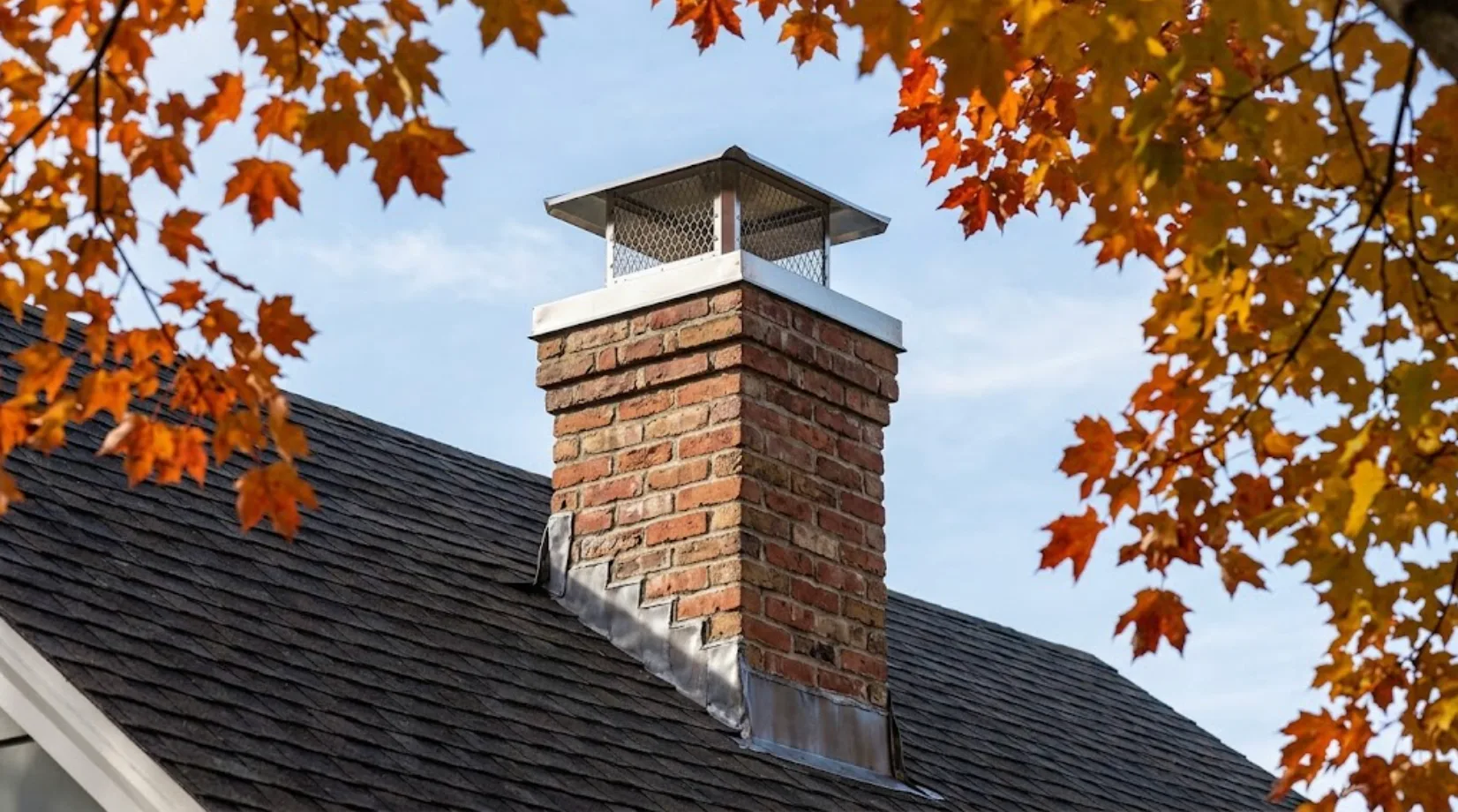
The exclusion project sealed gaps measured in millimetres. Meanwhile, on the roof, many Guelph homes carry an opening measured in tens of centimetres — uncapped, vertical, sheltered, and connected directly to the living room. The chimney is the single largest potential entry on most houses, and first-fire season is when its summer tenants get discovered the hard way.
Before anyone strikes a match this month, here's the chimney's pest profile and the checks that keep fire season uneventful.
What Moves Into Chimneys
Birds. The headline tenant. Chimney swifts famously nest in flues (and are protected — active nests can't be removed; they're also gone south by now, which is part of why fall is the work window). Starlings and sparrows nest on smoke shelves and in flue offsets; a spring of cheeping from the fireplace is this. Fall concern: abandoned nest material — a dense, dry, resinous bundle sitting in your flue, which is to say kindling installed above your fire.Raccoons. A flue is a hollow tree to a raccoon, and uncapped masonry chimneys are documented maternity dens — the smoke shelf is practically purpose-built. The sounds post's chittering-and-heavy-movement profile, heard from the fireplace, is this scenario. Spring brings the cubs complication; fall adults are evictable on the deck-denning playbook (patience, harassment, confirmation) — never by smoke, which is both cruel and a documented way to kill animals you can't see and ignite material you didn't know was there.Squirrels. Enter, sometimes can't climb back out of slick flue liners, and become either frantic fireplace visitors (open the damper and they end up in the living room — a memorable afternoon) or casualties that become odour problems. The squirrel guide's roofline vigilance includes the stack.Bats. Unused flues are roost habitat — the bat guide's rules apply fully, including the timing windows and the never-seal-them-in imperative.Insects. Paper wasp nests under rain caps and in damper voids; cluster fly and lady beetle aggregation in the masonry's sun-warmed south face and the flue's upper reaches; and the overwintering queens the fall series tracks, for whom a chimney crevice is a natural cliff-face substitute.
The Cap — The Whole Game in One Purchase
Nearly everything above is prevented by one piece of hardware: a proper chimney cap with integrated mesh (spark arrestor screening, roughly 1–2cm openings — small enough for birds and mammals, open enough for draft). If the house has no cap, or a bent relic with torn mesh, that purchase-and-install is the single best exclusion dollar on the property — the roofline equivalent of the door sweep, scaled up.
The fall check (binoculars from the ground do it): cap present, mesh intact, nothing visibly packed against it from below. Damaged or missing means this month — after confirmation nothing's currently resident, which is the next section. The furnace and water-heater flues get the same glance: their vent terminations need intact screening too, per manufacturer spec (improvised stuffing on combustion vents remains forbidden — the furnace post's rule).
The First-Fire Protocol
Before the season's first fire, five minutes at the hearth:
Open the damper and listen — rustling, chittering, or buzzing means stop; occupied flues get resolved before fire, full stopFlashlight up past the damper — looking for nest material, debris rain, or daylight where daylight shouldn't beThe smell test — musty (nests, moisture), ammonia (occupancy), or dead-animal notes all mean investigation firstThe smoke test — light a twist of newspaper and watch: smoke drawing briskly up means clear draft; smoke curling into the room means blockage (nest, debris, or cap packed solid) and no fires until it's clearedWhen in doubt, the WETT sweep — a certified chimney sweep's inspection handles the creosote question (its own fire risk) and the blockage question in one visit; fall-cleaning season exists for a reason, and any pest history in the flue makes it non-optional
Occupied Flue? The Response Tiers
Animal heard or seen in the flue now: damper stays closed (the living-room-squirrel prevention), the deck-denning harassment kit adapts upward (light and sound at the hearth; the flue amplifies both), and confirmation before any fire. A squirrel genuinely trapped (scrabbling, exhausted) is a wildlife-operator call — they lower escape media or retrieve; it's quick, standard work.Nest material, no animal: removal from below by a sweep (the right tool set for full-flue extraction) — not burned out, ever. Burning a nest is igniting an unknown quantity of resinous material inside your house with results you don't control.Bats: their guide's rules, timing windows and all. Fall is often the right season; the one-way protocols apply at roofline.Then the cap. Every eviction ends the same way every exclusion story in this series ends: the opening closes, permanently, same week.
The Unused-Chimney Clause
Decommissioned fireplaces and unused flues don't opt out — an unused chimney is habitat with even less disturbance. Cap it (or have it properly sealed with venting appropriate to the flue's needs — masonry wants some airflow), check the damper seals, and include it in the fall walk-around. Several of the archive's "mystery wall sounds" stories end at an unused flue nobody thought about.
Frequently Asked Questions
Smoke came into the room on our first fire — pest blockage? Possibly nest material, possibly cap screening packed with debris, possibly creosote or a damper issue — the diagnosis order is: out the fire, damper closed, sweep inspection before the next attempt. Don't keep testing with fire.
Can I install a cap myself? Single-storey, walkable roof, standard flue — it's a reasonable DIY with the right cap model. Steep, tall, or masonry-crown complications — the sweep or roofer installs it in minutes with the right anchoring. Either way, this month.
Something died in the chimney and the smell is in the room. The flue's vertical void concentrates it — retrieval from the smoke shelf (reachable past the damper with gloves and resolve, or the sweep's job with tools) beats waiting it out, because flue carcasses take months and warm-air season amplifies. The cleanup protocols apply.
Do gas fireplaces have any of these issues? Fewer but not zero — their venting terminates outside with screening that fails like any screening, and birds do enter B-vents. The cap-and-screen check covers gas terminations in the same pass.
Cap It Before You Light It
The chimney is either the biggest hole in your exclusion work or a sealed, swept, screened system — and the difference is one inspection and one piece of hardware. Sort it this month; then enjoy fire season the boring way.
Summit Pest Control handles roofline exclusion and works alongside WETT-certified sweeps across Guelph, Cambridge, KW, and surrounding areas.
Call (226) 780-6446 or request a quick estimate today.