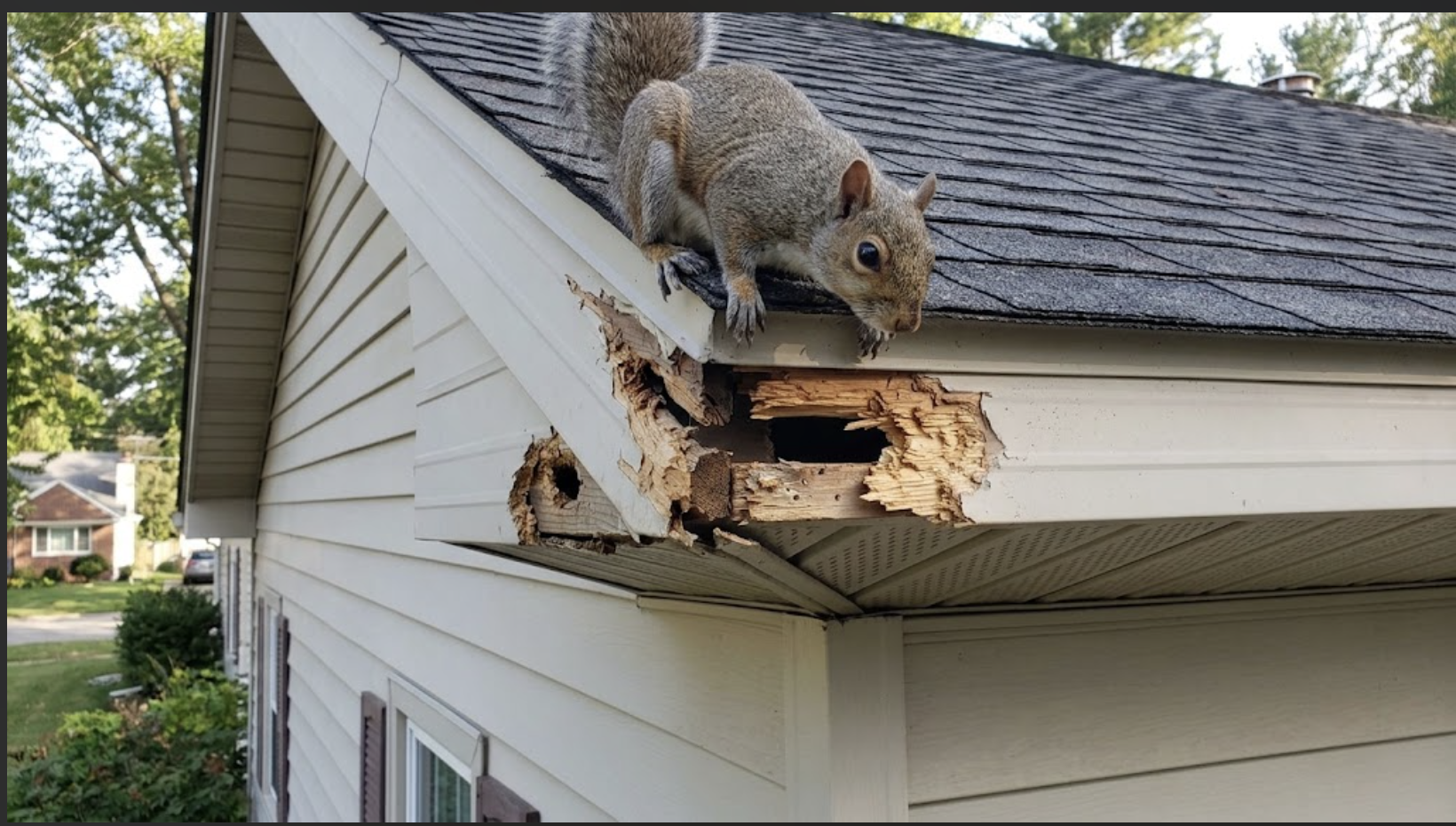
The sounds are the giveaway. Mice scratch lightly at night. What you're hearing is louder — running, rolling, thumping — and it happens in daylight, especially early morning and late afternoon. That's not a mouse. That's a squirrel, and around Guelph's mature-tree neighbourhoods, squirrels in attics are one of the most common fall wildlife calls there is.
Squirrels are also a different category of problem than anything else in this blog series. Here's how to confirm what you have, what the animal is actually doing up there, and the right way to get it out.
Confirming It's Squirrels
Three checks separate squirrels from the other attic candidates:
Timing. Squirrels are diurnal — active at dawn, morning, and late afternoon, quiet overnight. Mice and bats run the night shift. Daytime noise strongly suggests squirrels.Volume and character. Squirrels are heavy enough to hear properly: running the length of the attic, rolling nuts, gnawing loudly. Mice sound like faint scratching; bats sound like soft chittering and rustling at dusk.Exterior evidence. Walk the roofline with binoculars. Squirrels need a bigger opening than mice — look for chewed fascia corners, gnawed soffit vents, damaged gable vents, and gaps at the roof-soffit intersection, often with visible chew marks and staining. Watch at dawn: you'll frequently see the animal come and go.
Our sound-identification guide later this week goes deeper, but daytime + loud + roofline damage is squirrel until proven otherwise.
Why They're Up There
Fall is the peak season for a reason. Squirrels are caching food and securing winter shelter, and a warm, dry, undisturbed attic beats any tree cavity. Females also raise litters in attics — typically in late winter/early spring and again in late summer — which matters enormously for how removal has to be done.
The Damage Question
Squirrels do more damage faster than mice:
Chewed wiring — same fire-risk concern as rats, at larger scaleTorn and compressed insulation used for nestingChewed structural wood, fascia, and vents — and they keep enlarging their entry holesStored item destruction and contaminationCached food (nuts, cones) that attracts other pests later
A squirrel that's been resident for a season can leave a four-figure repair bill in insulation and wiring alone. Speed matters.
What NOT to Do
Don't seal the hole while the animal is inside. A sealed-in squirrel chews through anything — including into your living space — or dies in a wall void. If babies are sealed in, the mother will do astonishing structural damage getting back to them.Don't use poison. There is no registered rodenticide for squirrels, poisoning wildlife is illegal, and a poisoned animal dying in your attic or a neighbour's yard creates worse problems than you started with.Don't trap and relocate long-distance yourself. Ontario law restricts wildlife relocation (generally to within 1 km of capture). Long-distance relocation is illegal and usually fatal to the animal — and it doesn't work anyway, because your open entry hole invites the next squirrel.Don't ignore it until spring. Every month of residence is more chewing, and spring adds a litter to the situation.
What Actually Works
Proper squirrel removal is exclusion-based, and it follows a sequence:
Full inspection — every entry point found, not just the obvious one. Squirrels commonly have a main door and a backup.Litter check — if flightless young are present, the timeline adjusts. Humane removal means the family leaves together, either by waiting a short window or by a professional warming/repositioning technique that gets the mother to move the young herself.One-way door installation — the squirrel exits normally and can't re-enter. This is the humane, legal, effective core of the job.Confirmation — activity monitored until the attic is verified empty.Permanent sealing — every entry and potential entry sealed with materials squirrels can't chew through: heavy-gauge screening, metal flashing, proper vent covers. Wood filler and foam are not squirrel-proof. Nothing is sealed until the attic is confirmed empty.Damage assessment — insulation, wiring, and contamination reviewed so you know what's needed.
Who Handles What
Straight answer, same as our bat guide: squirrel eviction is licensed wildlife control work, and it's a specialization. Summit's lane is everything around it:
Identification — confirming squirrels vs. mice, rats, bats, or wasps before anyone pays for the wrong serviceReferral to trusted wildlife operators who do humane, legal exclusion properlyThe adjacent work — the rodent exclusion and sealing that the same roofline gaps demand, because squirrel holes become mouse highways after the squirrel is gonePost-removal prevention — trimming-adjacent advice, vent screening, and the perimeter program that keeps the attic quiet
We'd rather route you correctly on day one than sell you the wrong job.
Prevention for Squirrel-Heavy Neighbourhoods
If you're in one of Guelph's older, tree-lined areas, the pressure is permanent. The measures that matter:
Trim branches back 2–3 metres from the roofline — the primary highwayScreen all roof vents, gable vents, and chimney with heavy-gauge materialMaintain fascia and soffits — soft, rotting wood is an open invitationManage bird feeders — a feeder-fed squirrel population is a larger squirrel population testing your roofAct on the first sounds — day one is a one-week job; month three is a renovation
Frequently Asked Questions
How do squirrels even get onto my roof? Branches, fences, wires, and by climbing brick or siding corners directly. They're exceptional climbers — trimming helps but sealing is the real answer.
Red squirrels or grey squirrels — does it matter? Both enter attics around Guelph. Red squirrels are smaller, louder, and often more destructive gram-for-gram; greys are more common. The removal approach is the same.
Will a radio or lights drive them out? Occasionally helpful as harassment during a professional eviction, rarely sufficient alone — a warm attic with a nest beats an annoying one.
How much does squirrel removal cost? Wildlife exclusion jobs around Guelph typically run $400–$900+ depending on entry points and access, plus any repair work. Quotes come after inspection — sight-unseen numbers aren't real.
Daytime Noise Is a Deadline
Squirrel problems are speed-sensitive: the damage compounds, and litter season complicates everything. Confirm it, call the right specialist, and seal it properly — once.
Summit Pest Control offers attic assessments, honest identification, and exclusion-adjacent work across Guelph, Fergus, Elora, and surrounding areas.
Call (226) 780-6446 or request a quick estimate today.