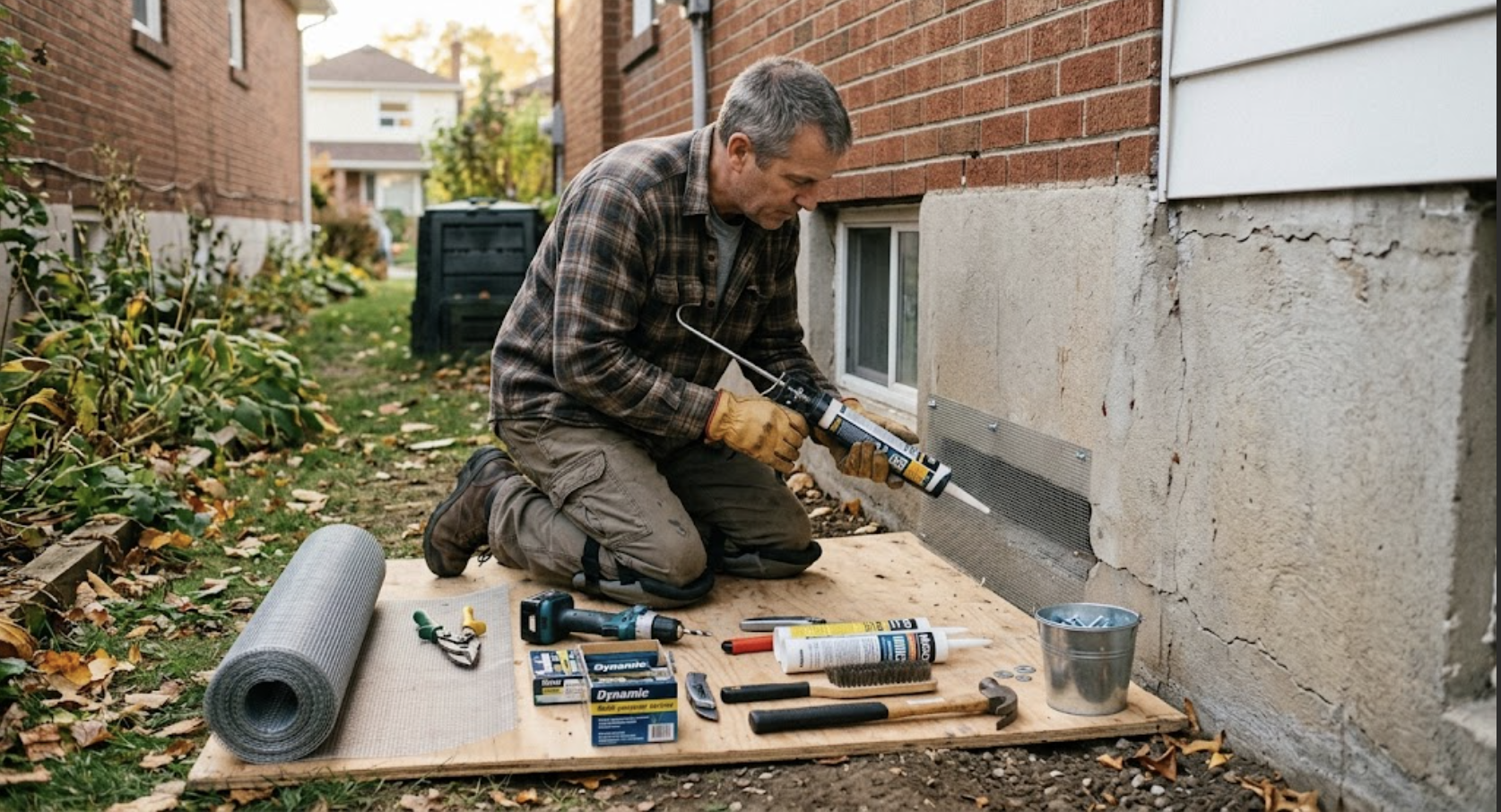
If you've read this blog through the fall run-up, you've noticed every guide converging on the same instruction: seal the entry points. Mice, crickets, boxelder bugs, lady beetles, cluster flies, wasand moisture pests — different pests, same doorways.
This post is that instruction, expanded into an actual project: one focused weekend, a manageable materials list, a room-by-room route, and an honest line between what's DIY and what's worth paying for. Done in early September, it's the single highest-return weekend of home maintenance on the calendar.
The Materials List
One hardware store trip, roughly $100–$200 covers a typical house:
Exterior-grade sealant/caulk (several tubes) and a caulk gun — polyurethane or high-quality silicone for exterior jointsSteel wool or (better) copper mesh — the chew-proof stuffing for gaps before sealing; copper doesn't rust-stainHardware cloth, 6mm (1/4") galvanized — the vent-and-opening screen that stops miceExpanding foam, one can — gap filler only ever used WITH mesh, never alone (mice chew bare foam like bread)Door sweeps for exterior doors, and a garage door bottom seal/corner pads if yours is wornMetal flashing or sheet metal scraps for chewed cornersSnips, gloves, flashlight, mirror-on-a-stick or phone camera, and a ladder you trust
The Rule That Governs Everything
Every gap gets the right fill for its size and type:
Small cracks and joints: sealant aloneAnything a pencil fits through (6mm — the mouse standard): mesh or steel/copper wool packed in, sealant overVents and openings that must breathe: hardware cloth screened over, never sealed shut — dryer vents, weep vents, soffit vents, attic vents all need airflowChewed or rotted spots: metal over the repair, because whatever chewed it once will test it again
And the one absolute: never seal an active animal inside. Buzzing, scratching, droppings, or a greasy rub-marked hole means occupancy — that's a treat-first-seal-after situation (our wall nest and sound ID guides cover the calls). Sealing is for empty doorways.
Day One — The Exterior Circuit
Work the perimeter clockwise, ground level first, then up. The route:
Foundation line. Walk it slowly with the flashlight. Fill cracks; mesh-and-seal any gap at the siding-foundation transition. Pull back mulch and vegetation as you go (the moisture pest guide's metre rule).Utility entries — the greatest hits. Gas line, AC lines, water, electrical, cable/internet, dryer vent. Nearly every house has daylight around at least two of these. Mesh packed, sealed over; hardware cloth cover for the dryer vent (check the flap works — don't block it).Hose bibs and exterior outlets. Gaps behind the fixtures — seal.Basement windows and window wells. Seal frame gaps, repair screens, clear wells of leaves (and screen the wells if they collect debris and moisture pests).Doors. Daylight test under every exterior door — daylight means a sweep. Garage door: replace a cracked bottom seal and pad the corners, the classic mouse door.Weep vents in brick. Screen with purpose-made weep covers or mesh — never seal (they drain the wall).Siding seams and trim joints. Seal the gaps, especially on the sunny sides the fall invaders mass on.
Day Two — Up High and Inside
Roofline (from the ladder, within your comfort — this is the section with a pro line). Soffit corners and the soffit-roof intersections, gable vents (screen with hardware cloth from behind if accessible), fascia gaps, and around the chimney. Cap the chimney with a proper rodent/animal cap if it isn't — one purchase, permanent payoff.Attic spot-check. From the hatch with a flashlight: daylight points = entry points; note their exterior locations for sealing. Droppings up here re-route you to treatment first.Interior utility penetrations. Under every sink where pipes meet the wall, around the furnace lines, the electrical panel entry, laundry connections — mesh and seal. These interior gaps are the highways between wall voids and living space.The garage-to-house door. Weatherstrip and sweep it like an exterior door, because functionally it is one — the garage pest guide's core lesson.
The Honest Pro Line
A weekend and a keen eye typically finds and fixes 60–70% of a house's entry points — genuinely worth doing. The remainder is why professional exclusion exists:
The findable gap problem: pros find 10–20 entry points on houses where owners found 4 — trained eyes on rooflines, behind fixtures, and at construction jointsThe access problem: two-storey rooflines, tight crawl spaces, and soffit work beyond safe ladder rangeThe materials problem: some repairs need fabricated flashing or proper vent hardwareThe occupancy problem: anything already living in the structure changes the sequence
The efficient combination for many homes: do the weekend project, then book a professional audit that catches the remainder and handles the high work. You've cut the pro's list — and the bill — substantially, and the house ends up actually sealed.
Frequently Asked Questions
Is September really the deadline? October works too — but the rodent scouting our late-summer guides describe is happening now, and every sealed week counts. After mid-November, exterior sealant application gets weather-limited.
Will expanding foam alone stop mice? No — they chew through it easily. Foam is a backer and gap-filler behind mesh, never the barrier itself.
How long does good exclusion work last? Properly installed mesh, hardware cloth, and metal repairs last the life of the house. Sealant joints get a walk-around check each fall — a ten-minute annual habit.
What's a professional exclusion audit cost? Around Guelph, typically $400–$1,200 for the audit-and-seal depending on findings and access — details in our fall rodent prep guide. Doing the weekend project first genuinely reduces it.
One Weekend, Quiet Winter
Every guide this fall pointed here. Two days, two hundred dollars, and the house stops being the easy option on the street — for mice, for the fall invaders, for everything.
Summit Pest Control offers exclusion audits and sealing work across Guelph, Cambridge, KW, and surrounding areas.
Call (226) 780-6446 or request a quick estimate today.