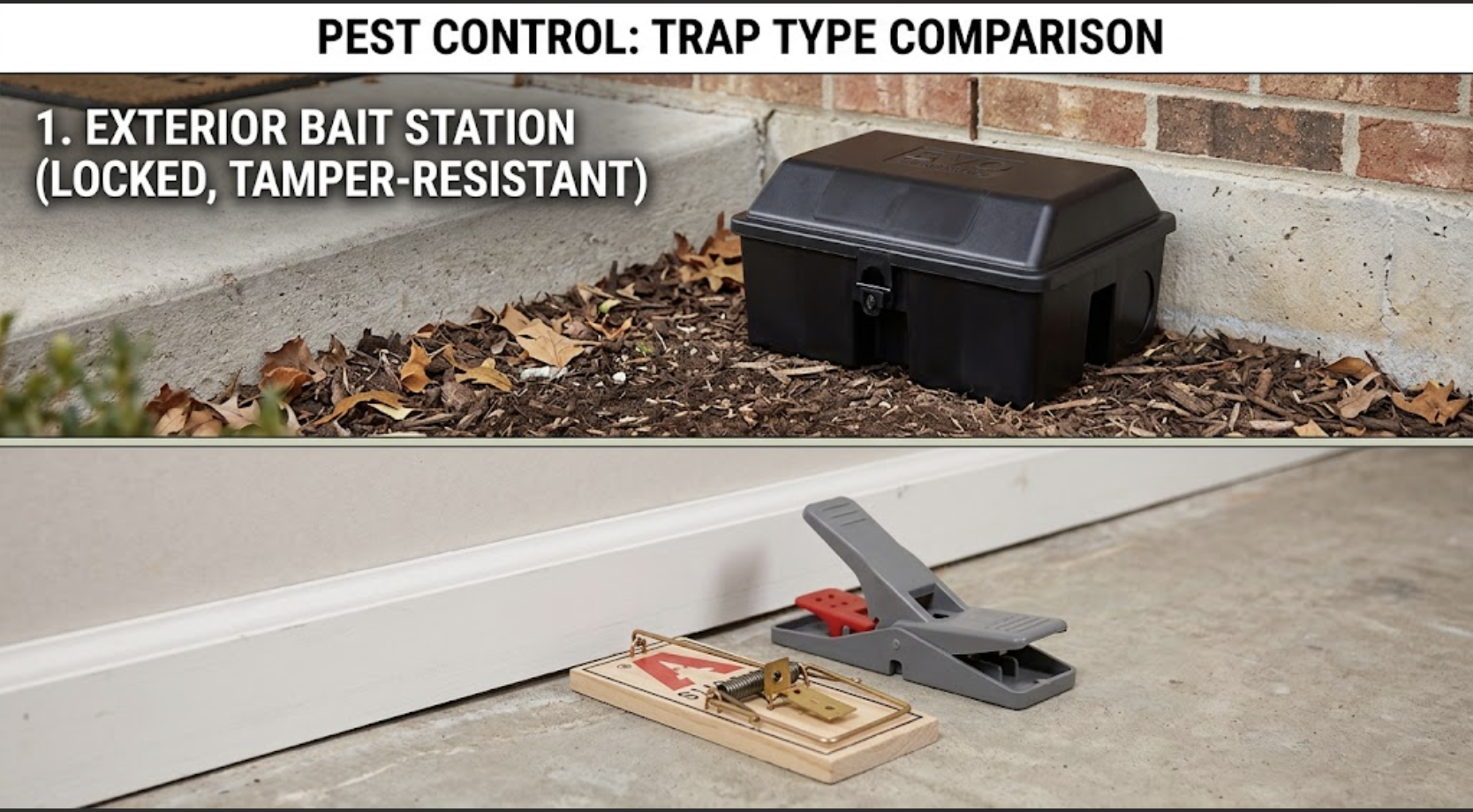
Stand in the rodent-control aisle and you're offered snap traps in four styles, glue boards, electronic zappers, live-catch tubes, bait blocks, and enclosed stations — with no guidance on which does what. Meanwhile, every professional truck carries a specific, fairly small toolkit deployed by consistent rules.
Peak rodent season is the right time to publish those rules. Here's the honest tool-by-tool breakdown, and the logic pros use to combine them.
Snap Traps — The Interior Workhorse
What they are: the spring-bar classic, plus modern plastic-jaw versions (easier to set and clean, similar performance).
What they're for: killing the rodents already inside, and telling you exactly where activity is. A snapped trap is a data point — species, location, direction of travel.
The rules that make them work (where most DIY fails):
Placement over everything. Perpendicular to walls, trigger-end to the baseboard, in the runways — behind appliances, along basement walls, inside cabinet kick spaces. Mice travel edges; a trap in open floor catches nothing.Numbers. The classic mistake is two traps for a real problem. Pros set a dozen or more in a serious situation — first-night saturation beats weeks of attrition, because mice learn.Bait small and sticky. A smear of peanut butter the size of a pea — not a lump they can lift. (The cheese thing remains a cartoon myth, per the DIY-traps guide.)Pre-baiting for the wary. Rats especially (neophobia — see the rat guides): unset baited traps for several days, then set them all. Patience converts suspicion into catches.Kids and pets change placement, not tools. Inside cabinets, behind appliances, in station boxes — snap traps stay usable in family homes with placement discipline.
Honest limits: traps kill individuals; they don't stop the supply. The whole fall series' refrain applies — trapping without sealing is a subscription.
Bait Stations — The Perimeter Defence
What they are: locked, tamper-resistant boxes anchoring rodenticide blocks — the black boxes along commercial foundations. The station is a delivery-and-safety system: rodents enter, feed, and leave; children, pets, and wildlife can't reach the bait.
What they're for: intercepting and suppressing the exterior population pressing on the building — the scouts and residents of the yard, before they're in your walls. Exterior, perimeter, ongoing.
Why they're a professional-tier tool, honestly stated:
The products matter and are regulated. Effective rodenticides are increasingly restricted from general consumer sale in Canada for good reasons — misuse risks. Professional deployment means licensed products, correct placement, and maintained records.Secondary poisoning is a real issue. Rodenticides in the food chain harm owls, hawks, foxes, and pets — the reason placement, bait choice, and monitoring discipline matter, and the reason loose bait ("just toss blocks in the garage") is never acceptable. The pro standard exists because the careless version does documented harm.Indoors, bait creates the die-in-the-wall problem. The smell scenario from the furnace post. Interior rodent work is trap work precisely so carcasses are removed, not entombed. Bait belongs outside and in specific structural situations, chosen deliberately.Maintenance is the product. A station is a monitored system — consumption tracked, blocks refreshed, activity read like a gauge. An abandoned station is just a weatherproof feeder.
The Rest of the Aisle, Quickly
Glue boards: legitimate as insect and activity monitors (this series uses them constantly for crickets and crawlers); as a rodent-killing tool they're inhumane — a slow death by exhaustion — and pros in good standing use them for rodents rarely and reluctantly, if at all. Snap traps kill in milliseconds; use those.Electronic zap traps: genuinely fine — effective, contained, easy to check. You're paying a premium for tidiness over a $3 snap trap; performance is comparable. No objection.Live-catch traps: see the relocation reality from the squirrel guide — relocated mice overwhelmingly die, and the open entry point invites replacements. The kindness is mostly optics; a well-placed snap trap plus a sealed house is the humane system.Ultrasonic repellers: the natural-remedies guide already ruled — no reliable effect, rapid habituation. The aisle's most consistent waste of money.
How Pros Combine Them — The Actual System
The professional deployment, house by house, is boringly consistent because it works:
Inside: snap traps in the runways, saturated early, checked and cleared — killing and mapping the interior populationOutside: locked stations at the pressure points — foundation lines, outbuildings, fence runs — suppressing the source populationUnderneath both: exclusion. The sealing is the actual solution; the tools manage populations while the building gets closed and hold the line afterOn top: monitoring — station logs and strategic traps as the early-warning system that catches next year's scouts in week one
That's also, transparently, what a Summit rodent program is: that system, deployed and maintained, with the exclusion work the fall series keeps advocating at its centre. Tools without sealing is managed failure; sealing plus tools is a solved problem with a monitoring layer.
Frequently Asked Questions
Why does my bait station have activity but I still see mice inside? Because the station is intercepting outside while an interior population persists — interior trapping plus finding the entry gap is the missing half. Stations alone don't fix indoor problems; that's not their job.
Are the bait blocks dangerous to my dog if the station is locked? The station's engineering makes direct access effectively impossible — that's its purpose. The residual concern is a pet catching a poisoned rodent; professional bait selection and station placement minimize it, and it's a reason DIY loose bait is never acceptable.
How many snap traps do I actually need? More than feels reasonable: a dozen for a genuine house mouse problem, placed in runways, all at once. Two traps is a gesture.
Peanut butter isn't working — now what? Try nesting-material lures (cotton ball, dental floss — fall mice want bedding), relocate to fresher sign, and suspect placement before bait. If catches stall with continuing activity, the population may be rat, not mouse — different traps, different game, see the rat guides.
Right Tool, Right Side of the Wall
Traps inside, stations outside, sealing underneath, monitoring on top. That's the whole professional secret — and every piece of it is in this fall's archive.
Summit Pest Control runs full rodent programs — trapping, stations, exclusion, monitoring — across Guelph, Cambridge, KW, and surrounding areas.
Call (226) 780-6446 or request a quick estimate today.