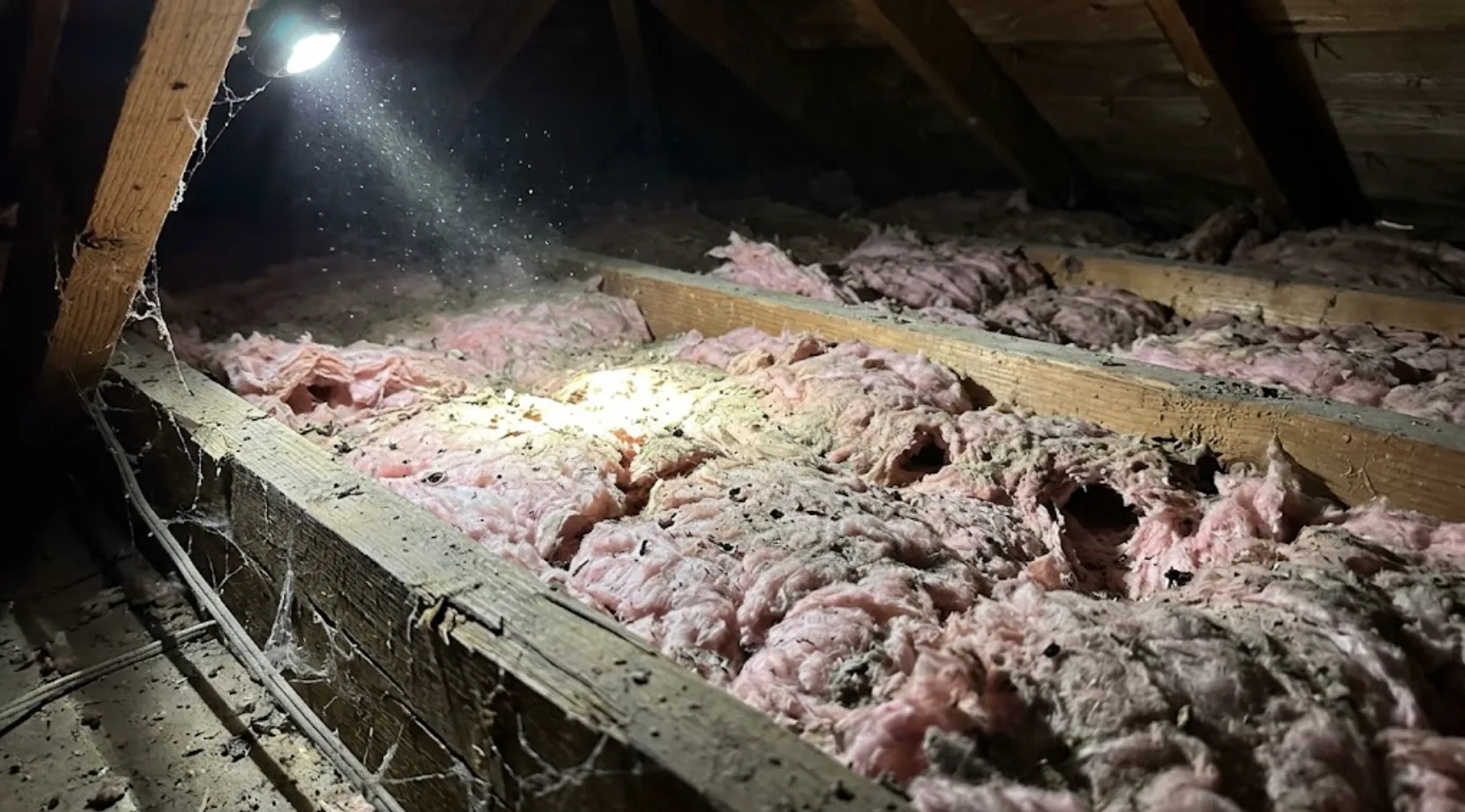
Nobody looks at their attic insulation until something makes them — a squirrel eviction, a mouse program, the energy audit, or this month's heating bills. And when they finally do look, the insulation tells the house's whole pest history: the tunnels of the mouse years, the compressed highways of the squirrel season, the soiled patch under the old bat gap, the cached walnuts from a tenant nobody knew about.
October — post-eviction season, pre-deep-winter — is exactly when this assessment pays. Here's how to read your insulation, what damage actually costs, and the honest framework for the cleaning-versus-replacement call.
What Pests Do to Insulation
Tunnelling and compression. Mice and squirrels drive runway systems through loose-fill and batt insulation. Every tunnel is a channel of crushed material, and compressed insulation loses its loft — which is to say, its function. R-value lives in trapped air; a matted-down runway network can cut effective performance dramatically along every route.Nesting excavation. Nests are built FROM your insulation — shredded, balled, relocated. The classic find is a basketball-sized hollow with a packed nest core, surrounded by thinned coverage.Soiling. The serious one. Rodent urine and droppings accumulate along runways and nest zones for as long as the population ran; bat guano concentrates below roost points; raccoon latrines are their own hazard tier (the roundworm warning from the deck-denning post applies fully up here). Soiled insulation holds odour — which does double damage: it's an air-quality and health issue (the hantavirus-protocol and allergy posts both apply), and the scent markers actively advertise the attic to the next generation of rodents. An attic that smells like mice attracts mice.Moisture compounding. Yesterday's condensation post meets this one: pest-disturbed insulation plus winter attic moisture equals matting and mold — damage that neither problem would have done alone.
Reading Your Attic — The Assessment
From the hatch with a strong light (and a mask if there's any evidence — the cleanup protocols apply even to looking):
Coverage: is depth even, or cratered and channelled? Guelph attics want roughly R-50–R-60 — about 40–50cm of loose fill. Visible joist tops across large areas means you're under-insulated regardless of pests.Runways: visible surface channels, tunnel openings, packed trails along the perimeterNests and caches: hollows, shredded concentrations, seed and nut storesSoiling: droppings density, urine staining (a UV flashlight makes this vivid), odourDaylight and entries: while you're up there — the exclusion-audit look at soffit corners, gable vents, and roofline gaps
Ten minutes gives you a grade: clean and full; disturbed but limited; or compromised.
The Honest Framework — Spot-Fix, Clean, or Replace
Spot remediation (limited damage, population resolved): localized nest and soiled-material removal (bagged, damp-method, PPE per the protocols), top-up insulation blown over thinned zones, done. The right call for a caught-early mouse chapter with one or two nest sites.Partial cleanout (moderate soiling, defined zones): the affected sections removed and replaced, the rest topped up. Common after a squirrel season or a longer mouse run concentrated in one attic region.Full cleanout and re-insulate (extensive soiling, long-running or heavy infestations, bat guano accumulations, raccoon latrine presence): everything out — professionally, with containment and HEPA-grade handling, because disturbing a whole attic of contaminated material is exactly the aerosolization scenario the health protocols exist for — then sanitizing treatment, THEN new insulation to modern depth. Expensive, and sometimes simply correct: no amount of fresh insulation blown over heavily soiled material fixes the odour, the attraction markers, or the air path into the house.
The sequencing rule that governs all three: exclusion first, always. Re-insulating an unsealed attic is furnishing the next tenant's unit. The eviction and the sealing (the squirrel, bat, and exclusion-audit playbooks) come before a dollar of insulation work — and any insulation contractor who quotes the refill without asking about the pest history is missing the step that protects their own work.
The Silver Lining — The Upgrade Window
The one good thing about a compromised attic: remediation is the cheapest moment you'll ever have to fix the attic's other problems. The hatch gets weatherstripped (yesterday's air-leak item), bathroom fans get properly vented outside instead of into the attic (a major moisture source and surprisingly common), vent screening goes in at hardware-cloth grade, and the insulation returns at modern R-value instead of the 1987 allotment. Houses come out of a pest cleanout with better attics than their neighbours — paid for partly by the heating bills the damage was quietly inflating.
Frequently Asked Questions
How much heat was the damage actually costing? Scale-dependent, but real: widespread tunnelling and compression in an older attic can meaningfully raise heating costs — the energy-audit thermal camera makes it visible as streaking cold zones. The repair pays back partly in gas.
Can I just add new insulation on top of the old? Over clean-but-settled insulation — yes, topping up is standard practice. Over soiled material — no; you're sealing in odour, allergens, and attraction markers that work through the new layer.
What does this cost? Spot remediation with top-up typically runs in the hundreds; full professional cleanout and re-insulation for an average attic runs into the low thousands, varying with attic size and contamination. Inspection first, written scope, per the quote guides — and get the exclusion line-itemed in the same scope.
Who does this work — pest control or insulation companies? Both, in sequence: pest-side handles the population, the contaminated-material protocols, and the exclusion; insulation-side handles the refill. Summit coordinates the handoff regularly — it's a standard pairing, and we'll tell you honestly which tier your attic is in.
The Attic Remembers — Make It Forget
Soiled, tunnelled insulation is the house holding onto its pest history and advertising for more. Read it this month, fix it at the right tier, and seal it before anything goes back in — and the attic goes back to being the boring room it's supposed to be.
Summit Pest Control provides attic assessments, remediation protocols, and exclusion across Guelph, Fergus, Elora, and surrounding areas.
Call (226) 780-6446 or request a quick estimate today.