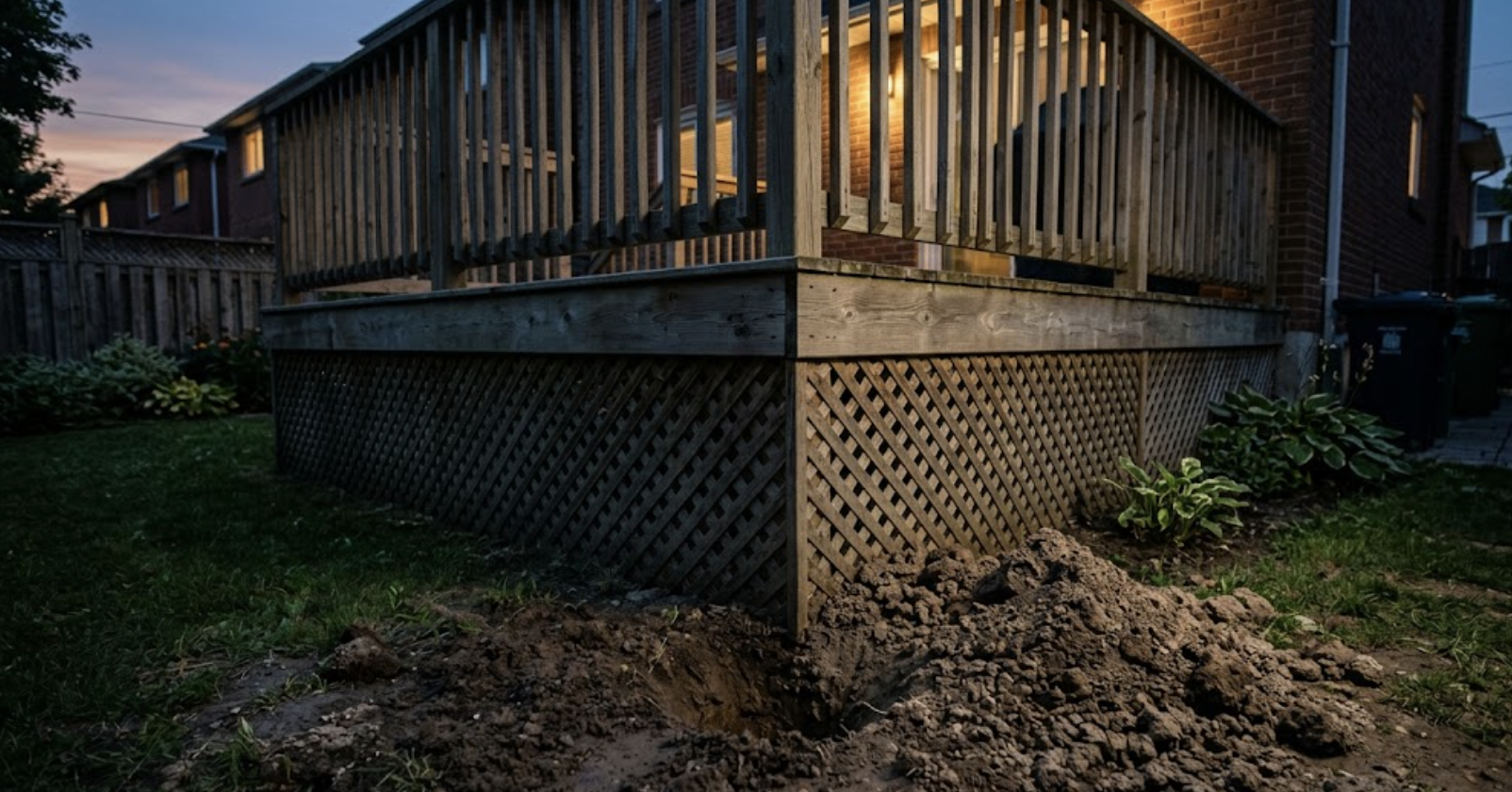
October is denning season. The same cold-weather logic pushing mice at your foundation is pushing bigger animals at the biggest shelter in your yard: the void under the deck, the shed, the porch, the addition on piers. Fresh digging at the skirt, a musky smell on damp evenings, heavy rustling at dusk — somebody's moving in for winter.
The wildlife entries in this series (bats, squirrels) established the pattern: identification first, humane and legal eviction second, permanent exclusion third, and honesty about which parts are licensed wildlife work. Under-structure denning follows the same arc. Here's the full playbook.
Who's Under There — The ID Reads
Skunk. The classic under-deck tenant. Reads: a freshly dug entry hole at the skirt or foundation edge (10–15cm, often with a soil fan), that unmistakable musky base-note on humid evenings even without a full spray event, and cone-shaped grub-dig holes in the lawn nearby (the lawn-digging guide's skunk is often this skunk). Active at dusk and night; you'll rarely see them, and that's mutual preference.Raccoon. Prefers elevation (the attic, per the sounds guide) but dens under structures readily. Reads: a larger forced or dug entry, heavier nighttime sounds including the chittering vocal range, visible latrine sites (raccoons designate toilet areas — droppings concentrated in one spot, which is also a genuine health hazard, more below), and bolder evening sightings.Rabbit, groundhog, feral cat, rats. The supporting cast: groundhogs dig the biggest burrows with big soil fans (and vacate at hibernation); rabbits shelter shallow at the edges; cats come and go; and rat burrowing at a deck base — smaller holes, 5–8cm, smooth-worn — routes you to the rat guides and a faster response tier.
The confirmation trick for any of them: the flour test. Dust a band of flour at the suspected entry at dusk; morning tracks tell you who, and no tracks for 3–4 consecutive nights tells you the void may already be empty.
The Rules Before Anything Else
Same legal frame as the squirrel post, stated plainly:
Ontario wildlife can generally only be relocated within 1 km — long-distance relocation is illegal and usually fatal to the animal. "Trap it and drive it to the country" is not an option.No poisons, ever — nothing is registered for mammals like these, it's illegal, and a poisoned animal dying under your deck is a worse outcome in every direction.Timing matters enormously: spring under-deck situations usually involve young (skunk kits, raccoon cubs), which changes everything — sealing a mother out while young are inside is inhumane, illegal in effect, and produces desperate structural damage. One of fall's few mercies: October dens are typically adults only, which makes right now the best eviction window of the year.Rabies-vector species (raccoons and skunks both) mean no handling, no cornering, and professional involvement for anything sick-acting (daytime stumbling, disorientation, aggression — call the city or wildlife authorities, not a shovel).
The Eviction — Make the Void a Bad Apartment
For a healthy adult in fall, humane eviction is harassment-by-inconvenience — stacking annoyances until the animal relocates itself, usually within days:
Light: a cheap work light or solar spotlight shining into the void, all nightSound: a radio on talk (voices outperform music), daytime and eveningScent: rags with apple cider vinegar or used cat litter near (not blocking) the entry — eviction-grade annoyance, not the folklore-repellent tierDisturbance: daily activity near the entry — the stillness these animals chose the spot for, revoked
Run all of it simultaneously for 3–5 nights, flour-testing nightly. Most fall adults leave within the week. (Ammonia is the traditional suggestion and the bat guide's objection stands — harsh, hazardous, and unnecessary with the kit above.)
The Close-Out — The Only Permanent Part
Eviction without exclusion is a vacancy posting. Once the flour test runs clean for 3–4 consecutive nights:
Trench and screen: hardware cloth (16-gauge, 1/2" or heavier for raccoon pressure) attached to the structure base, buried 25–30cm down AND flared 30cm outward in an L — the underground flare is what defeats re-digging; surface-level lattice alone defeats nothingOne-way door first if certainty is imperfect: a wildlife one-way over the entry with the rest screened, removed and sealed after a clean week — the squirrel guide's logic at ground levelClose the whole perimeter, not just the hole — the next tenant reads the skirt the way you now read entry pointsFinish the habitat work: the grub treatment (if skunk digging brought them), secured garbage, no pet food out (the bowl rules again), and the buffer-zone standards from the rural guide
This trench-and-flare work, honestly, is the part most homeowners hire out — it's digging, fitting, and fastening around a structure's full perimeter, and it's also licensed-wildlife-operator territory when an occupied void needs one-way management. Summit's lane, per the wildlife posts: identification, the rodent-side work (rat burrows at structures are ours outright), referral to trusted wildlife operators for occupied-den handling, and the exclusion-adjacent sealing that keeps the solution permanent.
The Latrine and Cleanup Note
Raccoon latrines get special mention because raccoon roundworm (Baylisascaris) is a genuine health hazard — eggs in the droppings, dangerous if disturbed dry. A latrine under or near the structure is a PPE-and-protocol cleanup in the same tier as the guano and hantavirus guidance: damp methods, gloves and mask, never dry sweeping, professional cleanup for significant accumulations. Skunk sites carry lower but real parasite considerations; same careful handling.
Frequently Asked Questions
Will the skunk spray under my deck during eviction? Skunks spray defensively when cornered, not ambiently — gradual harassment eviction almost never triggers it. The nightmare scenario (spray in a confined void) comes from cornering or dog encounters, which is half the argument for the patient method.
The animal left but the smell hasn't. Now what? Residual musk and den odour fade over weeks with airflow; speeding it up means opening the skirt ventilation during the sealed-void's airing period and addressing any soiled soil. Persistent strong odour re-check: something may have died in there — a different removal job.
Can I just live and let live until spring? With one big caveat: a fall tenant becomes a spring maternity den, and then you're in the young-present scenario with months more occupancy and a much harder eviction. October's adult-only window is the cheap exit — use it.
What does professional help cost for this? Wildlife eviction with one-way management typically runs $300–$700 around Guelph; full perimeter trench-and-screen exclusion is usually quoted by the linear foot and scales with deck size. Inspection first, firm scope in writing — the quote-reading guide applies here like everywhere.
Fall Dens Are This Month's Problem to End
The void under your deck is being evaluated this month whether you participate or not. Identify, evict patiently, and close it with the buried flare — and the best winter real estate in your yard goes permanently off market.
Summit Pest Control handles identification, rodent-side burrow work, and exclusion across Guelph, Fergus, Elora, and surrounding areas.
Call (226) 780-6446 or request a quick estimate today.