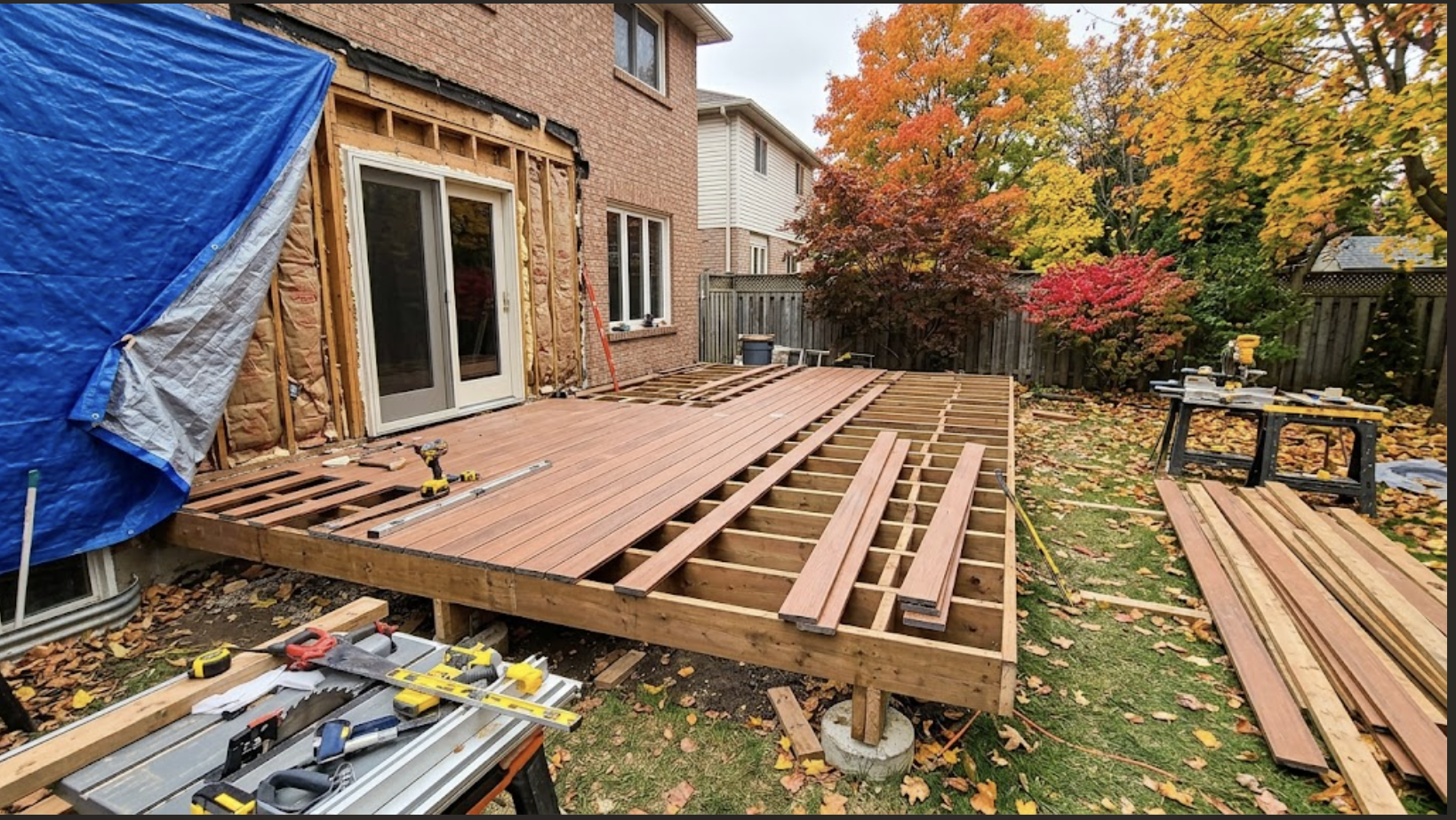
Fall is prime renovation season — the push to finish the deck, the bathroom, the basement, the siding before winter. It's also, as this blog has spent two months establishing, prime pest move-in season. Those two calendars overlap badly: renovations open the building envelope, disturb whatever was quietly living in it, and leave temporary gaps — during the exact weeks everything outside is scouting for a way in.
Handled with a little foresight, a renovation is actually a pest-control opportunity — walls open only so often. Here's the playbook.
What Renovations Disturb
Opening walls, floors, and ceilings regularly uncovers the populations this series has catalogued:
Mouse runways and nests in wall voids and insulation — the most common find by farCarpenter ant galleries in moisture-affected framing (window walls, bathrooms, deck ledgers)Old or active wasp nests in soffits and voidsOverwintering fall invaders in the wall cavities (a lady-beetle-filled void, opened in October, redistributes itself through the house)Bat evidence in attic-adjacent work (droppings accumulation — the guano-handling rules from the bat guide apply before anyone touches it)The historical record: old droppings, cached seeds, previous owners' problems
The wrong response is closing the wall on what you found. Everything discovered mid-project is easiest to solve exactly then — access is the expensive part of pest work, and the contractor just provided it free.
The Gaps Projects Create
The bigger risk is what projects open, temporarily or permanently:
Temporary openings — removed siding sections, open soffits, disconnected vents, the wall that stays open over the weekend. In September, a weekend is enough for mice to find and learn a route.New penetrations — every new line for the renovated kitchen, bathroom fan, EV charger, or AC creates a fresh utility gap, and sealing them properly is nobody's line item unless someone makes it one.Detail gaps at transitions — where new meets old: additions, deck ledgers, new windows and doors. Construction joints are the entry points our exclusion guides keep finding years later.The disrupted perimeter — excavation, regraded soil, and disturbed foundations temporarily rearrange the drainage and habitat picture at the foundation line.
The Site Conditions
Renovation sites also attract pests in their own right:
Dumpsters and debris piles — food waste from crew lunches plus shelter-rich debris equals rodent interest within days; keep lids on, food waste out, and piles briefMaterial storage — lumber stacked on the ground against the house is the firewood-pile problem in construction form; store raised and away from the wallOpen food and drink on site — crew habits feed the local wasp and rodent populations right at your open wallStanding water — in tarps, excavations, and material stacks; the mosquito math runs until frost
The Pest-Smart Project Protocol
Pre-project: know what's in the wall. For projects opening exterior walls, attics, or floors in a house with any pest history, a pre-project inspection is cheap intelligence — active issues get treated before demolition scatters them. (Disturbing an active mouse population with demolition doesn't remove it; it redistributes it through the house.)During: close the envelope nightly. The rule to agree with your contractor in writing: no exterior opening stays uncovered overnight. Plywood, mesh, or tarps secured over open sections — imperfect but massively better than open.During: seal as you go. Every new penetration gets the mesh-and-seal treatment (the exclusion project's materials list) while it's accessible — not "at the end."During: treat what's found immediately. Found galleries, nests, or active rodents mid-demo pause that section for a same-week treatment visit. Mid-project treatment with open access is faster and cheaper than any other version of the same job.Post-project: the transition audit. When the project wraps, walk the new-to-old transitions, penetrations, grade changes, and vent reconnections with the exclusion-project eye — or fold it into a professional audit. New construction details are where the next five years of entry points live.
The Opportunity Side
Open walls are a chance to do the things closed walls prevent:
Exclusion from the inside — mesh at sill plates, sealed chases, rodent-proofed penetrations, done properly while visibleInsulation upgrades that replace contaminated material (the rat-damage guide's remediation, at renovation pricing instead of standalone pricing)Moisture fixes — the leaks and condensation issues that feed carpenter ants and moisture pests, corrected at the sourceScreening and detailing — vent screens, weep covers, and flashing done as construction details rather than retrofits
A renovation that bakes exclusion into the scope produces the most pest-proof sections of the house. Ask the contractor to line-item it; it's small money inside a project and real money as a callback.
Frequently Asked Questions
We opened a wall and found droppings everywhere. Stop work? Pause that section, yes. Old droppings need the safe-cleanup protocol (dampen, PPE, no dry sweeping — the full guide's in the archive); fresh droppings mean an active population that should be treated while access is open. Either way it's a days-long detour, not a project-killer.
The contractor says a little gap at the new gas line "is normal." It's normal to find, and it's also precisely how mice enter — the fix is thirty seconds of mesh and sealant while everyone's standing there. Insist pleasantly.
Should we treat preventively before closing walls up? Where there's history or evidence, yes — void treatments and interior exclusion before drywall is the cheapest that work will ever be. In a clean wall with no evidence, sealing well matters more than treating.
Winter project instead — better or worse for pests? Winter demo avoids the fall move-in rush but risks disturbing overwintering populations (fall invaders in voids, and the bat-timing rules apply to any attic work). The nightly-closure and seal-as-you-go rules carry the season either way.
Renovate the Pests Out, Not In
Every project either tightens the envelope or loosens it — the difference is a written nightly-closure rule, mesh at every new penetration, and acting on what the walls reveal. Build it into the scope.
Summit Pest Control offers pre-project inspections, mid-project treatment, and post-project audits across Guelph, Cambridge, KW, and surrounding areas.
Call (226) 780-6446 or request a quick estimate today.