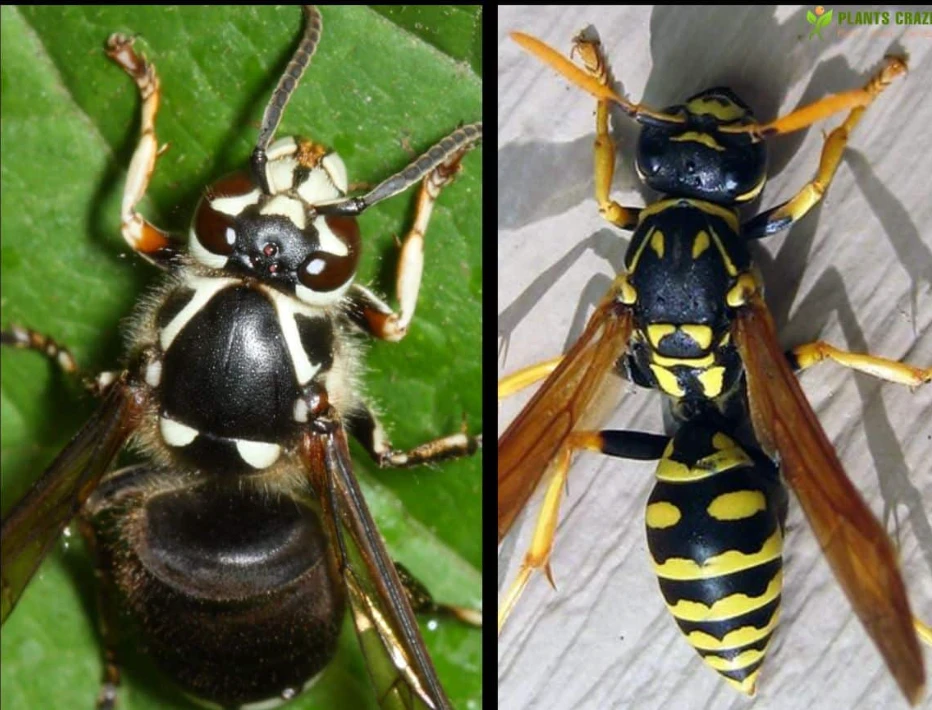
Most pest calls Tateum gets about "wasps" turn out to be one of three or four different species, and the right response depends entirely on which one is actually there. Bees, paper wasps, yellowjackets, and bald-faced hornets all behave differently — and a few of them shouldn't be killed at all.
Here's a quick guide to telling them apart in your Guelph yard.
Honeybees
What they look like: Fuzzy, golden-brown body with darker stripes. Smaller than most wasps. Usually seen on flowers.
What they do: Pollinate. They're not aggressive unless directly threatened, and they die after a single sting. A honeybee on a flower in your garden has zero interest in you.
What to do: Leave them alone. If you find a honeybee swarm or hive on your property, call a local beekeeper before anything else — most will relocate the colony for free or at low cost. Killing honeybees is something we work hard to avoid.
Bumblebees
What they look like: Big, fuzzy, round, with yellow and black stripes. Move slowly and noisily.
What they do: Also pollinate, also generally harmless. Bumblebee nests are usually in the ground, in old rodent burrows, or in dense vegetation.
What to do: Leave them alone if possible. Bumblebee colonies are small (50–200 bees) and die off naturally in fall. Only treat if a nest is in a high-traffic area or someone is allergic.
Paper Wasps
What they look like: Slim body, long legs that hang down in flight, brown or reddish with yellow markings. Smaller than hornets.
What they do: Build the classic open, umbrella-shaped paper nests under eaves, soffits, deck rails, and shed corners. Generally not aggressive unless the nest is disturbed.
What to do: If the nest is small and far from where people spend time, you can often leave it. If it's near a doorway, deck, or kids' area, removal is the right call. Paper wasps are easier to deal with than yellowjackets or hornets, but a sting still hurts.
Yellowjackets
What they look like: Bright yellow and black, smooth (not fuzzy) body, similar size to a paper wasp but with a more compact shape.
What they do: Build large enclosed nests, often underground in old rodent holes, in wall voids, or hidden in shrubs. Aggressive, especially in late summer when colonies are large and food becomes scarce. They're the ones that crash your BBQ and follow you to the soda can.
What to do: Yellowjacket nests should almost always be professionally removed. They sting repeatedly, mark targets with a pheromone that attracts more wasps, and the colony can have hundreds or thousands of workers. DIY treatment of an underground or in-wall yellowjacket nest is risky.
Bald-Faced Hornets
What they look like: Black with white markings on the face and abdomen. Larger than a paper wasp. Build distinctive grey, football-shaped paper nests, often hanging from a tree branch, soffit, or shed.
What they do: Defend their nests aggressively, sometimes from 10+ feet away. Strong fliers, persistent, and can sting repeatedly. The hornet you don't want.
What to do: Always professional removal. Bald-faced hornets are the species that lands more people in the ER than any other wasp in Ontario. Don't try to handle this one yourself.
European Hornets
What they look like: Larger than bald-faced hornets, brown and yellow body. Less common in Guelph but populations are spreading.
What they do: Aggressive, active even at night, can damage trees and shrubs. Build nests in hollow trees, attics, and wall voids.
What to do: Professional removal. Same logic as bald-faced hornets.
Quick "Should I Be Worried?" Reference
SpeciesAggressionDIY OK?ActionHoneybeeVery lowN/A — protectCall beekeeperBumblebeeLowSometimesLeave alone unless high-trafficPaper waspModerateSmall nests onlyPro for hidden/large nestsYellowjacketHighNoAlways professionalBald-faced hornetVery highNeverAlways professionalEuropean hornetVery highNeverAlways professional
Why Identification Matters
The treatment for each species is different. Yellowjacket nests need different products and tactics than paper wasps. Bald-faced hornets need a wider safety perimeter. Honeybees shouldn't be sprayed at all.
A pro who walks up to your nest and sprays without identifying it is cutting corners. A pro who pauses, identifies, and explains is doing the job right.
Frequently Asked Questions
What time of year do wasps and hornets become a problem in Guelph?Activity ramps up in late spring, peaks in late summer (August/September), and dies off after frost. Late summer is when nests are largest and colonies are most aggressive.
Can you remove a wasp nest without killing it?Live relocation is possible for small honeybee swarms (call a beekeeper) and occasionally for accessible paper wasp nests. For yellowjackets and hornets, lethal treatment is the standard approach.
How do I find a hidden yellowjacket nest?Watch the flight pattern. A consistent stream of wasps going in and out of the same spot — a hole in the ground, a wall void, or a shed corner — marks the nest entrance.
Are wasp treatments safe for my dog?Yes. Treatments are localized to the nest and dry quickly. We'll let you know exactly when it's safe for pets to be near the area.
When in Doubt, Get an ID First
If you're not sure what's flying around your yard, take a careful photo (from a safe distance) and send it to us before doing anything. A 30-second ID can save you from a bad sting and an ineffective DIY attempt.
Summit Pest Control handles wasp, hornet, and bee removal across Guelph, Cambridge, KW, and surrounding areas.
Call (226) 780-6446 or request a quick estimate today.