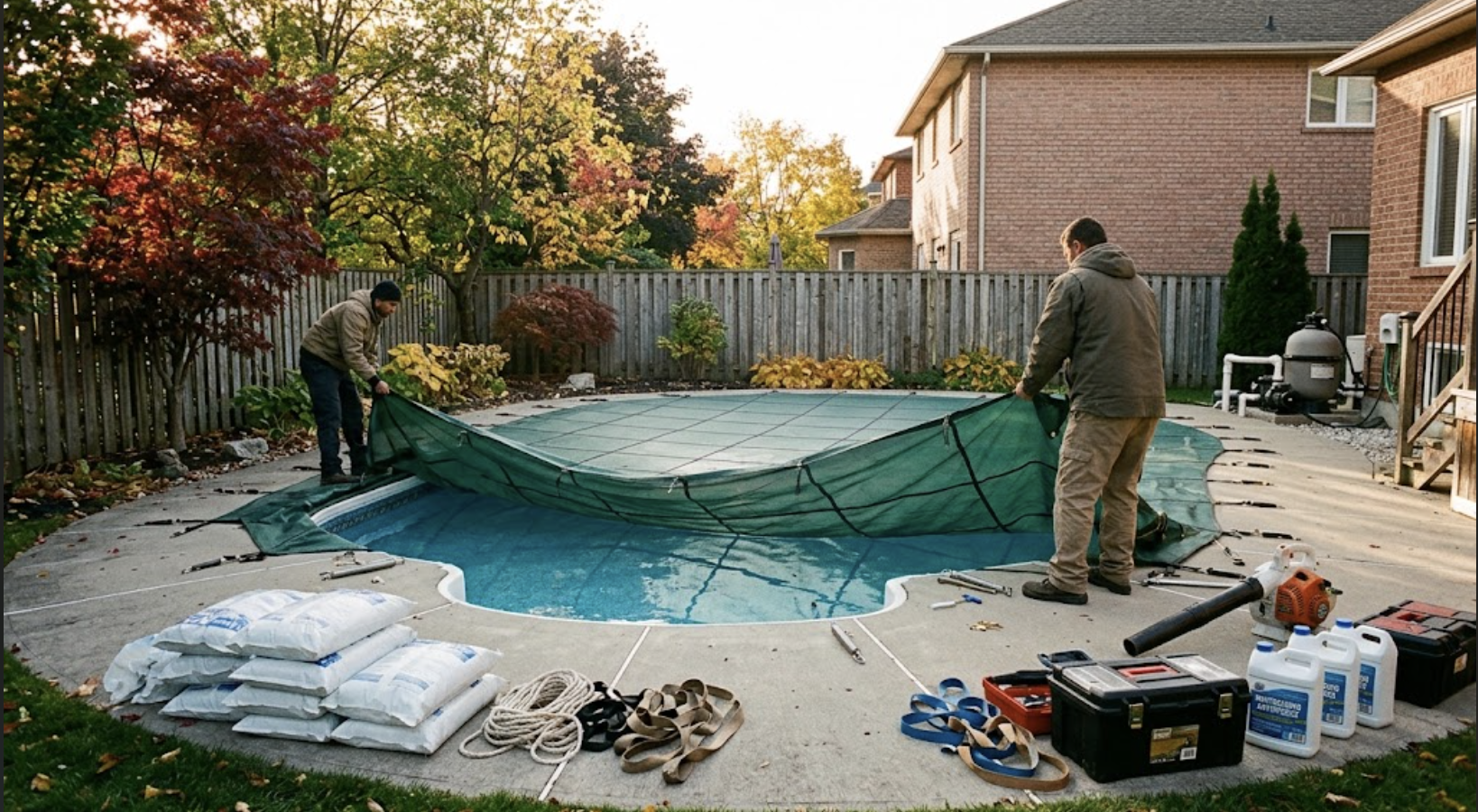
Pool closing season is here, and every closing checklist covers the same things: chemistry, lines, plugs, cover. What almost none of them cover is the pest dimension — and a closed pool area is one of the most pest-consequential zones on a property for the next eight months.
Get it right and the pool corner of the yard is inert until May. Get it wrong and you've built a mosquito hatchery with a rodent shelter attached. Here's the pest side of closing, integrated into the job you're already doing.
The Cover Is the Whole Ballgame (Mosquito Edition)
The single biggest pest decision at closing is what happens on top of the cover.
A solid winter cover collects rain and meltwater — and a sheet of shallow, warm, organic-debris-rich water sitting on a dark cover from April onward is textbook mosquito breeding habitat. Worse than a pond, honestly: ponds have predators; cover water has none. A neglected cover puddle in May can produce thousands of mosquitoes a week, exactly beside the patio, and it's the answer to many a "why is our yard so bad?" call.
The fixes, pick your system:
Cover pump on the low spot, run after every significant rain and through spring melt. The standard answer — it just has to actually happen, especially in April–May when nobody's thinking about the pool.Mesh/safety covers drain through and largely sidestep the problem (leaf debris still needs clearing so the water beneath stays covered, not exposed).Bti dunks (the mosquito larvicide from our natural remedies guide) tossed onto persistent cover water in spring — harmless to everything else, lethal to larvae, cheap insurance if pumping is inconsistent.
Put a spring reminder in your phone at closing time. The cover puddle problem is a March–May problem created by a September decision.
The Equipment and Chemical Area
The pump house, equipment pad enclosure, or deck box spends winter as an undisturbed, sheltered structure — which our rodent guides have taught you to read correctly:
Empty and clean the deck box. Stored floats, noodles, and toys are nesting material heaven. Clean, dry, and store torn items elsewhere or discard; a mouse-nested pool noodle in May is a rite of passage nobody needs.Chemicals in sealed, original containers, up off the floor — for safety first, but also because cardboard chemical packaging is chew-and-nest material.Rodent-check the pump house/enclosure: gap-check the base and corners (the exclusion project from last week applies at pool scale), and a snap trap or two inside as winter monitors if there's history.Skimmer baskets and lines get their normal winterization — with the note that open skimmer throats and unplugged returns are cricket, spider, and mouse shelters; the standard plugs and Gizzmos handle it.
The Furniture, Toys, and Deck Zone
Closing the pool usually means closing the whole zone, and tomorrow's post covers outdoor furniture storage in full — the pool-specific notes:
Drain everything that holds water before storing: toys, watering cans, buckets, the wheelbarrow used for closing. Every container of standing water in the pool corner is a spring mosquito nursery (and a fall one until frost).Shake out and inspect solar blankets and rolled items before storage — wasp queens and spiders settle into rolled material within days of it going still.Check the slide, diving board, and rail bases — the hollow bases and mounting cavities are wasp-queen and spider overwintering spots; a fall inspection beats a June surprise.Furniture cushions to indoor storage (never stacked wet under the deck — the moisture pest and rodent guides both have opinions about that pile).
The Perimeter Landscaping
Pull leaf accumulation away from the pool fence line, deck edge, and equipment area — the standing leaf litter is tick, moisture-pest, and vole habitat directly adjacent to next summer's barefoot zoneCut back and clean up plantings around the deck at fall-cleanup time (the full yard version runs next week)Fence post caps and hollow rails — a quick check for wasp activity now, and for the queens that will test them in April
The Hot Tub Corollary
Staying open year-round changes the calculus but not the vigilance: the cabinet is a heated, sheltered structure — the most attractive winter rodent site in most backyards. Gap-check the cabinet base annually, look for chewed insulation or droppings at water changes, and treat any activity fast — rodents in tub cabinets chew plumbing insulation and wiring with expensive enthusiasm. The cover stays maintained and fitted; a sagging, waterlogged tub cover runs the same mosquito math as a pool cover.
The Spring Payoff
A pest-smart closing pays out at opening: no cover-water mosquito bloom in May, no nested deck box, no wasp colony in the slide base, no vole runways under the mat of unraked leaves. Twenty extra minutes in September; the whole difference in May.
Frequently Asked Questions
Does pool water itself breed mosquitoes over winter? Properly closed (balanced, covered) pool water under the cover isn't the issue — the water ON the cover is. Neglected green pools without covers are a different story entirely and a genuine neighbourhood-scale mosquito source.
Are the wasps around my pool in September a closing problem? They're the late-season sugar-seeking pressure from our wasp guides — closing actually helps by removing the water and drink attractions. Any actual nest found in rails, slides, or the fence line during closing gets addressed now, while it's findable.
Should I put mouse bait in the pump house? Locked, professional stations if there's real history — never loose bait (the poisoned-mouse-in-the-plumbing scenario, plus pet and wildlife risk). Snap traps as monitors are the right DIY tier.
What about the pool heater? Same as any sheltered appliance: the off-season cabinet is rodent-attractive. Screen vents per manufacturer specs, check for nesting before spring startup — a nest against a heat exchanger is a fire and repair issue.
Close the Pool, Close the Habitat
The pool corner can spend winter as sealed, drained, monitored dead space — or as the most productive pest real estate on the property. Same weekend of work either way. Choose accordingly.
Summit Pest Control offers backyard and perimeter pest programs across Guelph, Cambridge, KW, and surrounding areas.
Call (226) 780-6446 or request a quick estimate today.