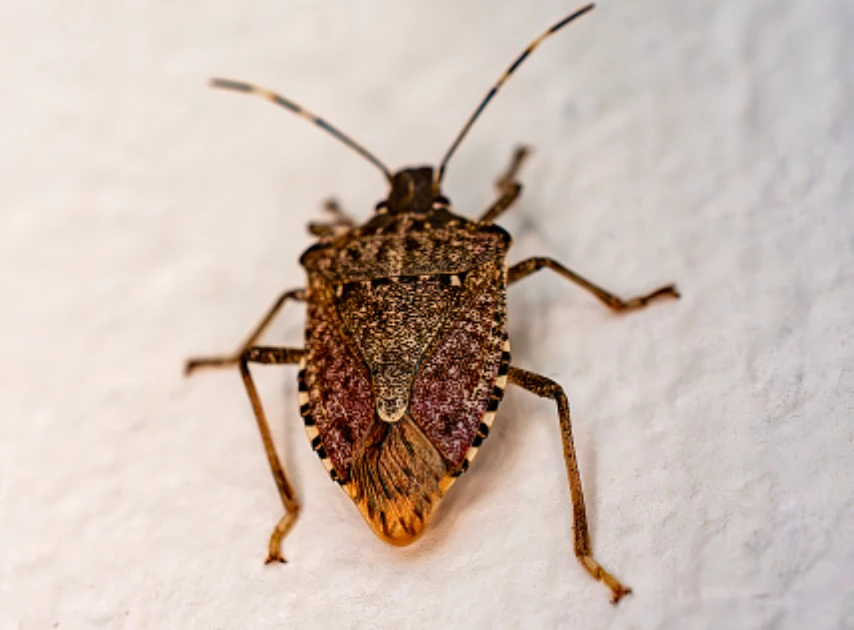
Stink bugs used to be one of those pests Ontario homeowners read about happening in other places. Not anymore. Brown marmorated stink bugs (BMSB) are now well-established across Wellington County, and they make their biggest impression every fall when they start trying to overwinter inside our homes.
Here's a practical guide to what's happening, why it matters, and how to keep them on the outside of your siding.
Brown Marmorated Stink Bug Basics
BMSB are shield-shaped insects about 17mm long, mottled brown, with alternating light and dark bands on the antennae and outer edge of the abdomen. They were introduced to North America from East Asia in the 1990s and have been spreading north and west ever since.
They eat plants — fruit trees, garden vegetables, and ornamentals — and can be a real headache for farmers and gardeners. But for most homeowners, the bigger problem is when they look for somewhere to spend the winter.
Why Late Summer Matters
BMSB are active outdoors all summer. By late August and into September, they begin "overwintering" behaviour: looking for warm, sheltered spots to spend the cold months in a dormant state.
Your house, basically. Sunny siding, soffit corners, attic vents, gaps around windows, and any opening that gets afternoon sun is exactly what they're scanning for. Once they find a way in, they often spend the winter in wall voids, attic spaces, or upper-floor rooms — emerging on warm winter days and on the way out in spring.
This is why so many homeowners say "I never saw them in summer, but in September they suddenly appeared everywhere."
The Smell Issue
The "stink" in stink bug is real but exaggerated. They release a defensive chemical when crushed or threatened. It's pungent — often compared to cilantro, almonds, or rancid herbs — but it dissipates quickly and isn't harmful.
What it does mean: don't vacuum stink bugs with a regular vacuum and don't crush them indoors. Both spread the smell and can persist for days.
Keeping Stink Bugs Out
Prevention is much easier than removal. Steps that actually work:
Seal entry points before fall. Late August is the right time. Focus on:
- Gaps around windows and doors
- Worn or missing weatherstripping
- Cracks in siding and foundation
- Soffit corners and roof intersections
- Unscreened attic and crawl space vents
- Around utility entries
Install or repair screens. Window screens, attic vent screens, and chimney caps. BMSB are surprisingly good at finding small openings.
Manage exterior lighting. Bright lights on sunny sides of the house attract stink bugs. Switching to yellow or warm LED bulbs reduces attraction.
Address landscaping. Plants pressed against the house, ground-touching wood, and dense vegetation provide staging areas for stink bugs before they move to the building.
Treat the perimeter in late summer. A professional exterior treatment in late August or early September significantly reduces fall stink bug pressure.
What to Do With Stink Bugs Already Inside
If they're already in the house:
- Vacuum with a shop-vac or a dedicated insect vacuum bag, and dispose outside immediately
- Don't crush them indoors — the smell persists
- Capture and release outside if you only have one or two
- Check window tracks and curtain folds during warm winter days — common emergence spots
- Schedule an exterior treatment for the following late summer to reduce next year's pressure
For homes already harbouring populations in wall voids or attics, more involved treatment is sometimes needed.
Why DIY Doesn't Always Help
Hardware-store insect sprays kill stink bugs on contact, but they don't reach the ones already in walls or attics, and they wear off quickly. By the time you're spraying visible bugs in October, the population is already established for the winter.
Effective stink bug management is about timing — getting the perimeter sealed and treated before they start scanning for entry points, not after.
How Summit Handles Stink Bugs
Tateum's approach for properties with stink bug pressure:
- Exterior inspection to identify likely entry points and high-pressure sides (usually south and west)
- Targeted perimeter treatment focused on entry points, eaves, and sunny siding areas
- Exclusion recommendations for any structural gaps worth sealing
- Late-summer timing to maximize impact before overwintering behaviour starts
- Follow-up as needed
Frequently Asked Questions
Are stink bugs dangerous?No. They don't bite, sting, or transmit disease. They don't damage structural elements. The concerns are smell, garden damage, and nuisance numbers indoors.
Can stink bugs reproduce inside my home?Generally no. They overwinter in a dormant state and don't reproduce indoors. They breed outdoors in spring.
When is the right time to treat for stink bugs in Wellington County?Late August to mid-September, before peak overwintering behaviour. Treatments after they're already inside are less effective.
Will spraying outside hurt my garden or pollinators?Targeted perimeter treatments minimize impact on flowering plants and pollinator-active areas. Application timing and placement matter — we adjust based on each property.
Get Ahead of Fall
Stink bug pressure is one of those problems where the work you do in August saves the headaches in October. Sealing, treating, and managing the perimeter before overwintering behaviour starts is the difference between a quiet winter and finding bugs in your bedroom curtains.
Summit Pest Control offers stink bug treatments and exclusion work across Wellington County, including Guelph, Fergus, and Elora.
Call (226) 780-6446 or request a quick estimate today.