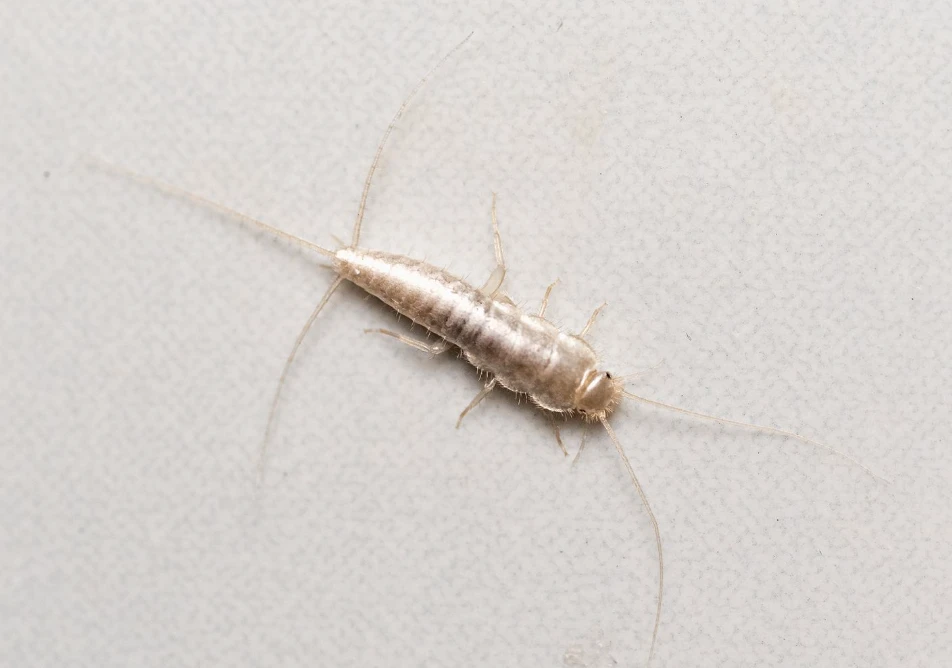
If you've ever turned on the bathroom light at 2 a.m. and seen a small, silver, almost fish-shaped insect dart toward a baseboard, you've met a silverfish. They're harmless, weirdly fast, and oddly memorable.
They're also one of those pests that tell you something about your home — usually that it has more moisture than it should.
What Silverfish Actually Are
Silverfish are wingless insects about 13–25mm long, silvery-grey, with three tail-like appendages and a tapered body shape that gives them their name. They're nocturnal, fast, and prefer hiding in dark, damp spaces during the day.
They've been around for over 400 million years. They're surprisingly successful little insects. They just happen to find your bathroom and basement very comfortable.
What They Eat (And Why It Matters in Your Home)
Silverfish eat starches and sugars. In your home, that means:
- Paper and cardboard (book bindings, photos, wallpaper paste)
- Glue and adhesives
- Dry pet food
- Cereal and pantry items
- Dead skin, hair, and dandruff
- Cotton, linen, and silk fabrics
- Mold and mildew
They can cause damage to old books, photos, and stored documents over time. They can ruin wallpaper, especially older paste-based applications. And they can damage stored clothing if populations are large.
But the bigger reason their presence matters isn't damage — it's the moisture they're indicating.
What Silverfish Mean About Your Home
Silverfish need humidity. They thrive at 75%+ humidity and will die in dry environments. If they're thriving in your home, your home has higher humidity than it should — at least in some areas.
Common moisture sources that support silverfish:
- Bathrooms without proper exhaust ventilation
- Basements with high humidity or condensation
- Damp crawl spaces
- Leaky pipes, faucets, or fittings
- Improperly vented dryers
- Foundation moisture from poor grading
- Roof leaks above attics or top-floor rooms
A few silverfish in a Guelph bathroom is usually a sign that ventilation could be better. A lot of silverfish is a sign there's a real moisture issue worth addressing.
Why DIY Treatment Falls Short
Silverfish are tough. They can live without food for months, hide in tiny cracks, and survive temperatures from near-freezing to over 35°C. Spraying the ones you see does almost nothing for the hidden population.
Effective silverfish control needs three things:
- Reduce moisture so the environment doesn't support them
- Treat hiding spots in cracks, voids, and harbourage areas
- Address food sources — sealed dry goods, decluttered paper storage
Without all three, the population keeps replacing itself.
What You Can Do Yourself
A lot, actually. Silverfish are one of the more responsive pests to environmental changes:
- Run bathroom exhaust fans during and after showers (at least 20 minutes)
- Use a dehumidifier in basements — aim for 50% humidity or lower
- Fix dripping faucets and leaky pipes
- Vent dryers properly to the outside
- Store paper, cardboard, and dry goods in sealed plastic bins
- Declutter under-sink areas and basement storage
A lot of mild silverfish problems resolve on their own once moisture is brought under control.
When to Call a Pro
Call for professional treatment if:
- You're seeing silverfish regularly despite addressing moisture
- You can't identify a clear moisture source to fix
- You're concerned about damage to stored items
- You're also seeing related pests (centipedes, sowbugs, mold)
- The population seems to be growing
Professional treatment for silverfish typically includes targeted application to harbourage areas, dust treatments in wall voids and crawl spaces, and recommendations for environmental changes.
How Summit Handles Silverfish in Guelph
A silverfish job for Tateum typically involves:
- Inspection to identify where silverfish are active and what's supporting them
- Targeted treatment of cracks, voids, and harbourage areas
- Moisture assessment — pointing out conditions you can change
- Follow-up to confirm reduction
Silverfish problems often resolve within 2–4 weeks when treatment is paired with moisture control.
Frequently Asked Questions
Are silverfish dangerous?No. They don't bite, don't transmit disease, and don't damage structural elements. The concern is property damage (to paper, books, fabric) and what they indicate about home moisture.
Why do I see silverfish in the bathtub or sink?They fall in and can't climb back out — the smooth surfaces are too slippery. The fact that they ended up there tells you they're active in the room at night.
Can I get rid of silverfish without chemicals?For mild problems, yes. Improved ventilation, dehumidification, and decluttering often handle it alone. For larger populations, you'll likely need professional treatment combined with environmental changes.
Will silverfish damage my home?Structurally, no. They can damage books, photos, wallpaper, stored documents, and natural-fibre clothing over time if populations are significant.
The Real Fix Is Usually the Air
Silverfish are one of the few pests where solving the underlying condition mostly solves the problem. Dry out the space, seal up the hiding spots, and they have nowhere to thrive.
Summit Pest Control handles silverfish treatment and broader moisture-pest issues across Guelph and surrounding areas.
Call (226) 780-6446 or request a quick estimate today.