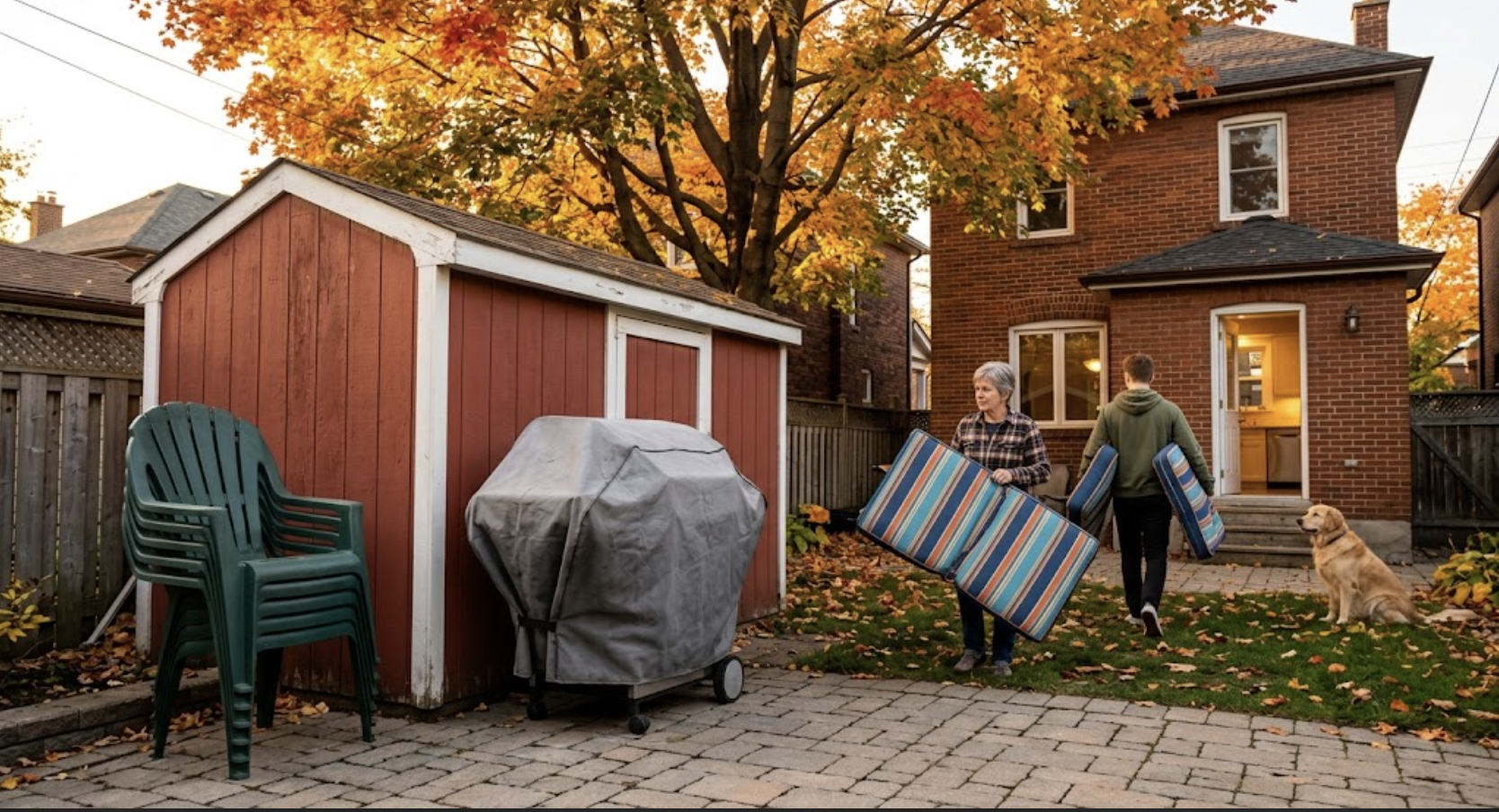
There's a spring ritual almost as reliable as pool opening: unzipping the BBQ cover to find a mouse nest on the grease tray. Unrolling the patio umbrella and meeting the wasp queen who wintered in the folds. Pulling the cushions out of the deck box into a shower of shredded foam.
Winter storage is a pest decision, and it gets made this month. The whole game is understanding what stored outdoor gear offers — enclosed shelter, soft nesting material, food residue, and six months of guaranteed stillness — and then withdrawing the offer, item by item. Here's the routine.
Cushions and Fabric — The Nesting Goldmine
Cushions are the single most pest-attractive thing on the patio: foam and batting are premium mouse nesting material, and fabric folds shelter overwintering insects.
Clean before storing. Brush off, spot-clean food and drink residue (the residue is the attractant), and dry completely — stored damp, you're growing mold and feeding moisture pests instead.Store indoors if at all possible — basement, heated garage shelf, closet. A sealed indoor bin is the gold standard.If they must stay outside: rigid, sealed, gap-checked containers only. The deck box counts only if its lid seals and its base has no chew gaps — walk it with the exclusion-project eye from last week. Fabric storage bags on the ground are mouse piñatas.Never the open pile under the deck or tarp-over-the-stack. That's the exact shelter-plus-material combination the whole rodent series warns about, assembled on purpose.
Hammocks, fabric chairs, and umbrella slings get the same treatment: clean, dry, indoors or sealed.
The Umbrella and Anything That Rolls
Rolled and folded material — umbrellas, solar blankets, shade sails, rolled outdoor rugs — is wasp queen and spider overwintering habitat within days of going still.
Open, shake out, and inspect before storage — especially the umbrella, whose folds are the classic queen hotelStore rolled items off the floor, ends covered or bagged where possibleSpring rule that pairs with this: open stored umbrellas outside the first time each year. The May patio story about the wasp in the umbrella writes itself every single spring.
The BBQ — A Purpose-Built Mouse Habitat
A covered, dormant BBQ is enclosed, weatherproof, elevated, and food-scented — from a mouse's perspective, custom construction.
Deep clean at closing: grates scrubbed, and critically, the grease tray and drip system emptied and degreased. Grease residue is the beacon; a clean grill is just a metal box.Remove and store the propane tank per safety practice (outdoors, upright, ventilated — never indoors).Check the cabinet and hose ports. Mice enter through the cart cabinet gaps and the burner/hose openings. Steel wool in the hose ports over winter (with the same bright removal tag trick as the RV exhaust from our storage guide) is a cheap classic.Cover fitted, not tented to the ground. A ground-draped cover creates a protected runway; a fitted cover on a clean grill is fine.Storing in the shed or garage? Clean first regardless — a greasy grill indoors relocates the attraction inside your building envelope, next to everything else stored there.Spring startup: open the firebox and check burner tubes for nests before lighting. Nested burner tubes cause flashbacks and fires — this is the one item on this list with a genuine safety edge.
Tables, Chairs, and Frames
Hard furniture is low-risk with two exceptions:
Hollow legs and frames — open tube ends shelter wasp queens, spiders, and occasionally mice (stack chairs upside down or cap/check tube ends)Stacked-against-the-house storage — the stack itself becomes a sheltered corridor at your foundation, bridging the exclusion work. Store stacks in the shed, garage, or at least away from the wall, per the buffer-zone rule from the rural guide.
Glass-top tables stored on edge, cleaned — and check the umbrella hole and frame channels, more queen real estate.
The Fire Pit, Heater, and Odds and Ends
Propane patio heaters: same as the BBQ — hose ports plugged, cabinet checked, fitted cover.Fire pit: empty the ash (damp ash cakes into insect-and-moisture habitat), cover or invert.The string lights, planters, and decor bin: empty planter saucers of water and soil-check for overwintering insects before anything comes indoors; shake out anything fabric.The "just shove it in the shed" impulse: the shed is a building too — the same exclusion, elevation, and sealed-bin logic applies inside it, or you're consolidating the winter habitat into one convenient structure.
The One-Afternoon Version
If the full routine is too much, the 80/20: cushions clean-dry-indoors, BBQ degreased with ports plugged, umbrella shaken and stored, nothing stacked against the house, nothing holding water. One afternoon; covers the large majority of spring surprises.
Frequently Asked Questions
Do mouse-repellent pouches in the deck box work? As a supplement in a sealed container, mildly; as the plan for an open box, no — the natural remedies guide has the full honest ranking. The sealed container is the plan.
Can cushions go in the attic over winter? Physically yes, but attics are exactly where fall rodents and overwintering insects concentrate — a sealed bin in the basement beats an open attic stack by a wide margin.
Is it okay to store furniture under the deck? Hard furniture, reasonably — with the underside kept clear of leaf accumulation. Cushions and fabric under the deck is the classic mistake: dark, sheltered, damp, and adjacent to the vole-and-mouse zone.
The wasps are all over the furniture NOW, before storage. Store anyway? That's September sugar-seeking (see the wasp aggression guides) — clean off the drink residue they're after, and yes, proceed. Any actual nest discovered in a frame or box gets dealt with before it's sealed into storage.
Pack It Away Empty
Everything on the patio is either stored clean, dry, and sealed — or it's stored occupied. The afternoon of prep is the whole difference, and May-you will notice.
Summit Pest Control handles rodent prevention and property assessments across Guelph, Cambridge, KW, and surrounding areas.
Call (226) 780-6446 or request a quick estimate today.