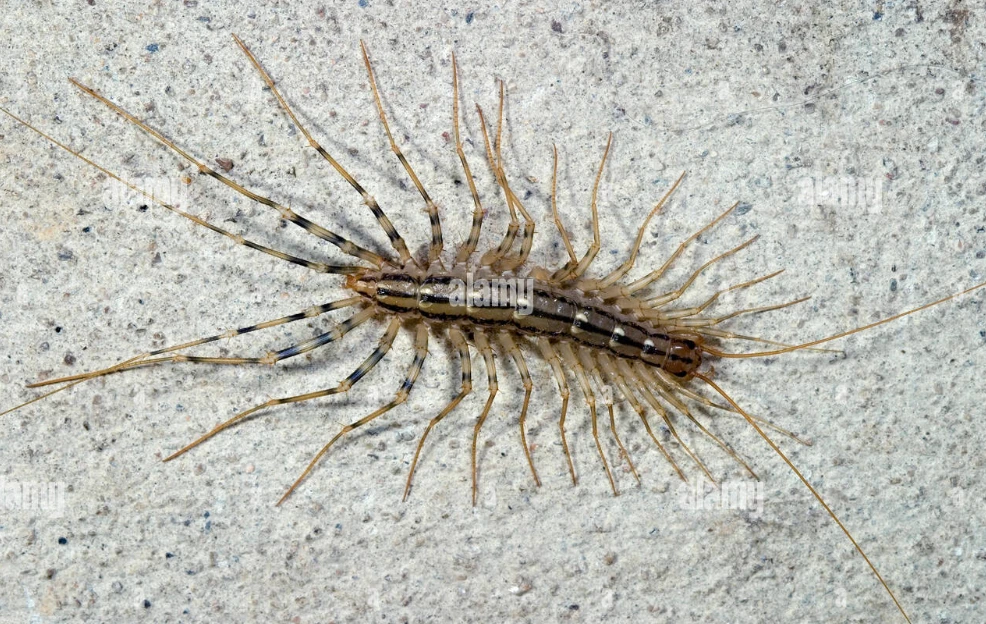
House centipedes are about 25–40mm long, yellowish-grey with darker stripes, and have 15 pairs of very long legs. They move fast. They look more like a small creature than an insect at first glance, which is part of why they make such a memorable first impression.
They're not insects, technically — they're arthropods related more closely to lobsters than to bugs. They're also predators. Everything about them is built for hunting other small things.
What They Eat
House centipedes are aggressive predators that feed on:
- Silverfish
- Spiders
- Cockroaches
- Bed bugs (yes, really)
- Carpet beetles
- Termites
- Ants
- Various larvae
If you have house centipedes, you have a steady supply of one or more of these prey species. Centipedes don't choose your basement randomly — they choose it because there's food.
That makes them an indicator pest. A centipede in the basement is usually telling you something else is happening too.
Are They Dangerous?
Centipedes can bite, but only if directly handled or trapped against skin. The bite is mildly painful for most people — comparable to a wasp sting — and not medically significant for adults. People who are allergic or who get bitten on the face can have stronger reactions and should see a doctor.
In practice, house centipede bites are rare. They prefer to flee from any larger creature, and they move much faster than a human can react.
Why You're Seeing Them in the Basement
Three conditions support centipede populations:
- Moisture. They need damp environments and won't thrive in dry basements.
- Prey insects. Silverfish, spiders, and other soft-bodied prey are required for them to survive.
- Harbourage. Cracks, undisturbed corners, and clutter give them daytime hiding spots.
If your Guelph basement has all three, you have a centipede population. If you address any of the three, the population usually drops.
What Their Presence Often Means
Common reasons centipedes show up in numbers:
- A silverfish problem you may or may not have noticed
- A spider issue that's grown
- A bed bug issue in serious cases (centipedes will follow bed bug populations into walls)
- Carpet beetle activity in stored fabrics
- A general moisture issue supporting multiple pest species
Treating the centipedes alone doesn't fix the underlying issue. Addressing what's feeding them does.
What You Can Do Yourself
Start with environmental control:
- Reduce humidity. Run a dehumidifier in the basement. Target 50% humidity or lower.
- Fix moisture sources. Leaky pipes, condensation around windows, water seepage through walls.
- Declutter. Move storage off the floor and away from walls. Centipedes need hiding spots.
- Seal entry points. Cracks in the foundation, gaps around basement windows, openings around utility entries.
- Address obvious prey populations. If you've also been seeing silverfish, spiders, or other insects in the basement, those need attention.
Most mild centipede issues resolve within a few months of environmental improvements.
When to Call a Pro
Call for professional treatment if:
- You're seeing centipedes regularly week-over-week
- They've started showing up upstairs
- You're also seeing other pests in the basement
- You can't identify or control the underlying moisture issue
- Bites have happened or are a concern
How Summit Handles Centipedes in Guelph
Tateum's approach typically involves:
- Inspection of the basement and lower-level spaces
- Identification of prey populations — addressing the underlying issue first
- Targeted treatment in centipede harbourage areas
- Moisture and exclusion recommendations to prevent recurrence
- Follow-up as needed
Most centipede problems in Guelph basements are resolved within 4–6 weeks of treatment combined with environmental changes.
Frequently Asked Questions
Are house centipedes a sign of a serious problem?Not necessarily — but they're rarely alone. They follow prey, so their presence usually means other pest activity in the home.
Should I kill a house centipede I see?That's personal preference. Some homeowners are content to let a few centipedes hunt other pests. Most prefer them gone. Either choice is reasonable.
Can centipedes live in walls?Yes. They use wall voids as daytime hiding spots, especially in older homes with hollow walls or in basements with extensive ductwork.
Will centipede treatment hurt my dog?No. Professional treatments are targeted and pet-safe when applied correctly. We'll explain any short-term precautions.
Treat the Cause, Not Just the Critter
House centipedes are usually a symptom of something else — silverfish, spiders, moisture, prey. Solving the underlying issue solves the centipede problem.
Summit Pest Control offers basement pest assessment and treatment across Guelph and surrounding areas.
Call (226) 780-6446 or request a quick estimate today.