Most ant problems in Guelph are annoying but harmless. Carpenter ants are the exception. They're the species that can actually damage the structure of your home — and a lot of homeowners don't realize they have them until the damage is already done.
Here's how to tell the difference, and what to do based on what you have.
Why It Matters
Most of the small ants you see in your kitchen are looking for crumbs. They follow scent trails, raid the sugar bowl, and disappear when the easy food does. Annoying, sometimes embarrassing, but not destructive.
Carpenter ants are different. They don't eat wood — but they tunnel into it to build their nests. Over time, that hollows out structural elements like deck supports, window frames, sill plates, and roof beams. In bad cases, it leads to thousands of dollars in repairs.
The faster you can identify which kind you have, the better.
How to Tell Them Apart
Size. Carpenter ants are big. Workers are usually 6–12mm long, sometimes larger. Regular house ants (pavement ants, odorous house ants) are typically 2–4mm.
If you're seeing ants noticeably bigger than what you'd consider normal, that's the first clue.
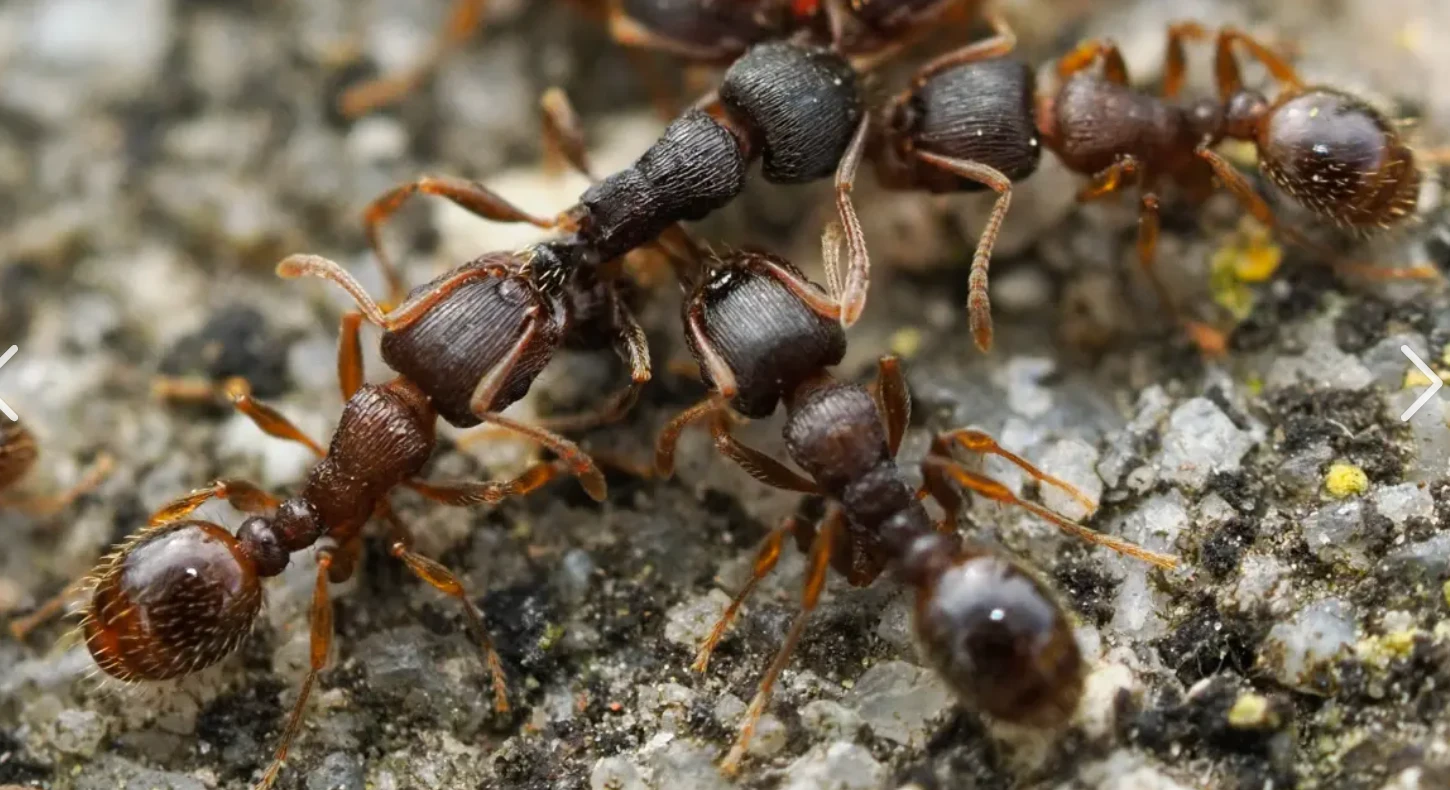
Colour. Carpenter ants in Ontario are usually black, sometimes with a reddish tinge. They look more solid and substantial than smaller species.
Body shape. Carpenter ants have a single, smooth, evenly rounded thorax (when viewed from the side). Pavement ants have a more angular profile. This is hard to see without a magnifying glass — usually size and behaviour are easier to go on.
Where you see them. Carpenter ants are often spotted indoors at night, especially around damp areas — bathrooms, kitchens, basements, anywhere there's a water source or moisture issue. Regular kitchen ants are more daytime-active and follow trails to food.
Wood shavings. This is the dead giveaway. Carpenter ants push tiny piles of sawdust-like material (called frass) out of their galleries. If you see small piles of what looks like fine wood shavings near a window, door, baseboard, or deck, you almost certainly have carpenter ants.
Sound. A large carpenter ant colony can be loud enough to hear — a faint rustling sound inside a wall, especially at night.
Where Carpenter Ants Build Nests
Carpenter ants prefer wood that's already been compromised by moisture. Common nest spots in Guelph homes:
- Window and door frames near old caulking
- Deck posts and railings
- Roof areas under leaking flashing
- Bathroom subfloors with old plumbing leaks
- Basement sill plates
- Trees with rot or hollow areas, then expanding into the house
If you've had a roof or plumbing leak in the past, the area is a candidate for a carpenter ant nest, even if the leak was repaired.
Why DIY Sprays Often Make It Worse
Spraying visible ants with hardware-store products kills the ones you can see. The colony — often containing thousands of ants and a queen — is somewhere else. Worse, some sprays cause the colony to "bud," splitting into multiple new colonies. You go from one problem to several.
Effective carpenter ant treatment needs to:
- Locate the actual nest (or nests)
- Use the right kind of bait or treatment so workers carry it back to the queen
- Address the moisture issue that attracted them in the first place
- Verify with follow-up that the colony is gone
How Summit Handles Ant Problems
Tateum starts every ant call with a proper inspection — not just where you're seeing them, but where they're coming from. Identifying the species is step one; finding the nest is step two; building a treatment plan that fits both is step three.
For regular house ants, that often means a single targeted treatment. For carpenter ants, it usually means a bigger plan: treatment plus addressing the conditions that made the home attractive in the first place.
Frequently Asked Questions
Do carpenter ants always damage the house?Eventually, yes — though it depends on how long the colony has been active. A colony in its first year may cause minimal visible damage. A colony that's been there 3+ years can cause significant structural issues.
Why am I seeing carpenter ants in winter?Carpenter ants seen indoors during winter usually mean an established indoor nest. Outdoor colonies go dormant; indoor ones stay active in heated spaces.
Are carpenter ants and termites the same thing?No. Termites eat wood; carpenter ants don't. Both can damage homes, but the treatment approaches are different.
How long does carpenter ant treatment take to work?Most carpenter ant colonies are eliminated within 2–4 weeks of proper treatment, with full resolution confirmed at follow-up.
If You're Not Sure What You Have, Find Out
Carpenter ants vs. regular ants is one of those calls where being wrong is expensive. If you're seeing larger black ants indoors, especially with any sawdust-like piles nearby, get an inspection before the colony grows.
Summit Pest Control handles ant identification and treatment across Guelph and surrounding areas.
Call (226) 780-6446 or request a quick estimate today.