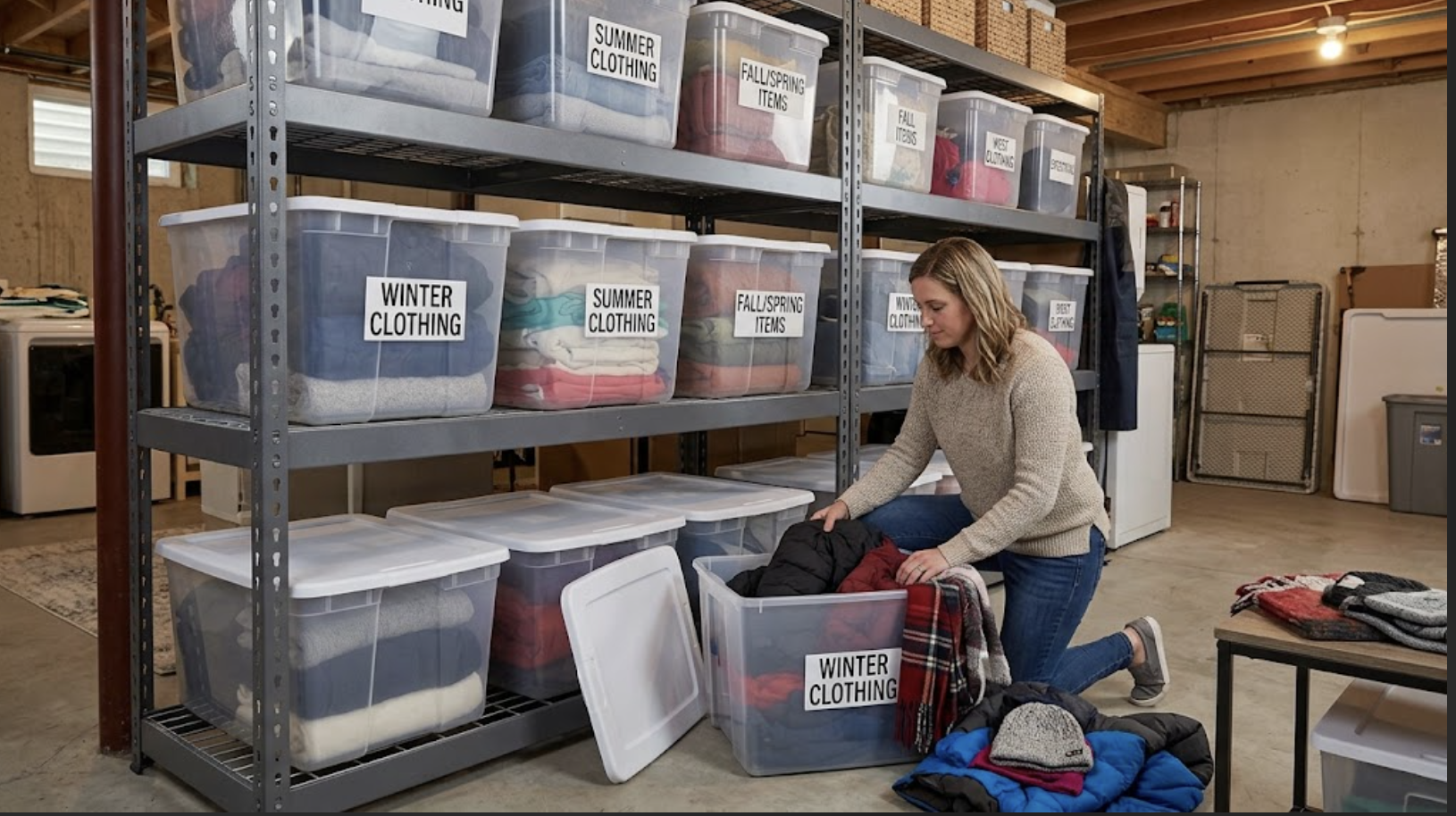
The great seasonal swap is underway: winter coats, boots, and blankets coming out; summer clothes, camping gear, and patio fabric going in. It's the highest-traffic moment of the year for household storage — and in pest terms it's two events at once: the discovery window for whatever fed on stored items all summer, and the packing window that decides next spring's discoveries.
The fabric-pest guides earlier this month covered the clothes-specific protocols. This is the whole-household version — the storage system itself. Here's how to unpack like an inspector and pack like the pests are watching, because they are.
The Unpack — Inspect Before It Integrates
The rule that prevents most storage-pest spread: inspect at the bin, before contents disperse into closets and rooms.
Open over a clean, light-coloured surface — old sheet, garage floor — so anything that falls out is visible.Read the bin first. Droppings, chew marks on the container, webbing at the rim, shed skins, or a musty smell — the container's evidence tells you whether the contents need the full protocol or a quick check.Shake out and eyeball each fabric item — folds, cuffs, and collars, per the moth and beetle guides. Small scattered holes, webbing, gritty cases, bristly larvae or their skins: that item and its binmates go straight to the hot dryer (30+ minutes), not the closet.Anything mouse-touched — droppings, shredded material, chewed corners — gets the safe-cleanup handling (dampen, gloves, no dry shaking indoors) and a hot wash or disposal call. A nested bin also means the storage area itself needs the monitoring-and-sealing look.Cardboard discoveries — silverfish grazing on box surfaces, cockroach evidence in seams — are a verdict on the container, not just the contents. Which brings us to:
The Container Verdict
The storage-pest hierarchy is simple and unforgiving:
Cardboard: fails everything. It's mouse bedding, silverfish food, cockroach shelter (and eggs ride its seams — the freight lesson from the warehouse guide applies at home), and it wicks moisture. Cardboard is transport, not storage.Fabric bags and open shelves: fail everything mobile — no barrier to moths, beetles, or mice.Rigid sealed plastic totes: pass for nearly everything household. Gasket-lidded versions pass better. Clear bins add the inspection bonus — you can see trouble without opening.Metal cans with tight lids: the gold standard where stakes are high — heirloom textiles, and (per the rural and feeder guides) all seed and feed.Vacuum bags: excellent for bulky fabric — compression plus barrier — inside a rigid tote so rodents can't puncture them.
The swap season is the cheapest moment to upgrade: every cardboard box you retire as bins empty is a permanent risk removed.
The Pack — Five Rules
Clean and bone-dry going in. Soil attracts (the moth guide's worn-sweater rule generalizes to everything), and trapped moisture grows mold and feeds the moisture cast. Wash, dry fully, then pack.No food, ever, in general storage. Crumbs in the camping bin, the granola bar in the beach bag, pet treats in the gear tote — each is a beacon. Food lives in the kitchen system or the sealed-can tier, nowhere else.Seal honestly. Lids fully latched, vacuum bags actually sealed, no "mostly closed" — a finger-width gap rates the same as open in mouse terms (the dime rule, again).Label with dates. Not just contents — pack dates. Storage age drives risk (the warehouse guide's dead-stock lesson at home scale), and dated bins make the rotation visible.Skip the folklore going in. Cedar and lavender per the natural-remedies verdicts — pleasant, briefly mildly useful, no substitute for clean-and-sealed. Mothballs: no (toxicity and off-label reality from the same guide).
The Storage Room Itself
Bins are half the system; the room is the other half:
Elevate and gap. Bins off the floor on shelving, a hand's width off walls — the inspection-and-airflow rule from the cold room guide, applied everywhere. Floor-stacked bins against a wall recreate the undisturbed-edge habitat every guide warns about.Zone by risk. Fabric and paper storage in the driest available space; the damp cellar corner gets only the sealed-plastic and metal tiers. The basement humidity work (dehumidifier at ~50%) protects storage as much as it suppresses silverfish.Light monitoring layer. A glue board behind the shelving and a snap trap along the wall — per the tools guide, storage rooms are exactly where a standing monitor pays, because nobody's watching otherwise.Annual disturbance. The stillness rule one more time: even sealed storage benefits from a yearly shuffle — move bins, sweep behind, glance at monitors. Ten minutes per season keeps the room read.
Special Cases Worth Naming
Holiday decorations: the classic mouse-nest discovery (soft ornaments, tissue, cardboard) — upgrade that lineage of boxes to totes this year and end the tradition. Camping gear: food residue is the whole risk — empty every pocket, air out, pack clean (sleeping bags get the hot-dryer treatment). Books and papers: sealed totes with silica packs in dry rooms — silverfish insurance. Electronics and cords: totes, not boxes — chewed cable insulation is a real pattern in mouse-active storage.
Frequently Asked Questions
Are vacuum-sealed bags rodent-proof? Barrier yes, armour no — a determined mouse can puncture them, which is why the bag-inside-tote pairing is the standard. Against moths and beetles alone, the sealed bag suffices.
Do I need to wash items that were stored clean in sealed bins? A shake-and-look suffices if the bin passes inspection — the full re-wash is for evidence, odour, or anything stored open. Clean-sealed storage is precisely what makes unpacking low-effort.
Silica packs, moisture absorbers — worth it? In sealed bins in damp spaces, yes — cheap mold-and-moisture insurance. They do nothing against pests directly; dryness just removes the moisture cast's invitation.
Basement, garage, or attic — which storage area is safest? Ranked by pest pressure: a dry finished basement beats all; garages carry the rodent traffic of the garage guide; attics stack rodent, overwintering-insect, and temperature-swing risk highest. Whatever the room, the sealed-and-elevated system does most of the equalizing.
Close the Loop
Inspect at the bin coming out; clean, sealed, dated, and elevated going in. Run the swap that way twice a year and storage stops being where pest surprises come from.
Summit Pest Control handles storage-area assessments and monitoring across Guelph, Cambridge, KW, and surrounding areas.
Call (226) 780-6446 or request a quick estimate today.