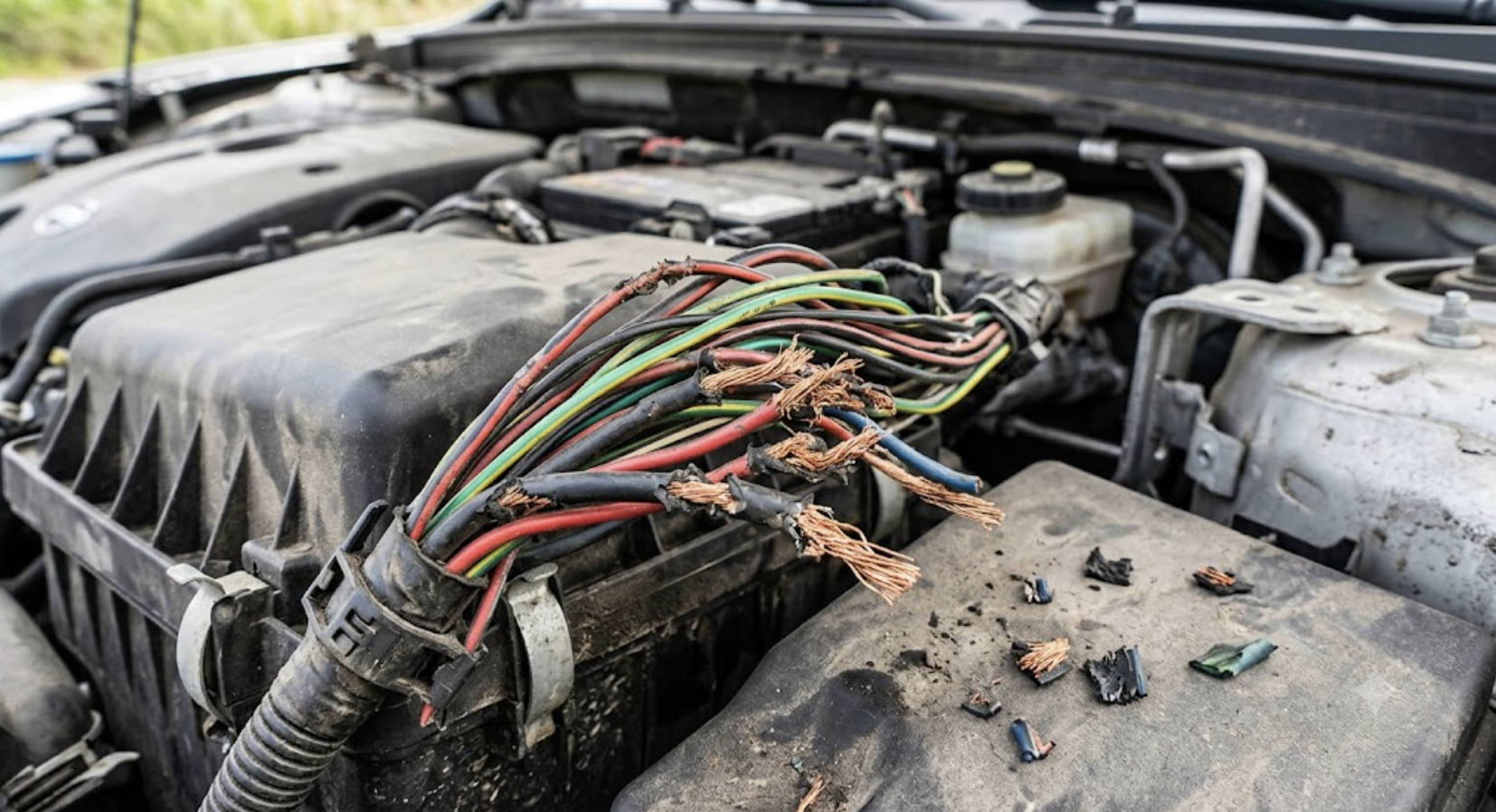
Every spring, Summit hears the same story with different vehicles in it. The RV that wintered in the side yard now smells like a barn and has a nest in the furnace ducting. The boat under the shrink wrap has chewed seat upholstery. The classic car in the barn won't start because the harness is gnawed through — a repair bill that starts around $500 and climbs past $3,000 on modern vehicles.
Stored vehicles are ideal mouse habitat: enclosed, undisturbed for months, full of soft nesting material, with dozens of protected entry routes. And modern wiring insulation — often soy-based — is genuinely appealing chewing material.
The good news: this is one of the most preventable pest problems there is. Here's the storage prep that works.
Why Vehicles Specifically
A parked vehicle offers mice everything at once:
Entry everywhere. Engine bays are open architecture; mice climb tires and enter through the firewall, vents, and countless gaps. RVs have underbelly penetrations, slide-out seams, and compartment doors. Boats have drain holes, vent lines, and cockpit covers that sag into ramps.Nesting material on tap. Cabin air filters, seat foam, insulation, stored linens, paper towel rolls in the RV cupboard.Zero disturbance. A vehicle untouched from October to April is the quietest real estate on the property.Food, often. Crumbs in seat rails, snacks in RV cabinets, a forgotten granola bar in the glovebox.
Step 1 — Clean Like It Matters (Because It's Most of the Battle)
Before storage:
Remove every trace of food. RV cupboards emptied completely — sealed containers aren't enough over a full winter; take it all out. Vacuum crumbs from seat rails, under cushions, and floor mats. Empty the glovebox and console of anything edible, including gum and cough drops.Remove nesting supply. Take bedding, towels, paper products, and fabric out of RVs and boats. What must stay goes in sealed plastic totes — not cardboard.Clean surfaces. Wipe down galley and kitchen areas so no food residue remains.Take out the garbage — including the small bags in vehicle door pockets.
A vehicle with nothing to eat and nothing to nest in is dramatically less worth colonizing.
Step 2 — Close the Doors Mice Actually Use
Vehicles/cars: Close HVAC vents to "recirculate" before parking. Stuff stainless steel mesh or copper wool into the exhaust tip and the air intake opening (leave yourself a bright reminder tag on the steering wheel to remove them). Check that cabin air filter housing is seated properly.
RVs: Walk the underbelly with a flashlight and mirror. Every plumbing, wiring, and gas line penetration gets sealed around with steel wool embedded in sealant or with proper mesh. Check corner seams, slide-out gaskets, and compartment door seals. Screen the furnace and water heater exterior vents with rodent-rated mesh made for the purpose (don't block airflow with improvised stuffing on appliance vents).
Boats: Plug drain openings appropriately for storage, screen vent lines, and make sure the cover is taut — a sagging cover touching the ground is a ramp aboard. Shrink wrap helps only if it's fully sealed; a single gap makes it a protected enclosure for the mice instead.
Step 3 — Make the Parking Spot Less Friendly
Storage location matters as much as vehicle prep:
Hard surface beats grass. Parking on gravel or concrete, away from long grass, wood piles, and dense vegetation, removes the covered approach routes mice prefer.Distance from feeders and compost. Don't store the RV beside the bird feeder.Elevation helps boats and trailers. Blocked-up storage with clean space underneath is less accessible than gear sitting in vegetation.Inside a sealed garage or barn only counts if the building itself is sealed. A mouse-accessible barn concentrates mice around your vehicle. If the building has activity, address the building.
Step 4 — Deterrents and Monitoring (In Their Proper Place)
Peppermint-oil products, deterrent pouches, and similar scent items are supplements, not solutions — in the enclosed space of a stored vehicle they contribute modestly, and they fade. Use them after steps 1–3, not instead of them.
What actually earns its keep:
Traps as monitors. A few snap traps inside the RV or boat (placed where you'll remember them) and around — not inside — the car tell you immediately if anything got past the prep.Monthly checks. Ten minutes a month through the winter: look for droppings, check traps, scan for new gnaw marks. Catching one mouse in November beats discovering a colony in April.Lights and disturbance. For barn or garage storage, occasionally running the vehicle's location lights or simply disturbing the space during your monthly check reduces the "undisturbed" appeal.
Skip loose rodenticide around stored vehicles entirely — it poisons pets and wildlife, and a poisoned mouse dying inside your dash ducting is a spring problem all its own.
Spring De-Winterizing Check
Before first use: remove exhaust/intake plugs (that's what the steering-wheel tag was for), inspect the engine bay and air filter housing for nesting, check wiring visually where accessible, run ventilation systems and smell for trouble, and inspect RV appliance compartments before firing anything up. Any nest evidence near wiring warrants a proper look before long trips.
How Summit Helps
For stored-vehicle and outbuilding rodent concerns in Guelph and Wellington County, Summit offers:
Storage-area assessments — the barn, garage, or yard where the vehicle wintersBuilding exclusion so the storage structure itself isn't the problemMonitored station placement for storage buildings, checked through the seasonSpring inspections when something got in anyway and you need to know how far it went
Frequently Asked Questions
Does starting the vehicle every few weeks keep mice out? Disturbance helps at the margins, but a nest behind the dash doesn't care about a ten-minute idle. Prep and sealing do the real work.
Are dryer sheets under the hood worth it? No meaningful evidence — and mice have been found nesting in them. See our natural remedies guide for the full honest list.
Is a car cover good or bad for mice? A fitted cover on a clean, prepped car is neutral-to-good. A loose cover touching the ground adds a sheltered runway. Fit matters.
What's the single most important step? Food and nesting material removal. A vehicle with nothing worth staying for gets explored and abandoned; one with a snack cupboard gets colonized.
Winterize Against Mice Too
You winterize the plumbing and the engine — the rodent prep belongs on the same checklist. An hour in October protects thousands of dollars of vehicle until spring.
Summit Pest Control handles rodent prevention for storage buildings and properties across Guelph, Fergus, Elora, and surrounding areas.
Call (226) 780-6446 or request a quick estimate today.