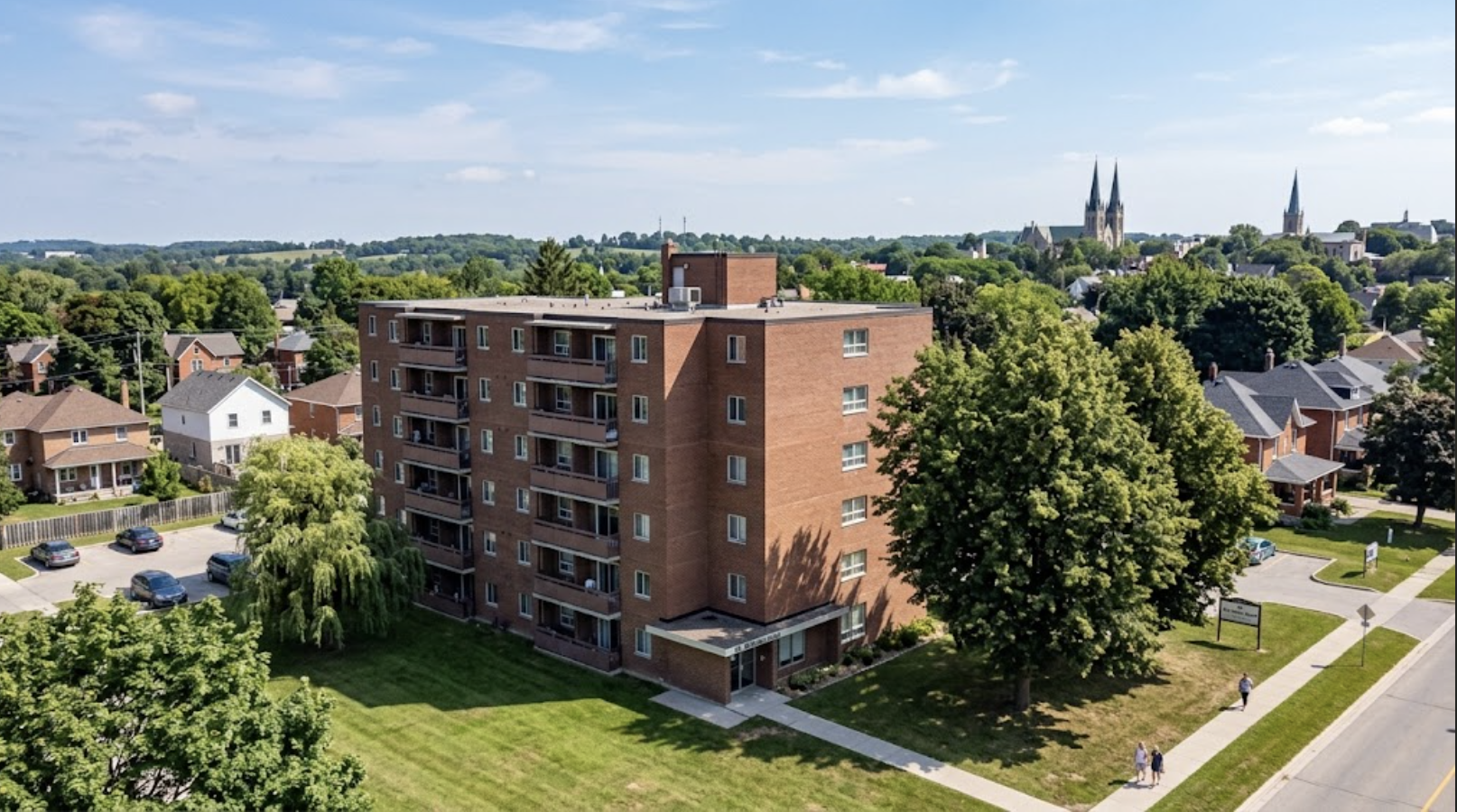
The tenant-landlord guide in this series covered who pays. This one is for the people running the buildings — the property managers and landlords of Guelph and KW's low-rises, converted houses, student buildings, and townhome blocks — because multi-unit pest control is genuinely its own discipline, and the difference between buildings that stay quiet and buildings that cycle through infestations is almost entirely program design.
The core fact everything follows from: in a multi-unit building, pests are a building-system problem. Cockroaches, bed bugs, and mice move through shared walls, pipe chases, and corridors — which means one untreated unit defeats five treated ones, and unit-by-unit reactive service is structurally designed to fail.
Why Reactive Unit-by-Unit Service Fails
The failure pattern is always the same: a tenant reports roaches, unit 4 gets treated, the population shifts through the wall to units 3 and 5, they report weeks later, treatment chases the problem around the building indefinitely — cost without resolution. Add the human factors (tenants who don't report out of embarrassment or fear, units that refuse access, turnover that resets knowledge) and reactive service isn't cheaper; it's just slower and paid in instalments, plus vacancy, turnover, and reputation costs on top.
The Program That Works
Building-level assessment first. Map the building as a system: unit inspections across the stack (not just the reporting unit), common areas, garbage rooms and chutes, laundry, mechanical rooms, and the exterior perimeter — producing a building pest map, not a complaint log.Block treatment protocols. For roaches and bed bugs, the treatment unit is the block — the affected unit plus adjacent units (beside, above, below) inspected and treated as one event. This is the single practice that separates buildings that clear infestations from buildings that circulate them.The common-area backbone. Ongoing service on the building's shared systems — garbage and recycling rooms (the building's pest engine), laundry and mechanical rooms, corridors, and the exterior perimeter with its station line (per the tools guide, maintained and logged). Common-area discipline suppresses the reservoir that reinfests units.Reporting culture, engineered. Tenants are the sensor network, and the program depends on early reports: a simple, blameless reporting channel, communicated at move-in and re-communicated seasonally; fast visible response to reports (the strongest possible signal that reporting works); and explicit no-fault framing — the tenant-landlord guide's legal reality plus the clean-house myth from yesterday both argue for it. A building where tenants report in week one instead of month three has cut its infestation costs by most of the total.Access management done properly. Legal notice practices for unit entry, coordinated scheduling for block treatments, translated notices where the building needs them, and prep-support for tenants who can't manage bed-bug prep alone (elderly and mobility-limited tenants especially — untreated-because-unprepped units are program leaks).Turnover inspections as standard. Every vacancy gets a pest inspection in the make-ready — the student-rental guide's move-in check, run from the owner's side. Catching the outgoing tenant's unreported problem before the incoming tenant inherits it is the cheapest treatment window a building ever gets.Documentation as protection. Per-unit and building-level service records, report-response timelines, and treatment verification — the file that answers tenant disputes, LTB proceedings, and public-health inquiries. In multi-unit work, the paperwork is legal infrastructure.
The Money Conversation
Program service costs more per month than no service and less per year than the reactive cycle — the honest math includes what reactive spending actually totals: repeat treatments chasing shifting populations, vacancy and turnover from pest-driven departures, staff time on complaints, legal exposure when response lags, and the listing-review damage that outlasts any infestation. A right-sized program for a small Guelph low-rise is a predictable line item; the reactive alternative is an unpredictable larger one that arrives at the worst times. Summit builds multi-unit programs at both scales — the converted-house fourplex and the corridor low-rise — with the block-treatment protocols, documentation, and direct-line responsiveness the discipline requires.
Frequently Asked Questions
Can we require tenants to pay for treatments? The tenant-landlord guide covers the legal reality: responsibility defaults to the landlord in most Ontario situations, and charge-backs require demonstrable tenant causation through proper channels. Program design assumes owner responsibility because that's both the law's default and the fastest route to resolution.
A tenant refuses access for a block treatment. Now what? Proper written notice under the RTA generally establishes entry rights; persistent refusal is an LTB matter — document everything. Meanwhile treat the accessible units and re-schedule; one holdout delays but shouldn't cancel the block.
How fast should a manager respond to a bed bug report? Inspection within days, not weeks — bed bug outcomes and costs scale directly with response time, and response speed is exactly what tribunals and public health look at. Fast response is also the cheapest response; that alignment is the manager's friend.
Do we disclose past infestations to prospective tenants? Legal disclosure obligations are a lawyer's question; practical reputation management favours honesty about resolved-and-documented issues over discovered concealment. A documented program is itself the best answer to the question.
Run the Building, Not the Complaints
Multi-unit pest control succeeds as a system — block protocols, common-area discipline, reporting culture, and paperwork — or fails as a complaint queue. The buildings that chose the system stopped having pest years ago.
Summit Pest Control builds multi-unit programs for landlords and property managers across Guelph, Kitchener-Waterloo, Cambridge, and surrounding areas.
Call (226) 780-6446 or request a quick estimate today.