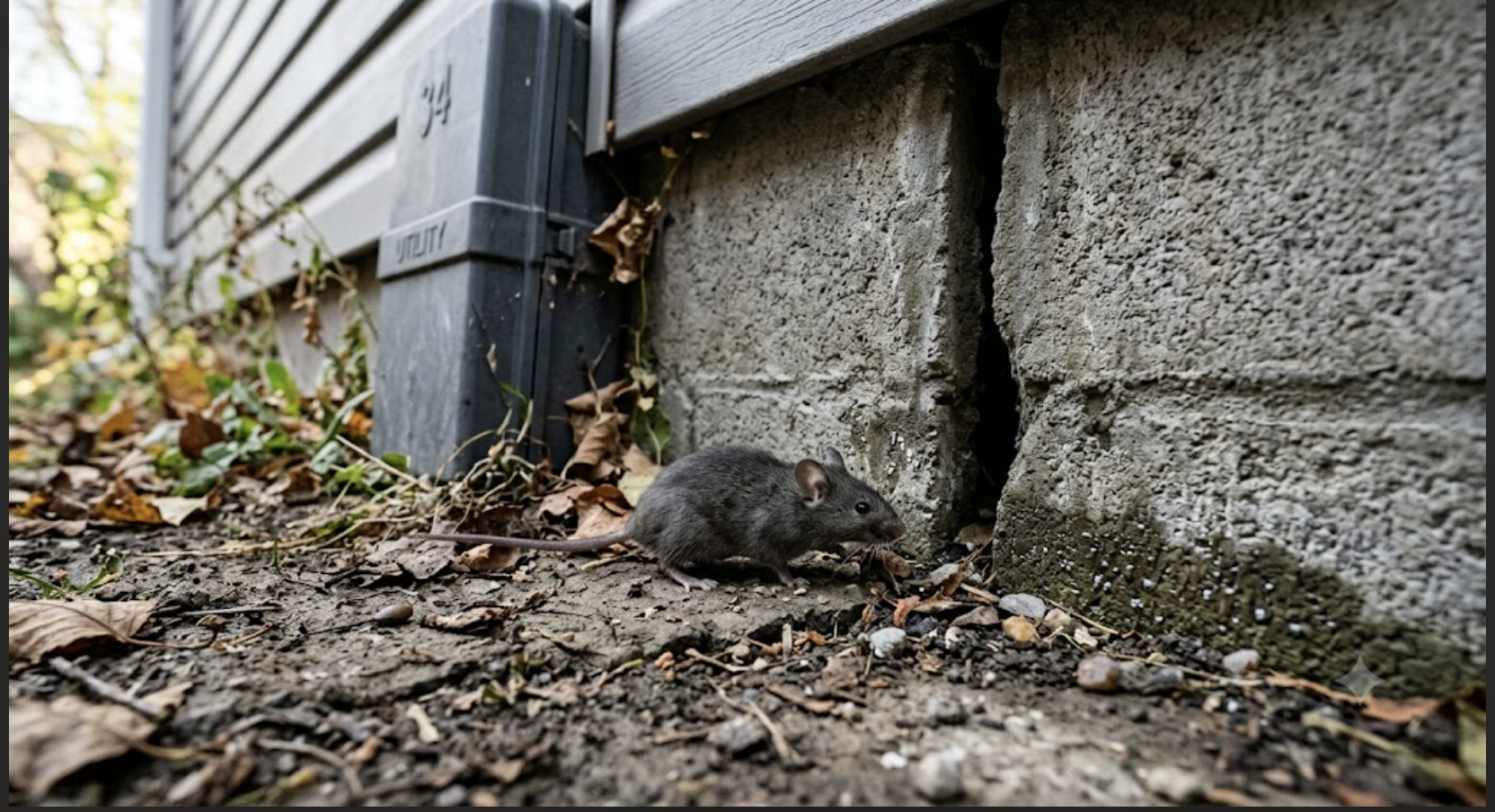
Most Guelph homeowners think of rodent season as fall. Cold weather comes, mice move in, and by October you're dealing with an active problem. That's when the calls to pest control spike.
Here's what most people miss: by the time you're hearing scratching in the walls in October, the mice you're hearing chose your house in July or August. Late summer is when rodents scout, decide, and start establishing. It's the highest-leverage window for prevention — and the one most homeowners sleep through.
Here's what to actually watch for right now.
Why Late Summer Is Rodent Scouting Season
Mice and rats are opportunists. They don't wait for frost to hunt for winter shelter — they start scouting when:
- Outdoor food sources start to decline (usually August)
- Populations peak from summer breeding
- Weather variability drives them to test indoor comfort
- Competition for winter territory intensifies
Late July through August is exactly when this behaviour peaks. The mouse activity you notice in mid-summer is the leading edge of what becomes your fall problem — if you don't intervene.
The Early Signs Most People Miss
Fall rodent problems announce themselves loudly. Late-summer scouting is much quieter:
1. Occasional single droppings in unexpected places. Not accumulated, not obvious — just one or two droppings on a garage shelf, along a basement baseboard, or behind a rarely-used appliance. Easy to write off as coincidence. Usually isn't.
2. New gaps in weatherstripping. Mice test soft materials for chewability. Small teeth marks on the corner of garage door weatherstripping is a scouting sign.
3. Reappearing gnaw marks. Small fresh chew marks on bird seed bags, pet food bags, or cardboard storage boxes.
4. Faint musky smell in an area that wasn't there before. Mouse urine has a distinct ammonia smell. If you're catching it in a specific spot, activity is likely.
5. Fresh burrows appearing near foundations. Especially near garden edges, along fence lines, or under sheds and decks.
6. Rub marks along baseboards or foundations. Mice follow the same paths — early rub marks are subtle greasy smudges you have to look for.
7. Missing pet food or bird seed overnight. Even small amounts.
8. Nesting material starting to appear in storage boxes, garage corners, or under-sink areas.
9. Dog or cat suddenly interested in a specific spot — behind the fridge, along a wall, under a couch — that they weren't interested in before.
Any single sign might mean nothing. Two or more usually means active scouting.
Where to Look Right Now
Focus your late-summer inspection on:
Garage:
- Corners of the garage door (weatherstripping)
- Stored bird seed, pet food, and grass seed
- Shelves and stored items
- Behind and under vehicles
Basement:
- Utility entry points (water, gas, electrical, cable)
- Behind and under the furnace and hot water tank
- Corners of storage rooms
- Around sump pump
Attic (if accessible):
- Around soffit corners
- Along the roof line
- Around any roof penetrations
- Insulation surface for tracks or droppings
Exterior:
- Foundation perimeter for burrows
- Under decks and porches
- Around outbuildings and sheds
- Along fence lines
Kitchen and pantry:
- Behind and under appliances
- Under sinks
- In pantry corners
What to Do When You Find Something
Not everything requires immediate action, but everything should be addressed within a few days:
Single dropping, no other signs:Clean thoroughly, watch the area, check again in 3–5 days. Sometimes a single mouse passes through without staying.
Multiple droppings or repeat activity:Set traps immediately. Book a professional inspection within the week.
Chewed food packaging or nesting material:Active population present. Professional response is the right call. DIY alone will be behind the curve.
Burrows outside:Address structural exclusion. Yard-level rat activity requires professional treatment for meaningful results.
Any activity in an older home:Higher stakes — established populations in older homes cause more damage faster. Book an inspection.
Why August Prevention Beats October Reaction
Two ways to solve a rodent problem:
October reaction: Population already established. Active droppings, chewed wiring, disturbed insulation. Requires trapping to reduce population, exclusion to prevent more entry, cleanup, and possibly insulation remediation. Multi-week process. Ongoing management needed to prevent rebound.
August prevention: Scouting activity detected before establishment. Entry points sealed before mice choose the property. Small early population addressed quickly. Full protection in place before cold-weather pressure. Days-to-weeks process. Long-term management much easier.
The August version costs a fraction of the October version. And it doesn't come with the sleepless nights or chewed wiring.
The Late-Summer Exclusion Push
For homeowners taking prevention seriously, the ideal window is late July through early September for:
Full exterior audit of every potential entry point.
Sealing work — hardware cloth, steel mesh, proper sealants — for every gap that could admit mice.
Structural fixes — worn weatherstripping, damaged soffit corners, gaps around utility entries, foundation cracks.
Yard-level changes — moving wood piles, addressing vegetation touching the house, cleaning around outbuildings.
Interior monitoring setup — traps or monitoring devices in key areas to catch any early activity.
Follow-up plan — one more visit in September to reassess.
This is what a serious fall prevention program looks like. Most Guelph homes can be fully protected with 2–3 visits during this window.
How Summit's Late-Summer Rodent Prevention Works
For a Guelph home taking prevention seriously, Tateum's approach:
- Full property inspection — inside, outside, attic, basement
- Documented entry point map — you see exactly what's being addressed
- Sealing work — appropriate materials for each location type
- Monitoring placement — where useful to catch any early activity
- Homeowner action plan — what to change on your end
- Follow-up visit in 4–6 weeks to reassess
Most late-summer prevention visits identify 6–15 potential entry points. Sealing all of them dramatically reduces fall rodent problems.
Frequently Asked Questions
Do all Guelph homes have some rodent pressure?Effectively yes. Population pressure varies by neighbourhood — older streets, homes near ravines, and properties with mature landscaping face more pressure — but all Guelph homes see some level of rodent activity in the surrounding area.
How much does late-summer rodent prevention cost?Typically $400–$800 for a full audit and sealing work on an average Guelph home, depending on findings. Prevention costs a fraction of active-infestation response.
Can I just wait and see if I get mice?You can, and many homeowners do. The problem is that once mice are established, the treatment cost, damage, and disruption are much higher than prevention.
When is it too late to start prevention for the fall?Even mid-October prevention work is worthwhile — it just prevents the population from growing rather than preventing entry entirely. Earlier is better.
The Window Is Now
Every week of August that goes by is another week mice have to choose your house. The work you do in the next 30 days determines whether the next 6 months are quiet or expensive.
Summit Pest Control offers late-summer rodent prevention across Guelph and surrounding areas.
Call (226) 780-6446 or request a quick estimate today.