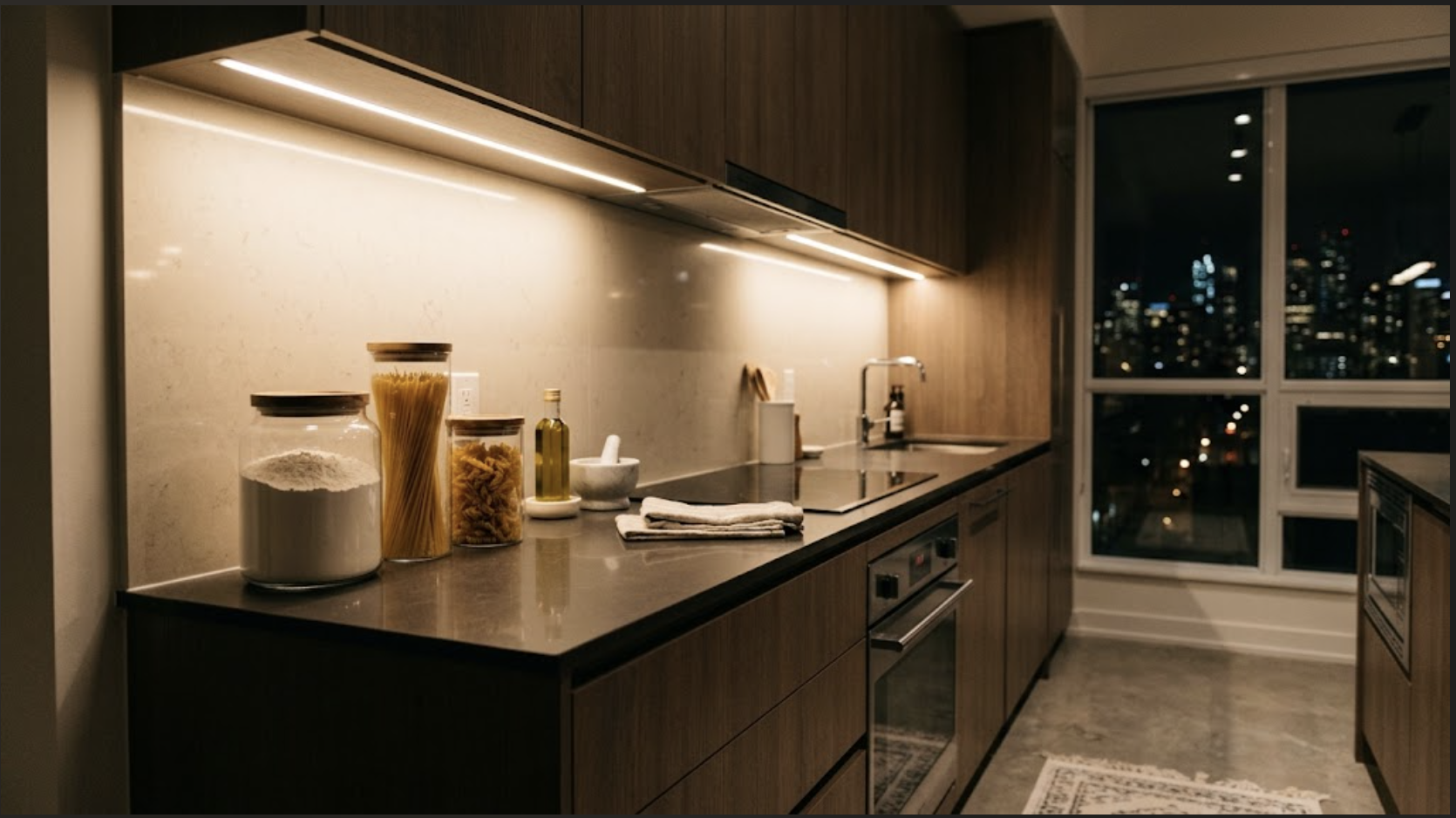
The September exclusion project sealed the building envelope. This post zooms into the one room that decides how any breach plays out: the kitchen. Every mouse that gets past the perimeter is heading here — it's the calorie centre of the house — and a kitchen run tight turns an intruder into a passer-through, while a loose one turns the same mouse into a resident with a family.
Mid-October, with Thanksgiving cooking ahead and rodent pressure at annual peak, is exactly when to run the lockdown. Here's the room, zone by zone.
Zone 1 — Behind and Under the Appliances
The stove and fridge gaps are the kitchen's true interior: dark, warm, crumb-fed, and never disturbed. This is where kitchen mouse activity lives, and it's the zone the lockdown starts with.
Pull the stove and fridge out — most roll or walk out in minutes. What you'll find after a few years is normal (a startling crumb archive) and exactly the point.Clean the floor and wall behind both — degrease the stove zone; crumbs plus grease is premium mouse forage.Check the gaps while you're there: the gas line or electrical penetration behind the stove and the water line behind the fridge are two of the most common interior entry points in any house — mesh and seal per the exclusion project.Check the anti-tip bracket area and the fridge's compressor cavity — the warm compressor space is a favourite harbour; droppings there are a definitive activity read.Repeat seasonally. Twice a year keeps the zone readable; the first pull is the hard one.
The dishwasher's kick panel cavity and the under-sink cabinet complete the circuit: the sink plumbing penetrations are the classic cabinet entry (mesh, seal), and the kick panels along the cabinet run are hollow highway — droppings inside kick spaces are why pros pop them during inspections.
Zone 2 — The Food, Hardened
The storage doctrine from the pantry pest guide, re-run with mouse teeth in mind:
Glass and metal beat everything. Mice chew through paper, cardboard, and thin plastic bags without noticing. Flour, rice, pasta, cereal, oats — into glass jars, metal tins, or heavy rigid plastic.The forgotten calories are the leak. The bag of dog food in the corner (the pet food post covers this at length next week), the potatoes in a paper bag on the pantry floor, the baking chocolate in original packaging, the open bag of birdseed staged for the feeder — each one out-attracts the sealed goods by miles.Floor-level pantry shelves get the rigid-container rule hardest — floor level is mouse level.The bread question: a steel bread box genuinely earns its counter space in an active-pressure house; bread in a bag on the counter is the easiest meal in the room.
Zone 3 — The Nightly Reset
Mice work the overnight shift, so the kitchen's state at 11pm is the only state that counts:
Dishes done or submerged — a pan with sauce residue is a full mealCounters wiped and the sink strainer emptied — wet food waste in the strainer basket is overlooked constantlyGarbage lidded, and out when it's full rather than "tomorrow"Pet bowls up (the full bowl rules come Friday next week)Crumb sweep of the floor, toaster tray emptied weekly, and the counter-appliance line (toaster, air fryer, coffee station) crumb-checked — the toaster is a crumb silo
None of this is about judgment — the clean-house myth got busted in September. It's about the margin: a kitchen that offers nothing overnight makes every trap in the room the best food available, which is exactly how trapping campaigns end fast.
Zone 4 — The Evidence Stations
The lockdown finishes with monitoring, because the kitchen is also where activity shows first:
Know the three reads: droppings along the cabinet backs and kick spaces, gnaw marks on packaging corners, and the grease rub marks along baseboard routes (the evidence guide covers all three in depth)Set the standing monitors: a snap trap behind the stove and one in the under-sink cabinet — perpendicular to the wall, per the tools guide — live there permanently in any house with history. Silent for months, they're confirmation; snapped once, they're the earliest warning you'll ever getCheck monthly, and always after the first cold snap — the arrival window every fall guide circles
Frequently Asked Questions
I found droppings in one drawer — do I have to empty the whole kitchen? That drawer and its neighbours, yes — wash the contents, vacuum the cavity (damp method per the cleanup protocol), and find how they're entering the cabinet run. The whole kitchen only if evidence keeps appearing across zones; then it's a population, and the full program applies.
Are mice actually dangerous in a kitchen or just gross? Real contamination risk — droppings, urine, and the salmonella-class bacteria mice track across prep surfaces nightly. Any surface with evidence gets disinfected, anything gnawed gets discarded, and the allergy post from September adds the airborne dimension. It's a health room; treat evidence accordingly.
Steel wool under the sink keeps falling out — better option? Copper mesh packed tight, then sealed over with caulk — the combination holds and doesn't rust-stain. Loose stuffing alone always works out eventually.
We did all this and still hear them in the kitchen walls. Then the population is established in the structure and the kitchen is just their restaurant — the lockdown is starving them while the trapping-and-exclusion program removes them. That's the point where the program earns its fee; the lockdown makes it work faster.
Win the Room, Win the House
Every mouse story in a house runs through the kitchen. Seal its gaps, harden the food, reset it nightly, and keep two silent sentries behind the appliances — and the room that decides infestations decides in your favour.
Summit Pest Control runs kitchen-to-foundation rodent programs across Guelph, Cambridge, KW, and surrounding areas.
Call (226) 780-6446 or request a quick estimate today.