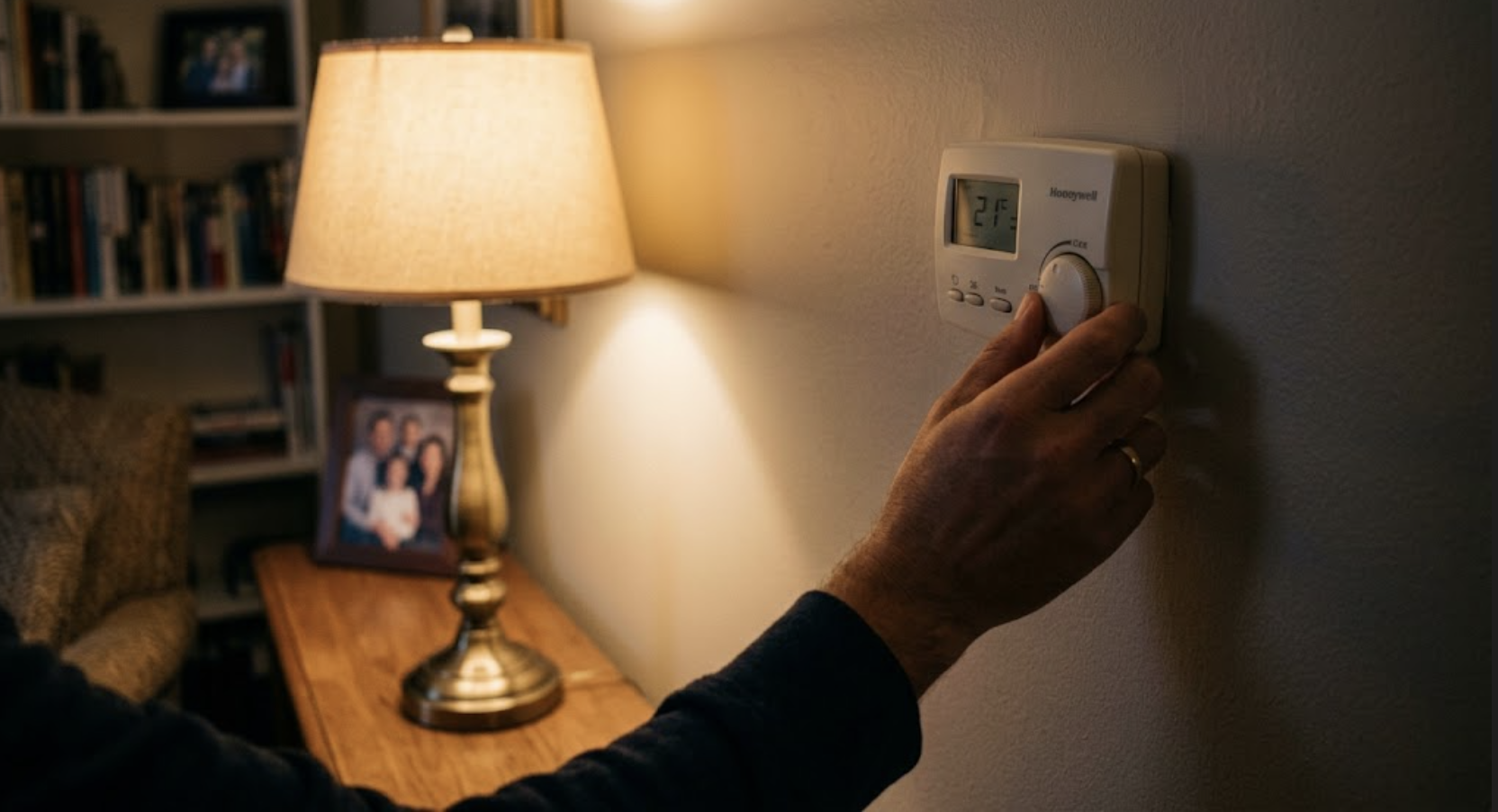
Some cool evening in the next few weeks, you'll do it: nudge the thermostat, hear the furnace catch, and smell that first-run smell every house makes. Mostly, that's dust burning off the heat exchanger — normal, gone in an hour.
But the first heat of the season is also a whole-house biological event. Warm air pushes through every duct, register, and wall cavity, and everything that settled into your structure this fall gets the wake-up call. Here's what stirs, what the different smells actually mean, and the ten minutes of pre-season checking that heads off the unpleasant versions.
What the Heat Wakes Up
The fall invader stirring. The cluster flies, lady beetles, boxelder bugs, and stink bugs that moved into your wall voids over the past six weeks are dormancy-triggered by temperature — and the first sustained heating cycle is exactly the warm-day signal that produces indoor emergences. The classic pattern: furnace season starts, and suddenly there are lady beetles at the upstairs windows and a cluster fly bumping the kitchen light. Not a new invasion — the residents, stirring. The vacuum-and-patience protocol from the fall invader guides applies all winter.
Wasp stragglers. A wall-void wasp nest near a heat run can produce confused late-season workers indoors during early heating cycles — sluggish, dying wasps at windows in October. A few is the colony's natural end; a steady stream means an actual wall nest situation (that guide's rules apply — especially the one about not sealing anything).
Crickets, spiders, and the basement cast, all of whom get more active and more visible as the basement warms and dries.
Reading the Smells
The diagnostic heart of this post — first-run smells, decoded:
Dusty/burning smell, gone within an hour: normal. Summer's dust burning off the exchanger and elements. No action.Musty/dirty-sock smell that persists: biological growth on the coil or in ducts/humidifier — an HVAC cleaning matter more than a pest one, but note it, because damp duct conditions also support the moisture-pest cast.Ammonia/urine smell from registers: rodent activity in or near the ductwork — urine warming on ducts or in adjacent cavities. This one is a pest finding: mice use duct chases as highways, and the smell means recent occupancy. Time for the inspection-and-exclusion response from the rodent series.Sharp dead-animal smell (you'll know it): a mouse or other animal died in a duct, chase, or adjacent void over the summer or early fall, and the heat is announcing it. Localize it register by register; accessible carcasses in ducts are retrievable (professional duct access if needed), void deaths ride out on time and ventilation — the cleanup guide covers the safe-handling side.Acrid/electrical smell: not a pest post's business — shut down and call HVAC. (Though for completeness: chewed wiring is one rodent contribution to electrical smells, which is why the rodent guides bang on about wiring.)
The Ten-Minute Pre-Season Check
Before the first real heating cycle, with a flashlight:
Registers and returns. Lift a few floor registers: droppings, seed caches, nesting material, or dead insects in the boot are direct evidence of what's using the duct system. Vacuum out debris (the safe-cleanup rules apply to droppings).Filter change with a look. A filter matted with insect parts or fur is telling you about the return-side traffic. Fresh filter regardless — it's also the carpet-beetle food-web point from last week's guide (dead insects in the system feed fabric pests).The furnace room walk-around. The utility room is a pest crossroads: check the furnace's combustion air intake and any gaps where lines and ducts penetrate walls (mesh-and-seal per the exclusion project), look for droppings behind and under the unit, and clear stored clutter off the floor around it.Exterior vents. High-efficiency intake/exhaust pipes and older chimney flues: confirm screens are intact and clear. These pipes are documented mouse and bird entries, and a nest-blocked intake is a safety issue beyond pests — screen per manufacturer spec (never improvised stuffing on combustion vents).The humidifier check. Furnace humidifiers with standing water or crusted pads are both an air-quality item and a little moisture-pest and drain-fly niche. Clean pad, correct drainage.
When the First Weeks of Heat Reveal a Problem
The heating season's start is genuinely diagnostic — treat the reveals accordingly:
Steady lady beetles/cluster flies at windows: wall-void population confirmed; manage indoors, calendar the late-August prevention for next year.Urine smell or register droppings: rodent program, now — winter is their growth season (the whole fall series exists for this moment).Recurring dead-animal smells season after season: something structural is admitting animals to the same void; that's an exclusion-audit flag, not bad luck.Allergy/asthma flare-ups with heating onset: pest residue in the air path (droppings dust, insect fragments, dander) is a real contributor — a topic big enough that it gets its own post later this month.
Frequently Asked Questions
Are the sluggish wasps at my window dangerous? They can still sting if handled, but they're dying workers, not an attack. Vacuum or cup them out. A continuing daily supply means a wall nest — different situation, different guide.
Can insects live IN the ducts? Ducts are more highway and graveyard than habitat — too dry and turbulent for most residents. The populations live in the voids and rooms the ducts connect; the ducts distribute the evidence (and the smells).
Should I get duct cleaning for pest reasons? After a confirmed rodent issue in the duct system — yes, cleaning plus sanitizing is warranted, alongside the exclusion that stops recurrence. As routine pest prevention absent evidence, it's optional.
Why does the smell come from only one register? Smells localize to the duct run nearest the source — that register is your search area for the carcass, activity, or moisture issue. Useful, if unglamorous, triangulation.
The Furnace Is About to Tell You Things
First heat is the house's fall status report: who moved in, who died trying, and which gaps are still open. Do the ten-minute check, read the smells honestly, and act on what the season reveals.
Summit Pest Control handles inspections, rodent programs, and fall-invader prevention across Guelph, Cambridge, KW, and surrounding areas.
Call (226) 780-6446 or request a quick estimate today.