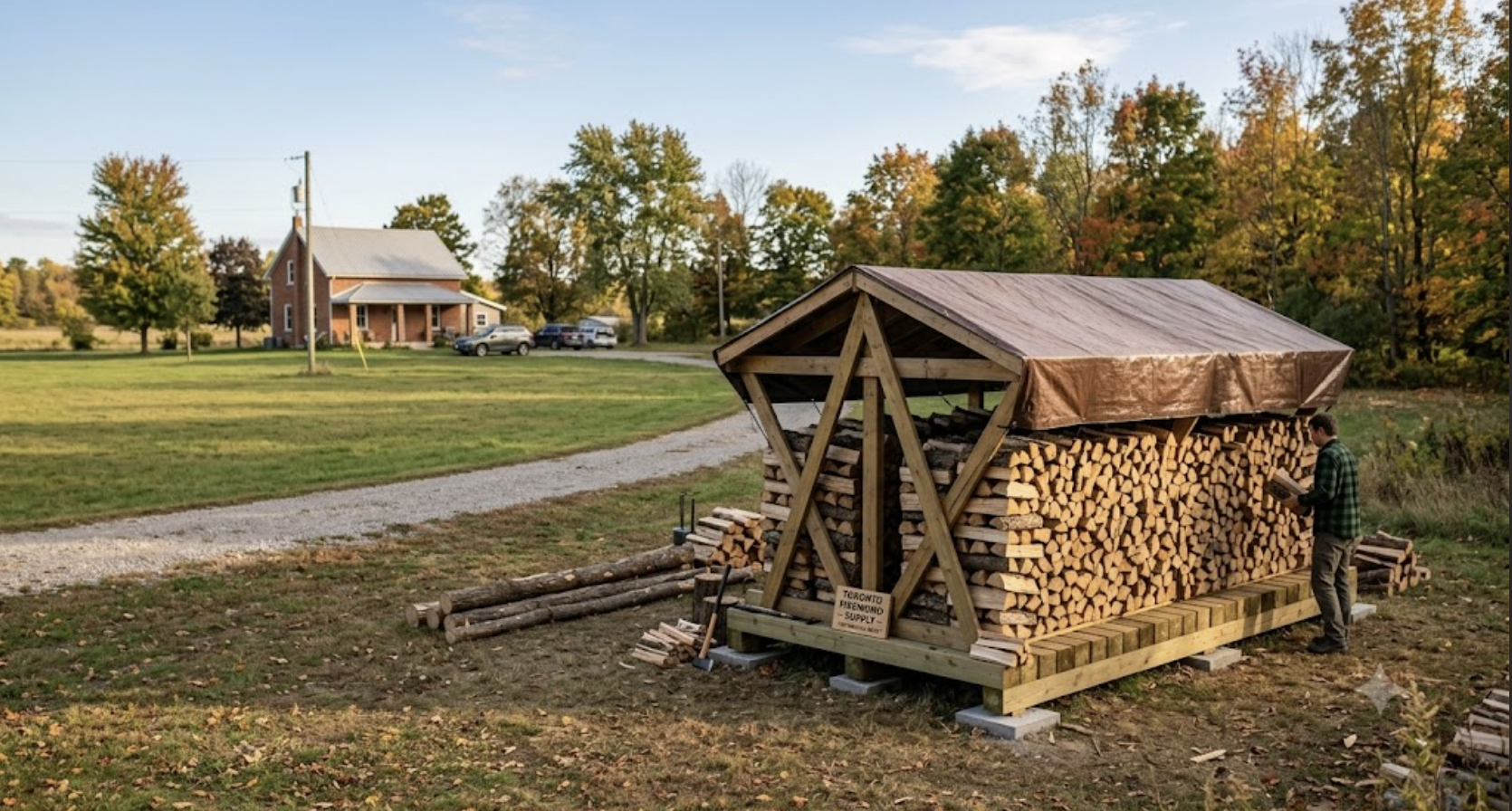
Wood heat is one of the great pleasures of a Wellington County winter. The firewood pile that makes it possible is also, honestly, the most pest-dense structure on most properties — a purpose-built habitat stack of shelter, moisture, and food sitting in your yard, sometimes against your house.
Order your cords now, in late August, and you get to set the pile up right from day one. Here's what lives in firewood, the storage setup that keeps the pile from feeding your pest pressure, and the carry-in routine that keeps the living cargo outside.
What's Actually Living in the Pile
A seasoned firewood pile hosts a genuine cross-section of this blog's back catalogue:
Carpenter ants — the headliner. Damp, ground-contact firewood is prime nesting habitat, and a colonized pile against the house is a staging ground for the structure itself. Large black ants and fine sawdust in the pile are the tells.Mice and voles — the gaps between logs are ready-made nest cavities with a roof. Voles tunnel beneath; mice colonize within.Spiders — abundant in every pile; mostly harmless hunters, but gloves exist for a reason.Sowbugs, millipedes, centipedes, earwigs — the moisture crew, thick in the damp bottom layers.Wood-boring beetles — larvae riding inside the logs themselves, sometimes emerging months later indoors (more on why that's mostly harmless below).Overwintering wasps and lady beetles — queens and beetles tucking into bark crevices for winter.Termites — rare in our area, but ground-contact wood piles are exactly the wrong bet to make with them.
None of this makes firewood a problem. Storage decisions make it a problem or not.
The Storage Setup That Works
Four rules cover almost everything:
- Off the ground. This is the big one. Ground contact is what turns a wood pile into habitat — moisture wicks up, the bottom layer stays damp and rotting, and everything from carpenter ants to termites gets its preferred conditions. Stack on a purpose-made rack, pallets, pressure-treated rails, or concrete blocks — anything that puts air under the pile. A raised pile is drier, seasons faster, burns better, and hosts a fraction of the pests. Every benefit points the same direction.
- Away from the house. Twenty feet minimum; more is better. A pile against the wall does three bad things at once: holds moisture against your foundation or siding, gives every pest in the pile a protected staging area at your building envelope, and bridges rodents past your exclusion work. The convenience of wood-by-the-door isn't worth what it costs. (Same logic applies to the barn, the garage, and the shed — distance from all structures.)
- Covered on top, open on the sides. Tarp or roof over the top third keeps rain and snow off; open sides let air move and wood dry. A pile wrapped tight in a tarp to the ground stays damp, seasons poorly, and shelters everything — the worst of both worlds.
- Old wood burns first. Rotate the stack — first in, first out. The forgotten bottom-corner logs aging for three years are the most colonized wood on the property. A pile that fully turns over every season or two never develops the deep, established populations an old pile does.
The Carry-In Routine
The pile can be perfect and still deliver pests indoors one armload at a time. The routine:
Bring in only what burns today. This is the rule that matters most. Wood stacked beside the stove for a week is wood warming up — and warmth wakes the passengers. Overwintering insects that were dormant in the bark (wasp queens, lady beetles, beetle larvae) revive in indoor heat within hours to days. Same-day burning means whatever's in the log meets the fire, not your living room.Knock logs together outside before carrying in — dislodges the loose riders, bark spiders, and debris.Gloves, always. For the spiders and the splinters both.Don't store wood in the basement or attached garage. An indoor wood stash is the carry-in problem at scale — a warm, permanent pest release station inside your envelope. If indoor staging is non-negotiable, a small rack holding a day or two of wood, cycled fast, is the compromise.Never spray firewood with insecticide. Burning treated wood releases the chemicals into your indoor air. The routine above is the control method; chemistry has no place here.
About the Bugs That Emerge Anyway
A beetle or two appearing near the wood rack in February causes a lot of unnecessary alarm. Wood-boring beetle larvae that ride in on firewood emerge as adults in indoor warmth — and then do nothing. The species in firewood infest dying and cut trees, not structural lumber, furniture, or framing; they cannot establish in your house. Vacuum them up and carry on. The exception worth acting on: a stream of large black ants from stored wood is carpenter ants — get that wood outside and burned promptly, and see our carpenter ant guide.
One More Rule: Buy Local, Burn Local
Moving firewood long distances spreads invasive forest pests — emerald ash borer reached much of Ontario in exactly this way, and firewood movement restrictions exist across the province. Buy wood cut near where you'll burn it. Your woodlot, your county, your firewood — it matters more than it seems.
How Summit Fits In
Firewood questions usually arrive attached to bigger ones. For Guelph and Wellington County properties, Summit handles:
Carpenter ant inspection and treatment when a pile — or the structure near it — shows activityRodent management where a wood pile has been bridging or hosting populationsStorage placement advice as part of any property assessment — where the pile should live on your specific lotThe perimeter picture — because the pile is one piece of the buffer-zone strategy from our rural property guide
Frequently Asked Questions
I found carpenter ants in the pile. Is my house next? Not automatically — but a colonized pile near the structure is a genuine risk factor. Move and burn that wood promptly, keep future piles distant and raised, and get the house inspected if the pile was close or you've seen large ants indoors.
Can I treat the pile with anything to kill what's in it? Nothing you should burn afterward. Dry storage, rotation, and distance are the treatment.
Does seasoned wood have fewer pests than green wood? Generally yes — properly dried wood is less attractive to carpenter ants and moisture pests. Another point for the raised, covered, airflow setup that seasons wood fastest.
What about bringing in wood for a backyard fire pit? Same rules, lower stakes — knock it together, burn what you bring out, and don't stage a week of wood against the house wall by the pit.
Stack Smart, Burn Happy
A raised, covered, distant, rotating pile gives you dry wood, better fires, and a pest population that stays in the yard where it belongs. Set it up right this fall and the routine runs itself.
Summit Pest Control handles carpenter ant, rodent, and perimeter work across Guelph, Fergus, Elora, and surrounding areas.
Call (226) 780-6446 or request a quick estimate today.