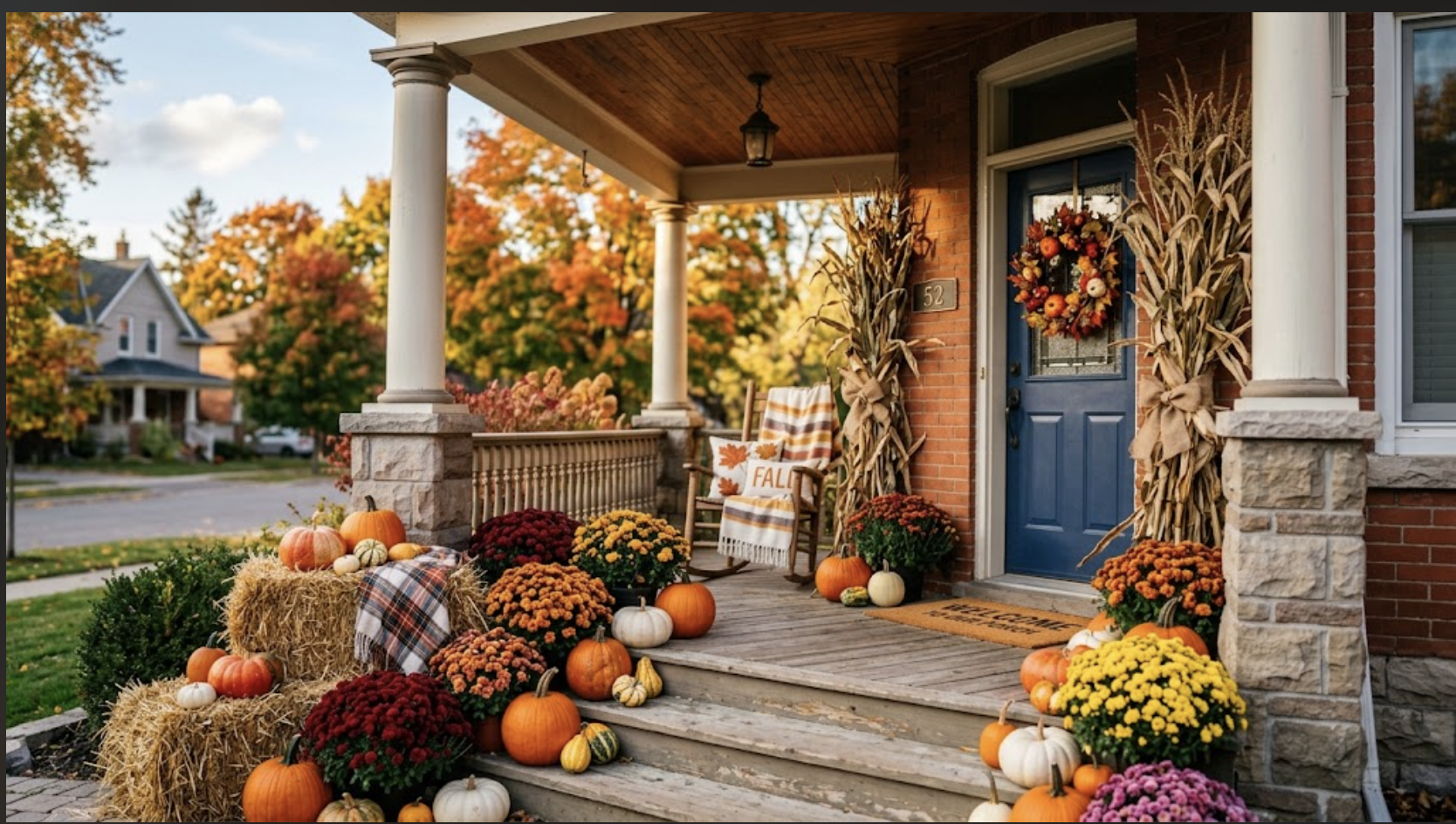
Thanksgiving is next weekend, Halloween is at the end of the month, and porches across Guelph are getting the full treatment: pumpkins on the steps, straw bales under the mums, corn stalks tied to the posts. It looks great. It's also, read through the lens of this blog's fall series, a curated pile of food and shelter staged at your front door during the exact weeks mice are scouting winter access.
None of this means skip the decor. It means knowing what each piece offers and managing it — the same deal this series makes with bird feeders, compost, and firewood. Here's the item-by-item read.
Pumpkins and Gourds — Food, on a Timer
A whole, uncut pumpkin is fairly inert — hard-skinned, slow to break down, low interest for the first couple of weeks. The clock starts when one of two things happens:
It gets carved. A jack-o'-lantern is an opened food container. Exposed flesh ferments within days — drawing fruit flies first, then wasps on warm afternoons (late-season colonies are at peak sugar hunger, per the harvest guide), then squirrels, and after dark, mice, rats, and raccoons. A soft, gnawed-open pumpkin on the porch by mid-October is a nightly feeding station a metre from your door.It gets frost-bitten and softens. Even uncarved, a freeze-thawed pumpkin collapses into the same buffet.
The management rules: carve late (the week of Halloween, not the first week of October), check daily once carved, and the moment one softens or shows gnaw marks, it goes — sealed green bin, not the compost pile by the fence (the compost guide's rodent math applies double for soft squash). Petroleum jelly or vinegar wiped on cut edges slows the squirrel damage a little; nothing stops the clock entirely.
Straw Bales — Shelter, Immediately
The straw bale is the sleeper issue on the list. Pumpkins are food on a delay; a bale is premium rodent shelter from day one — dense, dry, insulated cover, usually placed against the house, at ground level, during scouting season. Mice tunnel into bales within days of placement. Add a few weeks of rain and the bale base is also moisture-pest habitat (the sowbug-and-millipede crew) pressed against your foundation.
If the look needs straw: keep bales off the direct foundation line (even a metre helps), set them on the hard porch surface rather than soil, and treat them as strictly seasonal — out by early November, not rotting in place until spring. When the bale leaves, check under and behind it; it's been the most interesting structure on your porch for a month. And skip the loose-straw-scattered look entirely — scattered straw against the house is bedding material delivered to the door.
Corn Stalks — A Little of Both
Dried stalks bundled on the porch posts are mostly fine — low food value once dried, modest shelter. Two caveats: bundles with ears still attached are seed heads on display (squirrel and mouse food, same tier as the bird seed rules), and thick bundles against the wall create the same covered runway any dense material does. Earless stalks, tied tight, away from entry gaps — decorative and defensible.
Mums, Hay Rides' Worth of Leaves, and the Rest
Potted mums are harmless — just lift the pots occasionally so the dark damp circle underneath doesn't become permanent earwig and sowbug housing (the flowerpot rule from the moisture guides). Decorative leaf piles and bagged-leaf "pumpkins" run the standard leaf-litter math from the yard cleanup guide: fine for a photo weekend, habitat if they sit for weeks. Fabric decorations — the porch bunting, the scarecrow's clothes — go back into sealed storage per the bin guide, not loose into a garage corner where they're winter bedding.
The Timing That Makes It All Work
The whole fall-decor problem compresses into a calendar:
Early October: whole pumpkins, tight corn stalks, mums — decorate freelyMid-October: straw placed smart, carving held off, daily glance at anything organicHalloween week: carve, display, enjoy — the jack-o'-lantern's safe window is about a weekNovember 1–7: the teardown. Everything organic off the porch, bales checked and gone, pumpkins binned, fabric washed and sealed away
That first week of November matters more than any other part. Decor that lingers to mid-November has spanned the entire rodent move-in season as a food-and-shelter station — and the exclusion work from September deserves better support than that.
Frequently Asked Questions
Rats or mice — what's actually eating my pumpkin at night? Both happen in Guelph, along with squirrels (daytime damage) and raccoons (dramatic overnight damage). Small neat gnaw marks low on the pumpkin lean mouse; larger gnawing and droppings nearby lean rat — and per the rat guides, that evidence is worth taking seriously beyond the pumpkin.
Can I just put the old pumpkins in the backyard for wildlife? It's a kind impulse that feeds rats as readily as squirrels, and it trains nightly wildlife traffic into your yard during denning season. Sealed green bin — or a drop at a local farm that takes them for livestock.
Do decorative water features and cauldron props matter this late in the year? Standing water keeps its mosquito relevance until hard frost, and after that it's mostly a freeze-crack risk to the prop. Dump it either way.
Is any of this worth an actual service call? The decor itself, no — it's managed with timing. What it occasionally reveals is: gnaw evidence, droppings behind the bales, or a soft pumpkin that's clearly being visited nightly are signs of the fall pressure every October guide covers, and that's exactly when a call is worth it.
Decorate Loud, Feed Nothing
The porch can look like October without working as a buffet. Carve late, place straw smart, and strip it all the first week of November — the look stays, the guests don't.
Summit Pest Control handles fall rodent pressure across Guelph, Cambridge, KW, and surrounding areas.
Call (226) 780-6446 or request a quick estimate today.