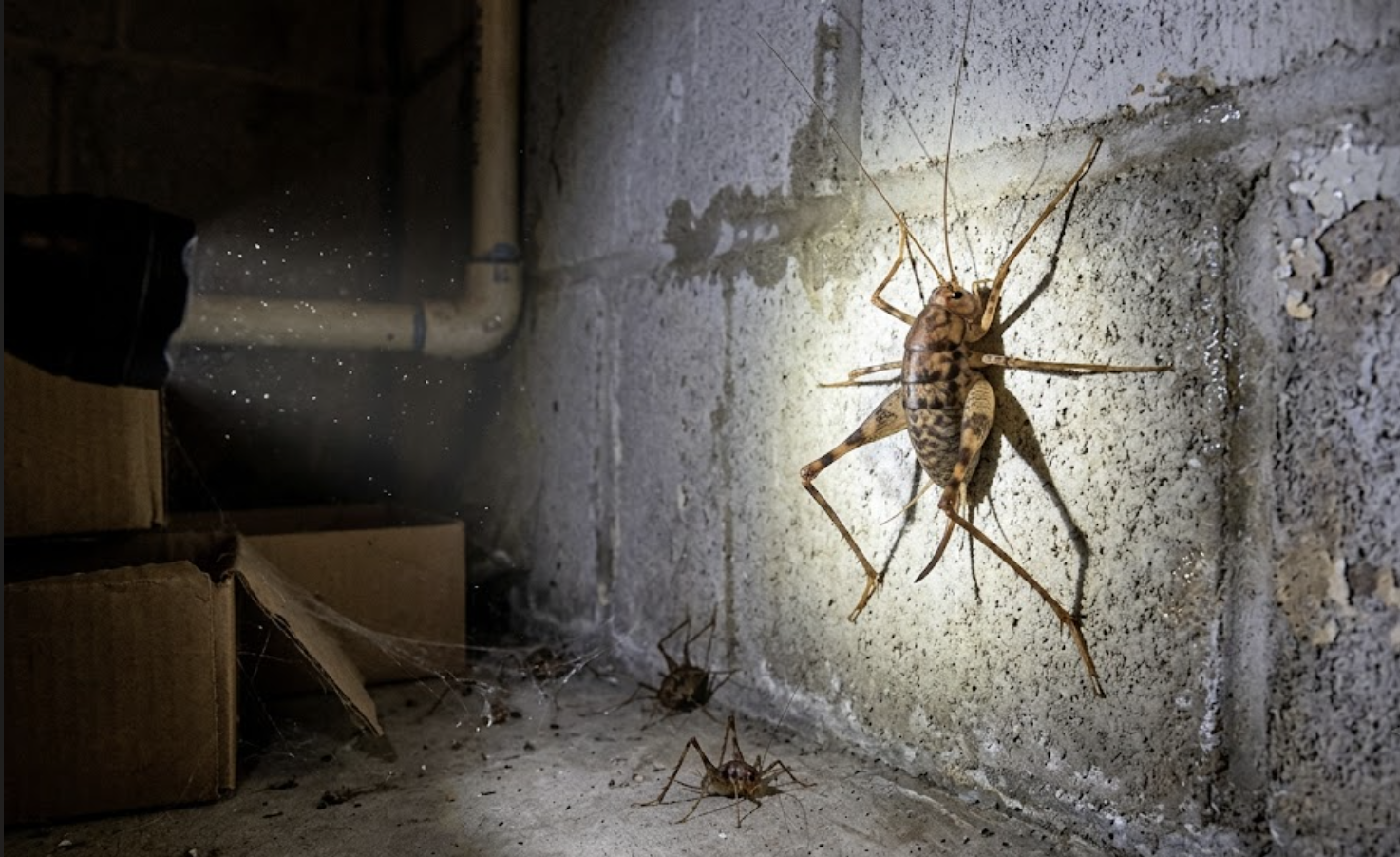
It starts as one chirp, somewhere behind the furnace, always at night, always impossible to locate. Then it's two. By early September, some Guelph basements sound like a campground.
Crickets moving indoors is a late-summer ritual with a clear cause and a clear fix. Here's what's happening and what to do about it.
Why August and September
Crickets spend the summer outdoors, feeding and breeding in grass, mulch, and garden beds. Two things push them toward your house in late summer:
Population peak. By August, the summer's generations have matured — outdoor cricket numbers are at their annual maximum.Conditions shift. Cooling nights, drying vegetation, and shortening days send crickets looking for warm, humid shelter. A basement — warm, dark, slightly damp — is exactly the habitat they're seeking.
Homes with bright exterior lighting get extra pressure: crickets are strongly attracted to lights at night, which draws them right to the foundation and the gaps in it.
Which Cricket You Have
Three show up in Guelph basements:
Field crickets. Black, 2–3cm, the classic loud chirper. The most common basement invader. They can't complete their life cycle indoors — the ones that get in are a dead end — but they can chirp for weeks and chew on fabrics, paper, and stored items before they die.
House crickets. Light yellowish-brown with dark head bands. Less common, but unlike field crickets, they can live and breed indoors indefinitely if conditions allow. Persistent chirping through winter suggests house crickets.
Spider crickets (camel crickets). Humpbacked, long-legged, tan, no chirp — they're silent, they jump erratically (sometimes toward you, which is why people hate them), and they thrive in damp basements and crawl spaces year-round. A damp-basement specialist and a moisture indicator more than anything.
Are They a Problem?
Mostly a nuisance, honestly. The real issues:
The noise. One field cricket behind a wall can wreck a week of sleep.Fabric and paper damage. Established populations chew on stored clothing (especially soiled fabrics), cardboard, and paper.The signal. Crickets — especially spider crickets — indicate the same basement conditions (moisture, gaps, harbourage) that support silverfish, centipedes, and spiders. A crickety basement is rarely just a crickety basement.
What Actually Works
- Cut the lighting attraction. Switch exterior fixtures near entrances and the foundation to warm-toned or yellow "bug" LEDs, and turn off unnecessary lights during August and September. This alone measurably reduces the nightly arrivals.
- Seal the entries. Crickets come in at ground level: gaps under exterior doors (door sweeps fix this), basement window frames and wells, foundation cracks, and the gap under the garage door — corners first. The same sealing that stops mice stops crickets.
- Dry the basement. Run a dehumidifier targeting 50% humidity. Fix leaks and condensation. Spider crickets in particular can't sustain themselves in a dry basement.
- Remove harbourage. Boxes off the floor, clutter reduced, storage in sealed plastic bins instead of cardboard. Sweep window wells clear of leaves and debris.
- Trap the stragglers. Simple glue boards along basement walls, in corners, and near the furnace catch crickets efficiently — and double as monitoring, showing you what else is active down there.
- Perimeter treatment for heavy pressure. For homes backing onto fields or with big annual invasions, an exterior perimeter treatment in mid-to-late August intercepts crickets (and the rest of the fall line-up) at the foundation before they get in.
Finding the One That's Chirping
The flashlight hunt fails because crickets stop chirping when they feel vibration. The trick: triangulate patiently. Stand still in the dark until it resumes, take a few quiet steps, wait again. They favour warm machinery (furnace, water heater), floor drains, and the base of walls. A glue board placed at the suspected zone usually ends the standoff by morning.
How Summit Handles Cricket Calls
For a cricket-heavy basement in Guelph, Tateum's approach:
Species identification — field cricket dead-enders vs. a breeding house cricket or spider cricket population changes the planEntry point inspection at ground level and sealing recommendationsMoisture assessment — the underlying condition, especially for spider cricketsTargeted treatment of harbourage areas and the exterior perimeter where warrantedMonitoring placement to confirm the basement goes quiet and stays quiet
Frequently Asked Questions
Do crickets bite? Effectively no. They can nibble skin in rare handling situations but pose no meaningful risk to people or pets.
Why do I only hear it at night? Crickets are nocturnal, and only males chirp — it's a mating call, loudest in the evening and overnight.
Will they die off on their own? Field crickets indoors die within weeks. House crickets and spider crickets can persist indefinitely if the basement suits them — which is why identification matters.
My cat keeps hunting them. Problem? No — crickets aren't toxic to cats or dogs. Your cat is providing free pest control, if inefficiently.
Quiet Is a Choice
A chirping basement in August is the house asking for door sweeps, a dehumidifier, and dimmer porch lights. Give it those and September stays silent.
Summit Pest Control handles cricket and basement pest treatment across Guelph, Cambridge, KW, and surrounding areas.
Call (226) 780-6446 or request a quick estimate today.