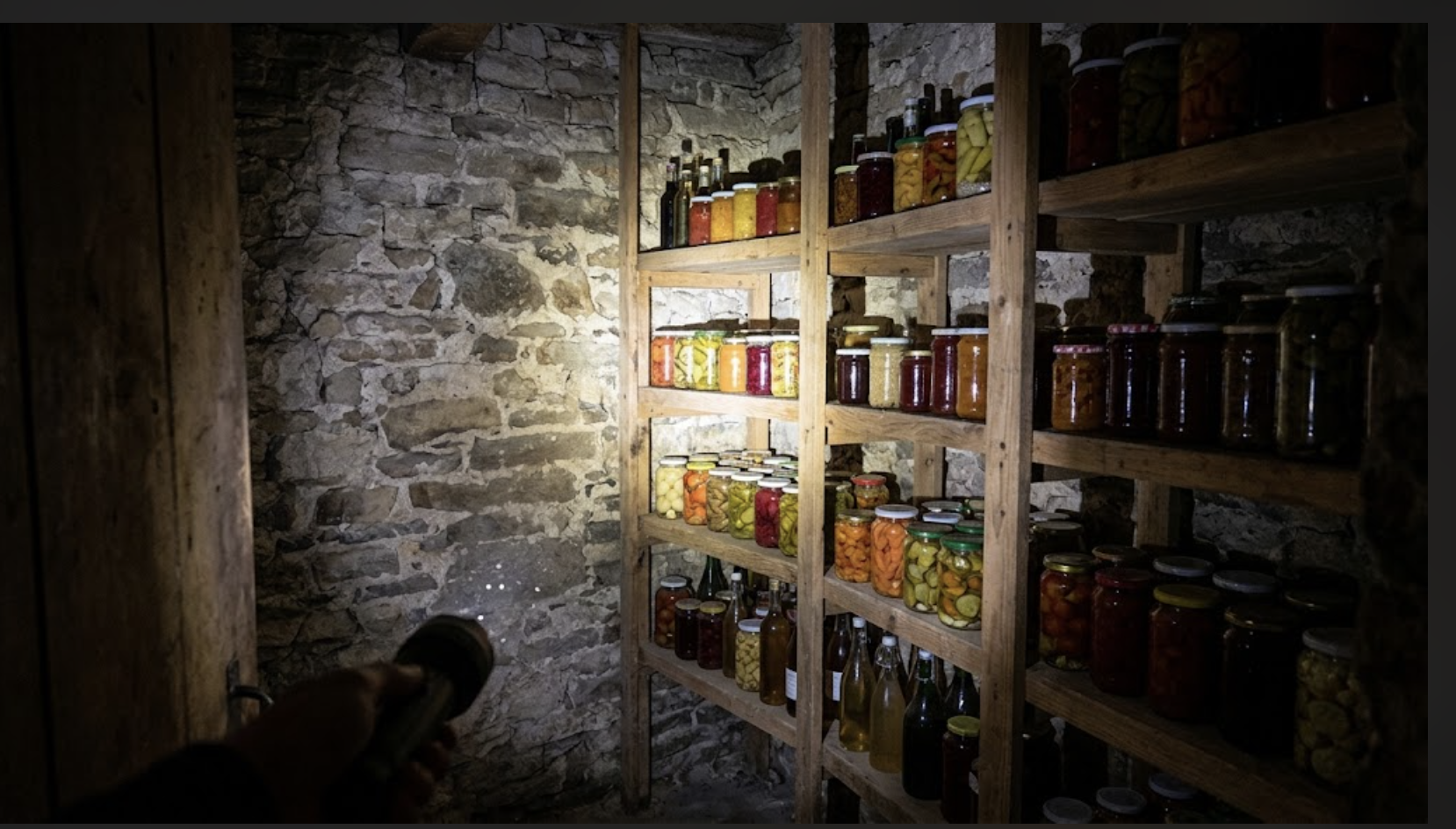
Older Guelph homes — the Ward, Old University, Exhibition Park, the stone farmhouses of Wellington County — almost all have one: the cold room under the front porch, the root cellar corner of a fieldstone basement, the cantina with the wooden shelves and the fifty-year accumulation. And when Tateum inspects these houses, that room is reliably where the pest story concentrates.
It's not mysterious — a cold room is deliberately the most outdoor-like space inside your envelope. Cool, humid, dark, undisturbed, food-stocked, and structurally connected to the exterior. That's the recipe for every basement pest this series covers, in one room. Harvest season, when the preserves and squash go in, is exactly the time to get it right.
Why This Room, Specifically
Deliberate cold and humidity. The features that store apples also suit moisture pests, spiders, and rodents — the room is engineered habitat.Direct exterior structure. Under-porch cold rooms share walls with open air and the porch void; stone cellar walls meet soil directly. More cracks, more temperature gaps, more entries than anywhere else in the house — old porous mortar and rubble-stone foundations most of all.Food, openly stored. Root vegetables in baskets, preserves, sometimes pet food overflow — calories in the quietest room in the house.Zero disturbance. Weeks between visits; the stillness every guide identifies as half the habitat equation.The vent problem. Many cold rooms have a deliberate exterior vent for airflow — frequently unscreened or rot-screened, i.e., a purpose-built pest door.
The Cast You'll Find
Reading a cold room is a tour of the archive: mice (droppings on shelves, chewed squash — the room is a larder), sowbugs and millipedes (the moisture crew, thickest along the floor-wall joint), spiders and their prey web, silverfish in the shelf paper and box cardboard, spider crickets in the damp corners, occasional slugs (silvery trails on the floor mean an at-grade moisture gap), and in stone cellars, the overwintering fall invaders using the wall gaps. Rat evidence in a cold room — larger droppings, real gnaw damage — moves everything to the urgent tier per the rat guides.
The Fall Reset — Do It Before the Harvest Goes In
One honest afternoon, this month:
Empty it completely. Everything out — the only way the room's actually inspectable.Read the evidence before cleaning. Droppings (age, size, location), gnaw marks, webs and what's in them, moisture staining, slug trails. Ten minutes of reading tells you the room's whole story (the safe-cleanup rules from the rodent series apply to any droppings).Seal it like the exclusion project, at 2× intensity. Every crack in the walls and floor-wall joint (mortar repair for stone, sealant for block), mesh-and-seal at every pipe and wire penetration, weatherstrip the interior door — and screen that exterior vent with proper hardware cloth while keeping it functional. The vent screen alone transforms most cold rooms.Correct the storage. Everything off the floor and off the walls — shelving with air underneath and behind; metal or sealed-plastic containers over cardboard everywhere (cardboard in a cold room is silverfish food and mouse bedding); produce in rodent-resistant baskets or bins with airflow, inspected as it goes in (one damaged onion starts the fruit-fly-and-rot cascade).Set the monitoring layer. A couple of snap traps along the walls and a glue board in the corner — per yesterday's tool guide, the cold room is precisely where a permanent monitoring presence pays.Calibrate the humidity. Cold rooms want humidity for produce — the trick is targeted airflow, not a dehumidifier that ruins the room's function: clear vent, slight shelf-wall gaps, and no wet floor. Standing water or wet walls is a drainage problem to fix, not a storage feature.
The Monthly Two Minutes
Thereafter: flashlight sweep of floor and shelves, check the traps, glance at the produce, note anything new. The room's stillness is why problems establish; two minutes of monthly disturbance is why they don't.
The Century-Home Context
The cold room is also a diagnostic window on the whole structure — the same porous foundation admitting sowbugs to the cellar is the one admitting mice to the wall voids (the older-home guides in the archive cover the full picture). A cold room that resists sealing, floods seasonally, or shows persistent rat evidence is telling you about foundation-scale work, and that's worth professional eyes: these rooms are where a Summit inspection of an older home starts for a reason.
Frequently Asked Questions
Is it safe to eat produce from a cold room that had mice? Anything gnawed, soiled, or in contact with droppings — discard. Intact hard produce from a contaminated room should be washed thoroughly; when in doubt, out. Then fix the room so the question retires.
My cold room ceiling is the porch floor and it rains dust and debris. Normal? Common, and it means the porch void above is open habitat connected to your room — a screening-and-sealing project (and occasionally an animal-denning check) worth doing from both sides.
Should the cold room door be insulated? Yes — an insulated, weatherstripped interior door keeps the room properly cold AND separates its climate from the basement, which limits the moisture migration that feeds basement-wide pest pressure.
Can I just not use it? Abandonment doesn't opt the room out — an unused cold room still runs as habitat, just unmonitored. Seal and monitor it even if it stores nothing.
The Oldest Room Gets the Newest Standards
A century-home cold room run on modern rules — sealed, screened, elevated storage, monitored — is the best of both eras: proper food storage and a quiet basement. One afternoon before the harvest goes in.
Summit Pest Control specializes in older-home inspections and exclusion across Guelph, Fergus, Elora, and surrounding areas.
Call (226) 780-6446 or request a quick estimate today.