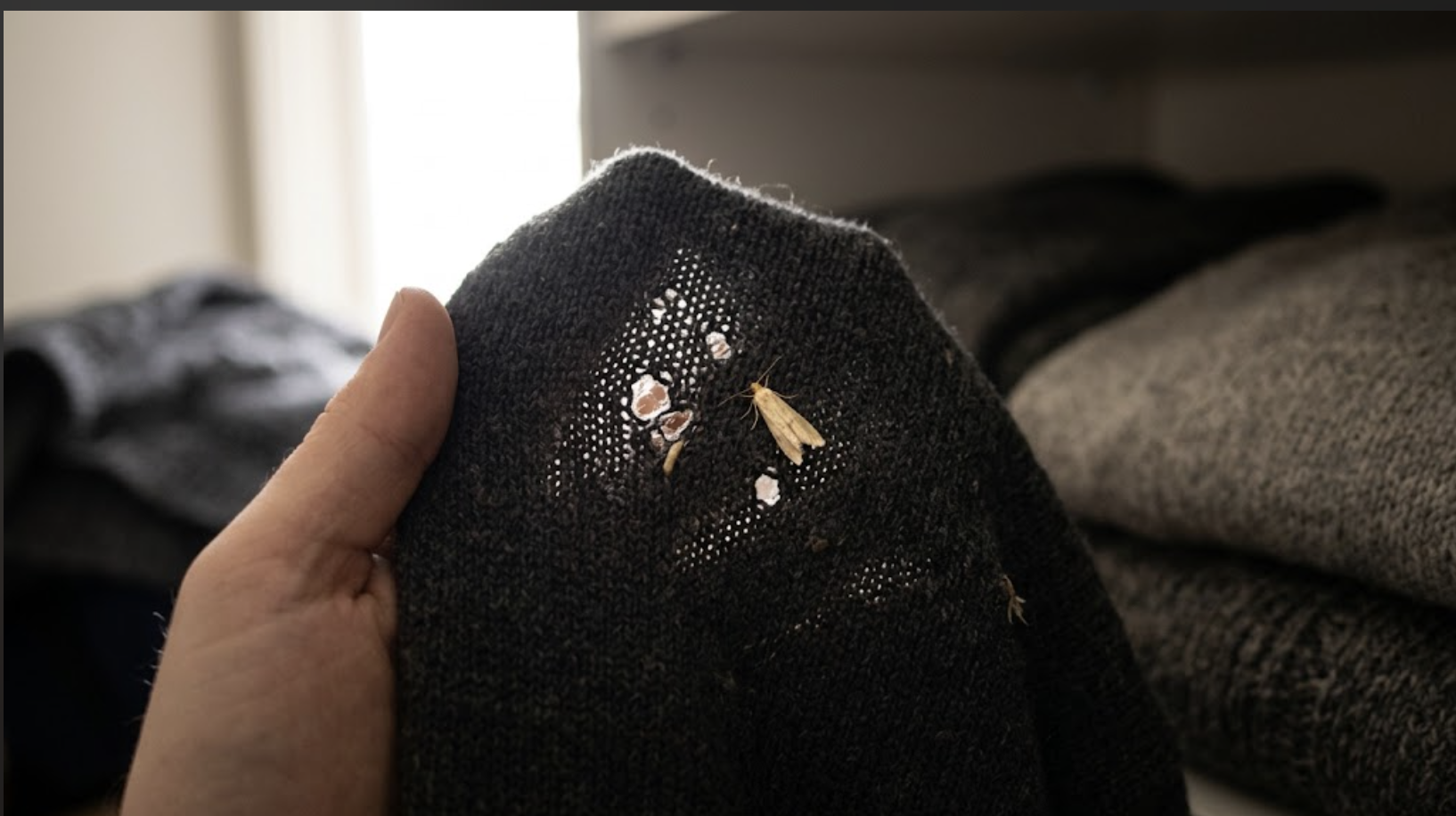
There's a specific September ritual: the first cool evening, the storage bin comes down, the favourite sweater comes out — and it has holes. Small, scattered, unmistakable. Somewhere between April and now, something ate it.
Clothes moths are the other fabric pest (yesterday's carpet beetle post covers their rival), and early fall is exactly when to deal with them — the damage is being discovered now, and the storage habits you set this month decide whether it repeats. Here's the full playbook.
Know Your Moth
First, the reassurance: the moth fluttering around your kitchen light is almost certainly not a clothes moth. Clothes moths hate light and are weak, reluctant fliers — a light-drawn moth is usually a pantry moth (see our pantry pest guide) or an outdoor stray.
Clothes moths are small (6–8mm), uniformly golden-buff, narrow-winged, and found in dark closets scuttling or making short, fluttery flights when disturbed. Two species matter locally:
Webbing clothes moths — the common one; larvae spin silky webbing and feeding tunnels on the fabricCasemaking clothes moths — larvae carry a portable fabric case, often dyed the colour of what they've been eating
Like carpet beetles, adults don't eat fabric — the cream-coloured larvae do, and they do it in the dark, in the folds, over months.
The Damage Read
Scattered holes across the item — often many small ones rather than one grazed patchSilky webbing, tubes, or gritty cases in the folds, under collars, and in the closet corners — the definitive moth signature (beetles leave bristly shed skins, no silk)Grazed nap on felt and heavy wool — surface fuzz eaten before holes appearPreference for the soiled — larvae seek sweat, food residue, and body oils; the worn-then-stored sweater gets hit before the clean one every time
The Clear-Out Protocol
Found moths or damage in a closet or bin? Work the whole zone, not just the damaged item — eggs and larvae are invisible in the folds of everything nearby.
Empty it completely. Every item out of the affected closet, drawer, or bin.Heat is the kill. Hot wash where the fabric allows, and a 30+ minute high-heat dryer cycle — lethal to eggs, larvae, and adults. Dry cleaning handles what can't take water. A hot car trunk in full sun (bagged items, a full afternoon) is a legitimate backup for bulky items in warm weather.Freeze the delicates. Bagged, 3–4 days minimum in a chest freezer, then a second cycle after a thaw day for high-value items (breaks any cold-hardy eggs).Clean the space itself. Vacuum the closet floor, corners, shelf edges, and the carpet edge under the door thoroughly; wipe shelves down. The closet structure holds eggs and pupae, not just the clothes.Inspect the neighbours. Adjacent closets and bins get a check — moths spread along the wool supply.Trap to monitor, not to solve. Pheromone traps for webbing clothes moths catch males and tell you whether activity continues. They're a gauge, not a treatment — a trap catching moths weekly means larvae are still feeding somewhere.Professional treatment for the entrenched cases. Established infestations in carpeted closets, under-rug wool, or heritage textiles warrant targeted crack-and-crevice work — the same professional lane as carpet beetles, often addressing both at once.
The Storage System That Ends It
The cycle breaks at storage time, with four rules:
Clean going in. Never store worn wool. Wash or dry clean everything at the end of the season — removing the soil removes the attraction and any hitchhiking eggs.Sealed going in. Airtight bins or zipped garment bags. Clothes moths can't chew through plastic to reach the wool; open shelving and cardboard are open doors.Cold or disturbed, ideally. Storage in a cool spot beats a warm one (development slows dramatically); and any wool in open rotation should be moved, worn, and brushed occasionally — moths need stillness.Skip the folklore. Cedar's oils fade within months (our natural remedies guide has the honest read) and mothballs are a toxic anachronism with real off-label use problems. The clean-and-sealed system needs neither.
The Rug and Runner Problem
The forgotten wool underfoot loses more value than the closets. Wool rugs in low-traffic rooms, the runner under the hall bench, the good rug's underside edge — all prime moth (and beetle) territory. Twice a year: vacuum both sides, rotate the rug, and check the edges and the section under furniture. Damage found early on a good rug is a repair; found late, it's a replacement.
Frequently Asked Questions
Are the moths I see flying at dusk in the bedroom clothes moths? Possibly, if they're small, golden, and avoiding the light rather than seeking it — clothes moths disturbed from a closet flutter low and land fast. Light-seekers are pantry moths or outdoor species. One in a trap settles it.
Can clothes moths eat synthetic fleece or down jackets? Down and feathers, yes — keratin. Clean pure synthetics, no — but blends and soiled synthetics are on the menu. The wash-before-storage rule covers all of it.
I found one damaged sweater. Do I really have to treat the whole closet? Yes — the visible damage is one larva's work, and the egg-laying female didn't stop at one item. Zone treatment now beats discovering the rest of the damage next September.
How did they get in? Secondhand and vintage textiles are the classic route, along with wool rugs, upholstered antiques, and occasionally adults flying in. Quarantine-and-clean any vintage wool before it joins the closet.
Protect the Good Wool
A closet run on the clean-and-sealed system simply doesn't have clothes moth problems. Set it up this month — the sweaters are already out anyway.
Summit Pest Control handles fabric pest inspection and treatment across Guelph, Cambridge, KW, and surrounding areas.
Call (226) 780-6446 or request a quick estimate today.