Once rodents are gone, the cleanup often gets treated like any other cleaning job. Grab some paper towels, spray some cleaner, sweep it up. That's a mistake.
Rodent droppings, urine, and nesting material can carry pathogens that become airborne when disturbed. Sweeping dry droppings kicks pathogens directly into the air you're breathing. Vacuuming without the right filter does the same. Handling contaminated materials without gloves and a mask exposes you unnecessarily.
Here's how to clean up safely, and when the job is bigger than DIY.
The Health Risks Are Real
Rodents in Ontario can carry:
- Hantavirus — particularly serious, transmitted through inhaled particles from urine, droppings, or nesting material. Rare but potentially fatal.
- Leptospirosis — bacterial infection from urine contact
- Salmonella — from contamination of food or surfaces
- Rat-bite fever — from direct contact with rats
- Allergens and asthma triggers — dander and dust from rodent material
- Secondary pest introductions — mites, fleas, and ticks from rodents
Most of these are uncommon in a typical residential context, but the risk isn't zero. Standard precautions dramatically reduce it.
Before You Start
Confirm the rodents are gone. Cleaning up while there's still active infestation is pointless — new droppings appear as fast as you clean. Complete pest control first, then cleanup.
Ventilate. Open windows in the affected area for at least 30 minutes before starting. This reduces airborne pathogen concentration.
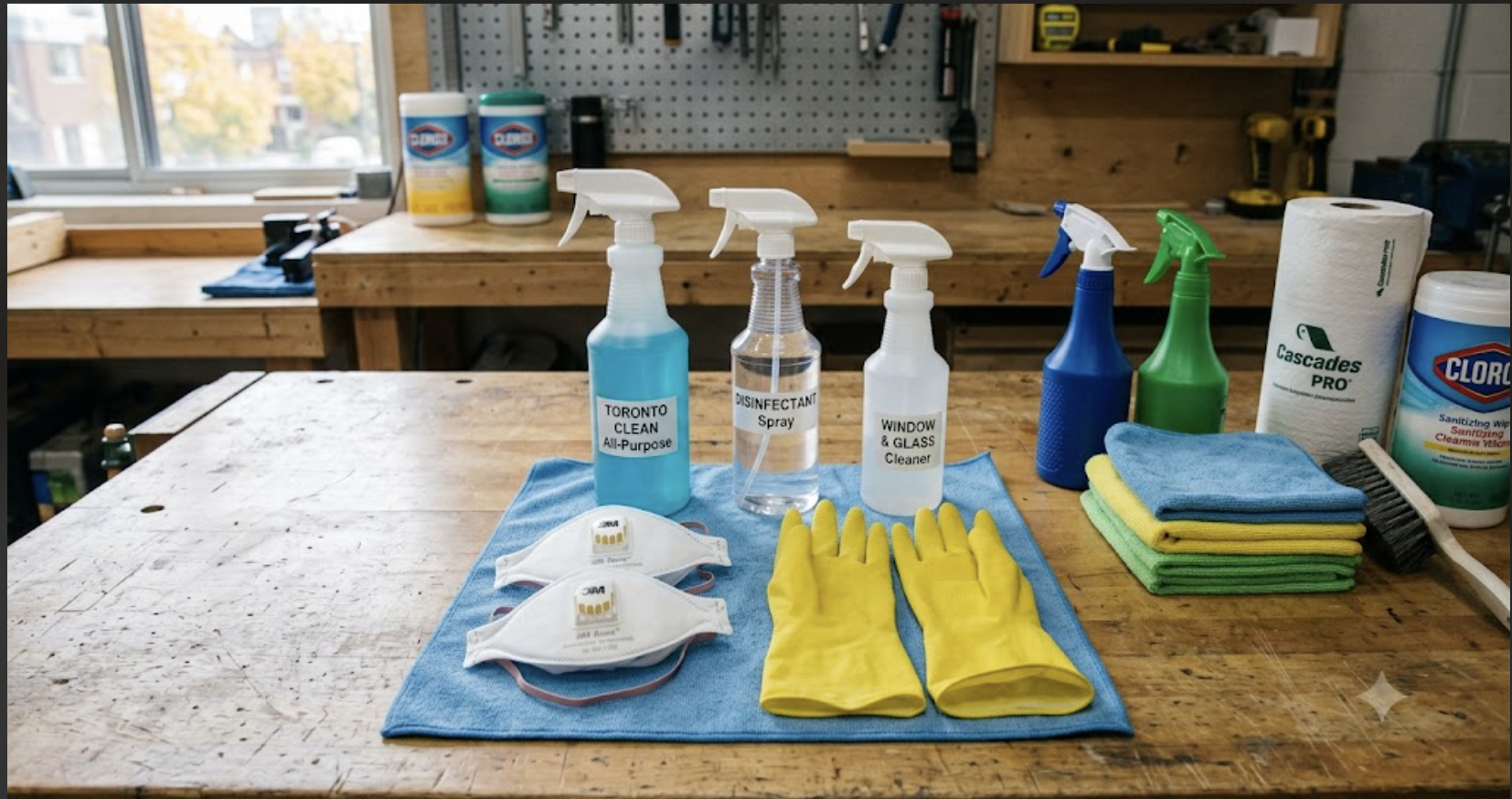
Gear up. Minimum PPE:
- Disposable nitrile or rubber gloves
- N95 or better respirator mask (not a cloth or surgical mask)
- Long sleeves you can wash immediately
- Old shoes or shoe covers
- Safety glasses recommended for larger cleanups
Gather supplies:
- Spray bottle with disinfectant solution (either commercial disinfectant labelled effective for hantavirus, or a fresh bleach solution: 1 part bleach to 10 parts water)
- Paper towels or disposable cleaning cloths
- Sealed garbage bags (heavy-duty preferred)
- Clean cleaning supplies for the second pass
The Right Cleanup Method
Do not sweep or vacuum dry. This is the single most important rule. Both create aerosols that spread pathogens.
The proper method:
- Spray droppings and contaminated areas with disinfectant. Let sit for 5–10 minutes to soak and inactivate pathogens.
- Pick up wet material with paper towels or disposable cloths. Don't scrape or scrub.
- Place all material in sealed garbage bags. Double-bag for heavier cleanup.
- Wipe the entire area with disinfectant. Not just where droppings were — the surrounding surfaces too.
- Let dry. Don't wipe dry with new towels — let air-dry.
- Dispose of PPE properly. Gloves and mask go in sealed bags. Wash clothes on hot immediately.
- Wash hands and shower. Even with PPE, a full shower after cleanup is a good idea.
Special Situations
Contaminated fabrics, bedding, or clothes.If items can be laundered, wash on hot with detergent, dry on high heat for 30+ minutes. If they can't be laundered or the contamination is heavy, throw them out.
Contaminated boxes or cardboard.Not worth trying to save. Throw out.
Contaminated insulation.Sometimes cleanable, sometimes not. Heavy contamination usually means removal and replacement of the affected sections. Professional remediation is often the right call.
Contaminated food or food packaging.Throw out anything not in sealed containers. Discard anything with chew damage, no matter how minor.
Dead rodents.Spray with disinfectant, wait 10 minutes, pick up with paper towels or a plastic bag turned inside out, double-bag, and dispose. Wash the area thoroughly.
Rodent nesting material inside walls or attics.Usually needs professional remediation. Don't try to reach or disturb without proper equipment.
When to Call a Pro
DIY cleanup is fine for small, contained situations. Call for professional help when:
- Heavy or long-standing infestation with extensive droppings
- Contamination in attics or crawl spaces requiring PPE and access
- Insulation involvement that may need removal
- HVAC contamination that could spread through ductwork
- Businesses or rental properties with health-code implications
- Vulnerable people in the household — pregnancy, immunocompromised, or asthmatic residents
- You're not sure what you're dealing with
Professional rodent remediation includes proper HEPA-filter equipment, industrial disinfection, and safe disposal — all of which reduce exposure significantly.
What About the Smell?
Rodent smell — either from active urine or from dead rodents in walls — is one of the most persistent DIY headaches. Options:
Active urine smell: Enzymatic cleaners specifically designed for pet urine also work on rodent urine. Multiple applications may be needed.
Dead rodent in wall smell: Usually resolves in 1–3 weeks as the body dries. Fans and dehumidifiers can accelerate it. Removing the carcass requires opening the wall — sometimes worth it, sometimes not.
Whole-space smell after cleanup: Persistent enzymatic treatments, activated charcoal, and ozone treatment (professional only) can help. Sometimes affected insulation needs replacement.
Long-Term Follow-Up
After cleanup, the exclusion work continues:
- Monitor for any signs of return activity for at least 30 days
- Address entry points if you haven't already
- Consider ongoing prevention for properties with historical rodent pressure
- Have the HVAC checked if there's any concern about ductwork contamination
Recurring rodent problems that never seem to stay solved usually have unaddressed entry points or unaddressed conducive conditions.
How Summit Handles Post-Rodent Cleanup
For Guelph homeowners dealing with post-infestation cleanup, Summit can:
- Assess the extent of contamination
- Recommend appropriate remediation — from DIY-suitable to professional required
- Coordinate professional remediation for larger jobs
- Combine cleanup with exclusion work so problems don't recur
- Provide honest guidance — some cleanups genuinely are DIY-appropriate; others really aren't
We'll tell you which category you're in.
Frequently Asked Questions
Is hantavirus really a risk in Ontario?Cases are rare but do occur. Precautions during cleanup are worth it regardless — even without hantavirus, other pathogens and allergens matter.
Can I use my regular vacuum after cleaning?Yes, once the area has been properly disinfected and dried. The problem is using an unfiltered vacuum on dry droppings — that's what spreads pathogens.
How long does cleanup take?Small localized contamination: 1–2 hours. Larger areas (attic droppings, extensive contamination): can take a full day or more, and often benefits from professional remediation.
What about pet safety after cleanup?Once surfaces are disinfected and dry, pets are safe. During cleanup, keep pets out of the area.
Do It Once, Do It Right
Post-rodent cleanup done properly protects your household and gives you a clean slate to prevent future issues. Done sloppily, it exposes you to unnecessary risk.
Summit Pest Control offers post-rodent assessment and remediation coordination across Guelph and surrounding areas.
Call (226) 780-6446 or request a quick estimate today.