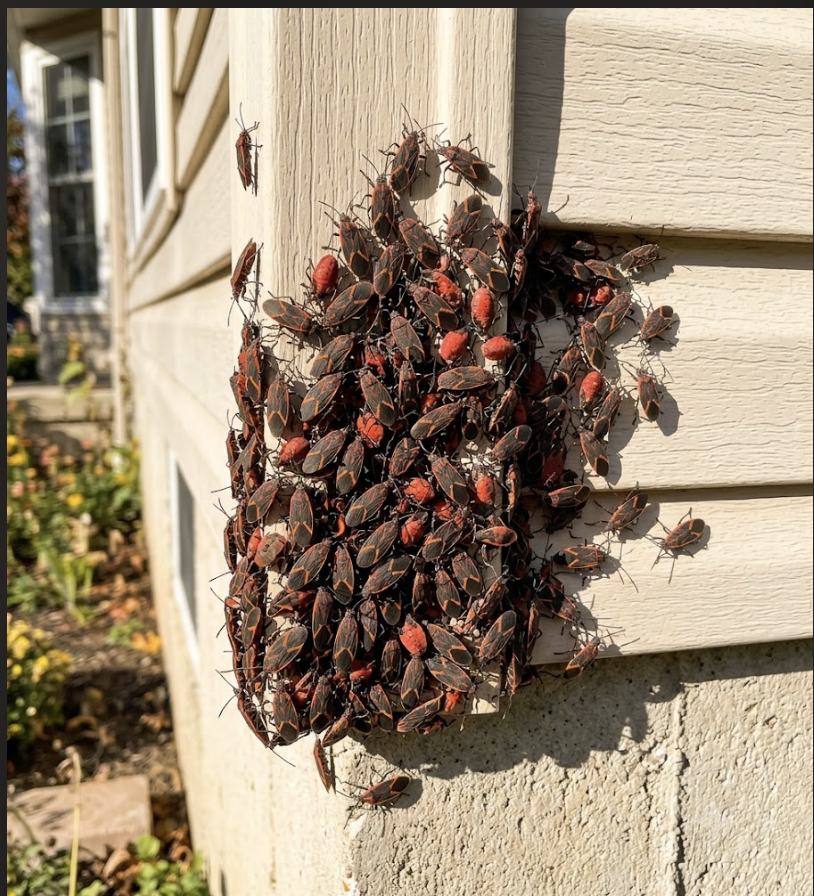
Stink bugs get the press, but for a lot of Guelph and Wellington County homes, the real fall invasion is black and red. Boxelder bugs mass by the hundreds on sun-warmed siding in September and October, slip into every gap they can find, and spend the winter in your walls — then reappear on warm days, indoors, all winter long.
Like every overwintering pest, they're dramatically easier to prevent than to evict. And the prevention window is now — late August into early September.
What Boxelder Bugs Are
Boxelder bugs are flat, elongated insects about 12mm long, charcoal black with distinctive red-orange lines along the edges of the body and wings. Nymphs (the young) are bright red and often seen in clusters through summer.
They feed on the seeds and leaves of boxelder trees (Manitoba maple), as well as other maples and ash. They don't bite, don't sting, don't breed indoors, don't eat anything in your house, and don't transmit disease. Crushed, they can release a mild odour and their droppings can stain light fabrics and curtains — but the honest summary is that boxelder bugs are purely a nuisance pest.
The nuisance, at scale, is real. A heavily-pressured house can host thousands of them.
Why Your House and Not the Neighbour's
Boxelder bug pressure is one of the most predictable in pest control. Your house gets hit if it has:
A boxelder (Manitoba maple) tree on or near the property. Especially a female (seed-bearing) tree. This is the single biggest factor — the summer population develops on the tree, then migrates to nearby structures in fall.Sunny south- or west-facing walls. The bugs mass on warm surfaces before moving in. Light-coloured siding on a sunny exposure is a magnet.Gaps to exploit. Worn caulking, unscreened vents, gaps at window frames, soffit corners — the same openings every fall invader uses.
If you have all three, you're the house on the street that gets them.
The Fall Timeline
August: Summer's final generation matures on host trees. Populations peak.
September: Migration to structures begins. Massing on sunny walls on warm afternoons — this is when most homeowners first notice the scale.
October: Move-in. Bugs work into wall voids, attics, and gaps around windows as temperatures drop.
Winter: Dormant in the structure, with emergences into living spaces on warm sunny days — usually at south-facing windows.
Spring: Mass emergence as they head back outside to the host trees.
The intervention that works happens before the September massing — which is why this post is running in early August.
What Actually Works
- Exterior perimeter treatment, timed right. A residual treatment applied to the sunny walls, foundation line, and entry-prone areas in late August to early September intercepts the bugs during massing, before they get inside. This is the single highest-impact intervention for heavy-pressure homes, and timing is most of the battle — too early and it degrades before migration; too late and the bugs are already in the walls.
- Sealing. The same exclusion list as every overwintering pest, done before mid-September:
Caulk gaps around window and door framesRepair or replace damaged window screensScreen attic and crawl space vents with fine meshSeal gaps where utilities enter the houseAddress soffit corner gaps and worn siding seamsInstall door sweeps on exterior doors
- Host tree management. The long-term fix. If a female boxelder tree on your property is the source, removal ends the pressure almost entirely. That's a real decision with real trade-offs — shade, cost, attachment to the tree — but for homes with severe annual invasions, it's the only permanent answer. Short of removal, seed cleanup in fall reduces next year's local population somewhat.
- Physical removal of massing bugs. A shop-vac or a spray of soapy water (a few tablespoons of dish soap per litre) knocks down bugs massing on walls. Purely a numbers-reduction move, but satisfying and harmless.
What Doesn't Work
Spraying them indoors all winter. You're killing individuals from a wall-void population you can't reach. Endless and pointless.Foggers. Don't reach wall voids, leave residue, don't help.Sealing after they're inside. Trapping the overwintering population in the walls doesn't remove it — and you'll still get indoor emergences all winter.
Once they're in the walls, the realistic play is managing indoor stragglers with a vacuum until spring, then preventing properly the following August.
If They're Already Inside This Winter
Vacuum them up — shop-vac preferred, or empty the canister outside promptly. Don't crush them on fabrics or light-coloured surfaces (staining). Focus on prevention next season rather than fighting the wall population now.
How Summit Handles Boxelder Bugs
For a boxelder-pressured property in Guelph or Wellington County, Tateum's approach:
Assessment — confirming the host tree situation, pressure sides, and entry pointsTimed exterior treatment in the late-August-to-early-September windowExclusion recommendations — a specific list of what to seal on your houseHonest talk about the tree — whether host management is worth considering for your situationCombined scheduling — boxelder treatment pairs naturally with stink bug and cluster fly prevention in the same visit
For homes that get all three fall invaders, one properly-timed perimeter treatment covers the lot.
Frequently Asked Questions
Are boxelder bugs harmful to my house? No structural harm. The concerns are nuisance numbers, possible staining on light fabrics, and the general unpleasantness of bugs at your windows all winter.
Do they reproduce inside my walls? No. They overwinter in a dormant state and breed outdoors on host trees in spring. The winter population indoors is fixed — it doesn't grow.
I don't have a boxelder tree. Why do I have boxelder bugs? They also feed on other maples and ash, and they'll migrate from host trees within a couple hundred metres — including a neighbour's tree or streetscape planting.
Will a cold winter kill the ones in my walls? Wall voids buffer them from the worst cold. Some die, plenty survive. Don't count on winter doing the job.
Beat Them to the Wall
Every boxelder bug you keep out in September is one you don't meet at the bedroom window in January. The window for that is open now.
Summit Pest Control offers fall invader prevention — boxelder bugs, stink bugs, and cluster flies — across Guelph, Fergus, Elora, and surrounding areas.
Call (226) 780-6446 or request a quick estimate today.