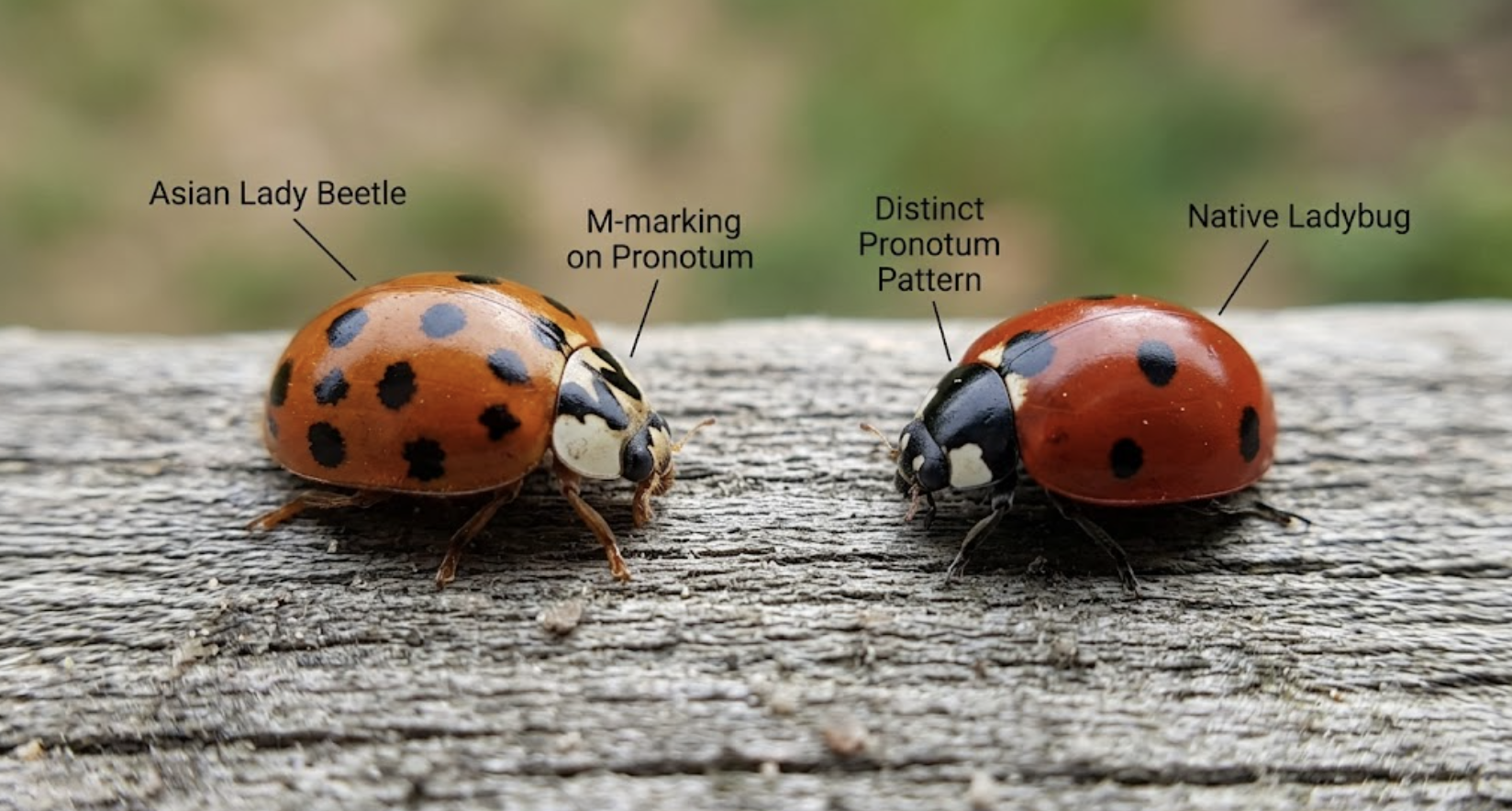
Every fall, Guelph homeowners describe the same scene: hundreds of "ladybugs" appearing on sunny walls in October, working into window frames, and then showing up indoors — in light fixtures, along ceilings, in curtain folds — all winter long. And every fall, the same confusion: aren't ladybugs supposed to be the good guys?
They are. The thing swarming your house isn't quite a ladybug. It's the multicoloured Asian lady beetle — an introduced species that looks similar, behaves very differently, and is one of the big three fall invaders in Wellington County alongside stink bugs and cluster flies.
Telling Them Apart
Native ladybugs (like the nine-spotted and other local species):
Deep red with distinct black spotsSmaller and rounderLive outdoors year-round; overwinter in leaf litter and vegetationDo not invade homes in numbersDon't bite, don't smell
Asian lady beetles:
Colour ranges wildly — orange, red, tan, with many spots, few spots, or noneSlightly larger and more ovalThe tell: a black "M" (or "W") marking on the whitish plate behind the head. Check that spot and you have your answer.Aggregate on buildings in fall and overwinter indoors, sometimes by the thousandsCan deliver a small nip (a pinch, not a true bite — harmless but noticeable)Release a yellow, staining, foul-smelling defensive fluid when disturbed or crushed ("reflex bleeding") — the source of stained walls, curtains, and window sillsCan trigger allergies in sensitive people when present in large indoor numbers
If it's in your house in November, it's an Asian lady beetle. Native species essentially never do that.
A Complicated Villain
Worth saying honestly: Asian lady beetles are genuinely beneficial outdoors. They were originally introduced to North America for aphid control, and they're exceptional at it — a single beetle eats hundreds of aphids. Your garden benefits from them all summer.
The problem is strictly the overwintering behaviour. In their native range, they overwinter in cliff faces. In Ontario, the closest thing to a cliff face is the sunny side of your house.
So the goal isn't eliminating them from your property. It's keeping the fall aggregation outside.
Why They Pick Your House
Asian lady beetle pressure follows a pattern:
Light-coloured buildings on sunny exposures. They orient to sun-warmed, contrasting surfaces — a white or light-grey house with south/west sun is prime.Rural and rural-edge properties. Beetles disperse from crop fields (especially soybeans) after harvest. Homes near agricultural land in Wellington County — Fergus, Elora, rural Guelph — see far heavier pressure than downtown.Homes with previous infestations. Aggregating beetles leave chemical markers that attract next year's beetles to the same structure. If you had them last year, you're on the map.Structures with gaps. Same story as every overwintering pest: window frames, soffit corners, vents, siding seams.
The Fall Timeline
Late September – October: The trigger is the first warm, sunny days following a cold snap — classically the sunny afternoons after the first frost. Beetles take flight en masse and aggregate on warm structures. Move-in happens fast, sometimes over a single weekend.
Winter: Dormant in wall voids and attics, with indoor emergences on warm days — beetles appearing at windows, ceilings, and light fixtures.
Spring: Mass emergence as they head back outdoors.
Because the trigger is weather-driven and abrupt, prevention has to be in place before it happens — which means treatment and sealing in September, planned now.
Prevention That Works
- Exterior perimeter treatment in September. A residual treatment on the sunny exposures, eaves, window surrounds, and known aggregation areas intercepts beetles at the massing stage. For rural and previously-hit homes, this is the difference between dozens indoors and thousands.
- Sealing before the first frost. The standard exclusion list: caulk window and door frames, repair screens, screen vents with fine mesh, seal utility entries and soffit gaps, add door sweeps. Asian lady beetles exploit gaps as small as 3mm.
- Managing the ones that get in. Vacuum — with a nylon stocking secured inside the hose as a catch-bag if you want to release them outside, or straight into a shop-vac. Don't crush or swat them: reflex bleeding stains paint, fabric, and drywall. Don't spray indoors; the wall-void population is out of reach and dead beetles in voids can attract secondary pests like carpet beetles.
- Light management. Beetles active indoors gravitate to light. Reducing bright exterior lighting on aggregation walls during the fall flight window modestly reduces attraction.
What About Ladybug Houses and Releasing Them Outside in Winter?
Two well-meaning ideas that don't help: "ladybug houses" don't meaningfully divert aggregation from a heated structure, and beetles released outside mid-winter simply die — if you're removing them alive, do it on a milder day near sheltered vegetation, or accept the shop-vac.
How Summit Handles Asian Lady Beetles
For a beetle-pressured home in Wellington County, Tateum's approach:
Pressure assessment — exposure, siding colour, agricultural proximity, and infestation historyTimed exterior treatment in September, ahead of the first-frost flightExclusion guidance specific to your structureCombined fall-invader service — lady beetles, boxelder bugs, stink bugs, and cluster flies share the same prevention window, and one properly-timed visit covers all fourSpring follow-up where heavy overwintering populations are emerging
For rural properties, the combined fall-invader treatment is one of the best-value visits on the calendar.
Frequently Asked Questions
Are Asian lady beetles dangerous to my family or pets? Not meaningfully. The nip is harmless, and the defensive fluid is foul but non-toxic. Dogs that mouth large numbers of beetles can experience mouth irritation — uncommon, and it resolves. Large indoor populations can aggravate allergies in sensitive people.
Do they damage the house? No structural damage. The issues are staining from defensive fluid, odour when disturbed, and sheer nuisance numbers.
Why do they keep coming back to my house specifically? Aggregation markers from previous years, plus the fixed features (colour, exposure, rural proximity) that made your house attractive in the first place. Consistent annual prevention breaks the cycle.
Should I kill them or protect them since they're beneficial? Outdoors, leave them alone — they're working for your garden. The fall aggregation on and in your house is fair game for prevention and removal.
Good Bug, Wrong Address
Asian lady beetles earn their keep in the garden and lose it in your curtains. Keep the relationship outdoors — the window to set that up is September, and the planning starts now.
Summit Pest Control offers combined fall-invader prevention across Guelph, Cambridge, KW, Fergus, Elora, and surrounding areas.
Call (226) 780-6446 or request a quick estimate today.