Bed bugs are one of the few pests where the wrong treatment makes the problem worse. Spray a few visible bugs and you push the rest deeper into the walls. Treat one room and skip the next, and they migrate. Half-finish the job, and you're back where you started in a month.
That's part of why heat treatment has become a go-to approach for serious bed bug infestations. Here's how it works, what to expect, and when it's the right choice for your situation in Guelph.
How Bed Bug Heat Treatment Works
The science is simple: bed bugs and their eggs die at temperatures above about 50°C (120°F).
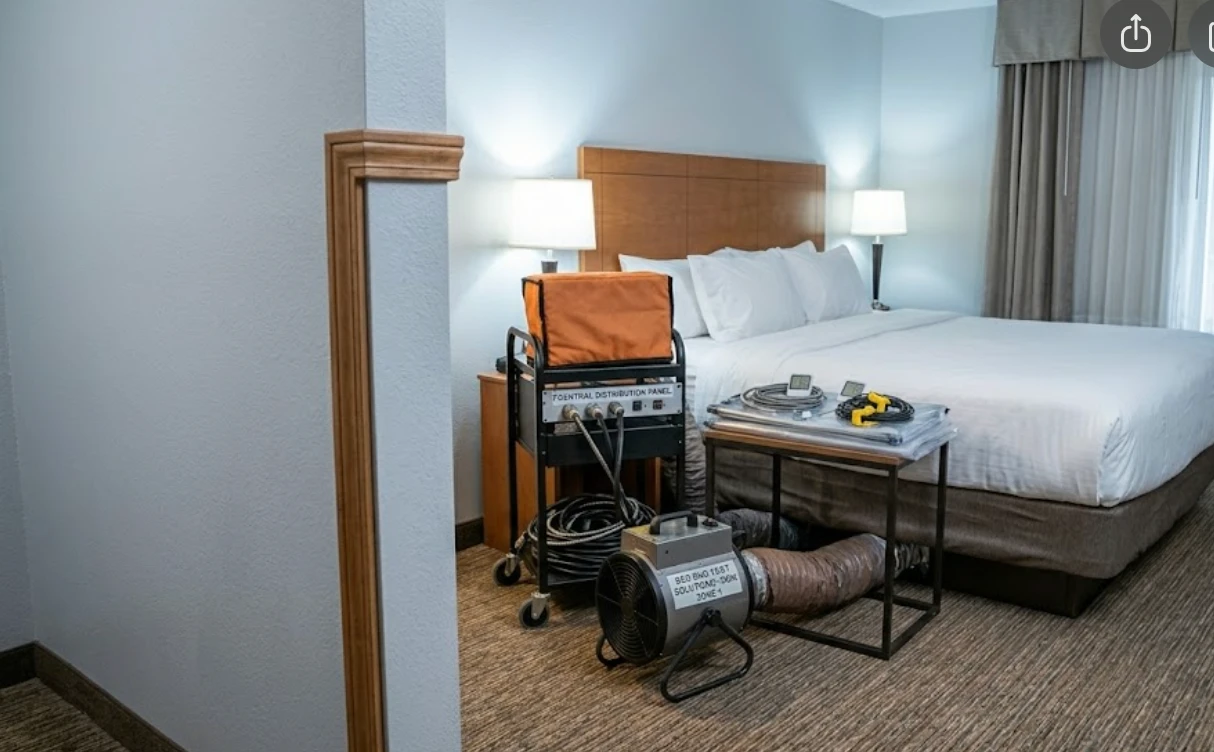
In a heat treatment, professional equipment is brought into the affected rooms — usually high-output electric or propane-fired heaters — and the room temperature is raised to roughly 55–60°C and held there for several hours. Industrial fans circulate the heated air to make sure it penetrates everywhere bed bugs hide: mattress cores, baseboards, behind picture frames, inside furniture joints, and into wall voids.
When the temperature gets high enough, every life stage — eggs, nymphs, adults — dies. That's the part chemical treatments alone can struggle with: getting deep enough into hiding spots to reach the eggs.
Why Heat Beats Chemical-Only in Many Cases
1. It reaches everywhere at once. Heat penetrates places sprays don't — wall voids, deep mattress seams, tight furniture joints.
2. It kills eggs. Many chemical residual treatments have limited effect on eggs, requiring multiple visits to catch the next generation as they hatch.
3. No relocating into walls. Some sprays cause bed bugs to flee into wall voids, which can spread them into adjacent rooms or units.
4. One-day completion. A successful heat treatment is typically done in a single day. Chemical-only treatments often need 2–4 visits over weeks.
5. Less chemical exposure. Heat treatments use minimal pesticide. For households sensitive to chemicals or with babies, this matters.
That said, heat isn't always the right answer for every situation. We'll talk through your case before recommending an approach.
What to Expect on Treatment Day
A typical bed bug heat treatment for a Guelph home looks like this:
Before treatment (homeowner prep):
- Remove anything that can't tolerate high heat — candles, aerosol cans, vinyl records, certain electronics, plants, pets, fish tanks
- Bag and launder bedding and clothing on high heat (or have it heat-treated separately)
- Move items so the equipment can heat the room evenly
- Plan to be out of the home for the day (usually 6–10 hours)
During treatment:
- Equipment is set up and the rooms are heated to target temperature
- Industrial fans circulate heat throughout the space
- Temperature sensors are placed throughout the room to confirm every spot reaches lethal temperature
- The heat is held at temperature for the required duration to kill all life stages
- Cool-down begins
After treatment:
- Equipment is removed
- We do a post-treatment inspection
- A follow-up visit is scheduled (typically 2 weeks out) to confirm no surviving population
- You can use the room normally that evening
Most treatments are completed in a single day with no overnight relocation needed.
When Heat Treatment Is the Right Call
Heat is often the best option when:
- The infestation is established or severe
- Multiple rooms are affected
- The household is sensitive to pesticides
- Previous chemical treatments haven't fully worked
- Speed matters (heat finishes in a day)
Chemical-based treatment plans can still be the right choice for early or limited infestations, especially when budget is a factor. Tateum will walk through both options so you can decide what fits.
What Heat Treatment Costs in Guelph
Heat treatments are more expensive per visit than chemical, because of the equipment and labour involved. But they're often a single visit instead of three, so the total cost ends up comparable for moderate-to-severe infestations.
Pricing depends on square footage, number of rooms, and access. We'll quote a written total before any work starts — no surprise charges.
Common Misconceptions
"Just turn up my furnace really high — same thing, right?"No. Residential heating systems can't get rooms to lethal bed bug temperatures, and even if they could, the heat wouldn't penetrate into the spots that matter. Professional heaters and circulation fans are essential.
"What about cold treatment? Bed bugs die in the freezer."Cold can kill bed bugs, but only at sustained temperatures below -16°C for several days. A Canadian winter porch isn't reliable enough, and most home freezers aren't cold enough.
"Can I rent a heater and do it myself?"Strongly recommend against this. Without proper equipment, monitoring, and circulation, you'll likely cook your belongings without reaching lethal temperatures. And the fire risk of improperly used industrial heaters in a home isn't theoretical.
Frequently Asked Questions
How long does bed bug heat treatment take?A typical residential treatment takes 6–10 hours, including setup, heating, hold time, and cool-down. You'll usually need to be out of the home for the day.
Will heat treatment damage my furniture or electronics?Most furniture and standard household items handle the temperature without issue. Sensitive items (candles, certain electronics, vinyl, plants) need to be removed before treatment.
Is heat treatment safe for my home?Yes, when performed by a professional. We use temperature monitoring throughout the treatment and are trained to identify any items that need to be removed.
Do I need a follow-up visit?Yes. We always do a follow-up inspection (typically 2 weeks after treatment) to confirm no surviving bed bugs.
Get the Real Story
Bed bug treatments are not a place to cut corners. The wrong approach turns a 1-room problem into a 3-room one fast. Summit Pest Control offers honest, thorough bed bug services across Guelph and surrounding areas — including heat treatment for cases where it's the best fit.
Call (226) 780-6446 or request a quick estimate today.